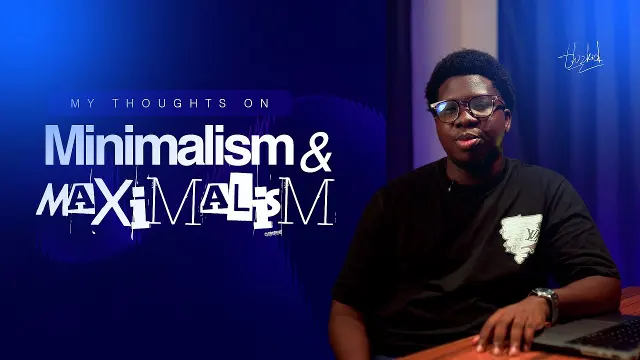
 Reflections on Exploring Both Minimalism and Maximalism Design
#Design Learning
1 ideas
Reflections on Exploring Both Minimalism and Maximalism Design
Get new #Design Learning ideas by email
Every Thursday: the week's best ideas, with the newest from #Design Learning.
Related tags
Design Learning: A Practical Guide to Getting Started
Design learning is the process of understanding how visual choices shape the way something looks, feels, and works. It can apply to many areas, from graphic and interior design to fashion, crafts, and digital layouts. At its core, design is about solving problems with style and intention. Good design does not only look attractive; it also communicates clearly, guides attention, and creates a sense of balance.
If you are just starting out, it helps to think of design as a mix of observation, practice, and editing. You learn by looking carefully at the world around you and asking why certain things feel calm, bold, elegant, playful, or practical. Over time, you begin to notice how line, shape, colour, texture, proportion, and spacing work together. These are the building blocks of almost every design field.
The main principles of design
A few simple principles appear again and again in good design:
Read more
- Balance: keeping visual weight evenly distributed, either symmetrically or in a more relaxed asymmetrical way.
- Contrast: using differences in size, colour, shape, or texture to create interest and clarity.
- Repetition: repeating elements to create rhythm and unity.
- Hierarchy: showing what should be noticed first, second, and third.
- Alignment: arranging elements so they feel connected and orderly.
- Proportion: making sure parts relate well in size and scale.
You do not need to master all of these at once. A strong beginner habit is to focus on one principle at a time and notice how it changes the result.
Common styles and approaches
Design learning often includes exploring different styles. Minimalist design uses restraint, simple forms, and plenty of space. Maximalist design is fuller, more expressive, and layered. Other approaches may feel classic, modern, rustic, handmade, or experimental. None is automatically better than another. The right style depends on the purpose, the subject, and the feeling you want to create.
When you study styles, try not to copy only the surface details. Instead, look at the structure underneath. Ask yourself what makes a design feel minimal, warm, busy, refined, or playful. That will help you adapt ideas more confidently.
How to practice
A useful way to learn design is to work in small steps:
- Collect examples you admire and describe what they have in common.
- Sketch rough ideas before trying to make them polished.
- Experiment with colour combinations, spacing, and layout.
- Simplify your work, then add details only where they help.
- Review your own designs and ask what feels unclear or crowded.
Practice also means learning to edit. Many beginners try to include too much. Often, stronger design comes from removing what is unnecessary and letting the important parts breathe.
What beginners should remember
Be patient with yourself. Design skill grows through repetition, not perfection. Try to build a visual vocabulary by observing everything carefully: books, packaging, rooms, clothing, posters, and natural forms. Keep note of what works and what does not. Most importantly, trust that taste can be learned. The more you look, question, and make, the more confident your choices will become.
#Design Learning: frequently asked questions
How do I start learning design if I have no experience?
Begin by training your eye before your hand: look closely at posters, packaging, rooms, and clothing, and ask yourself why each one feels calm, bold, or cluttered. From there, try small exercises such as sketching rough layouts or rearranging colours and spacing in something simple. Short, regular practice sessions teach you far more than waiting until you feel ready to make something polished.
Do I need special tools or software to learn design?
No. Paper, a pencil, and a willingness to observe are enough to start, especially while you are learning to sketch ideas and notice how shapes and spacing relate. Digital tools become useful once you want to refine layouts or experiment with colour more quickly, but they cannot substitute for understanding the underlying principles.
Which style should a beginner focus on, minimal or maximal?
Neither style is inherently better, so the choice should follow the purpose and the feeling you want to create. Minimalist work relies on restraint and space, while maximalist work is layered and expressive, and both are worth trying because each teaches you something different. Look past the surface of a style you admire to understand what gives it that character, so you can adapt it rather than copy it.
How do I know if my design is actually working?
Step back and ask what your eye notices first, second, and third, since a clear answer usually means your hierarchy is doing its job. Then check whether anything feels crowded or unclear and remove what is not helping. Reviewing your own work honestly and comparing it with examples you admire builds judgement faster than chasing perfection.
How much should I put into a design before it looks finished?
Most beginners add too much, so start simple and add details only where they genuinely improve clarity or interest. A common approach is to simplify first and then reintroduce one element at a time, checking whether the design still communicates clearly. Letting the important parts breathe often reads as more confident than filling every space.
What are the most common mistakes people make when learning design?
Trying to master every principle at once is a frequent stumbling block, and it is more effective to focus on a single principle such as balance or contrast and see how it changes your result. Another common error is copying only the surface look of a style instead of understanding its structure. Finally, expecting immediate polish holds people back; skill builds through repetition and editing, not from getting it right the first time.
Videos come from YouTube and posts from Instagram; titles and summaries are our own. All rights belong to their creators.