 Fixing Amateur Layouts Using Gestalt Rules and Design Theory
#Design Psychology
1 ideas
Fixing Amateur Layouts Using Gestalt Rules and Design Theory
Get new #Design Psychology ideas by email
Every Thursday: the week's best ideas, with the newest from #Design Psychology.
Related tags
Design Psychology
Design psychology is the study of how people perceive, interpret, and respond to visual design. It brings together ideas from psychology, visual perception, and communication to explain why some layouts feel calm, clear, or trustworthy, while others feel confusing or hard to use. You meet it everywhere: in websites, packaging, posters, rooms, interfaces, and branding.
At its core, design psychology asks a simple question: how will a person experience this? Color, shape, spacing, hierarchy, texture, and movement all influence how quickly someone notices information and how they feel about it. Good design does not only look attractive; it helps the eye understand what matters first and what to do next.
What design psychology is used for
Design psychology is useful whenever you want visuals to guide attention or support a mood. It helps with:
- making information easier to scan
- creating a sense of order and balance
- encouraging trust, comfort, excitement, or calm
- reducing confusion and visual fatigue
- supporting decisions, such as reading, clicking, buying, or following directions
Read more
This is why it matters in both practical and decorative design. A beautiful layout can still fail if it is hard to read or if the important part does not stand out.
Main ideas behind it
Several well-known principles shape how design works in the mind. You do not need to be a psychologist to use them, but it helps to know the basics.
- People notice contrast, difference, and movement before quiet details.
- The eye looks for patterns and groupings.
- Clear spacing can be as important as the elements themselves.
- Repetition creates familiarity and structure.
- Strong hierarchy helps the viewer understand what is most important.
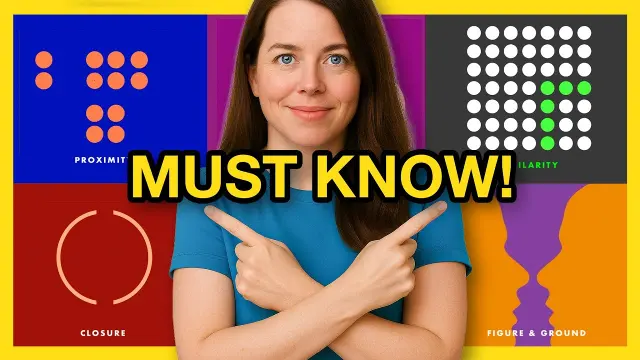
These ideas are often linked to visual perception and Gestalt thinking, which looks at how people organize what they see into meaningful wholes.
How to use it well
If you are designing anything, start by deciding what you want the viewer to feel and do. Then use visual choices to support that goal.
- Use size and contrast to guide attention.
- Group related items together.
- Leave enough white space so the design can breathe.
- Keep typography readable and consistent.
- Use color with purpose, not just decoration.
- Repeat key shapes or styles to create unity.
If you are unsure, simplify. Many design problems come from trying to do too much at once. A clearer layout usually feels more confident and more thoughtful.
What beginners should know
Design psychology is not about manipulating people. At its best, it is about respecting how people naturally see and process information. The goal is to make design feel intuitive, not confusing.
A useful habit is to look at your design from a distance or after a short break. Ask yourself:
- What do I notice first?
- Is the message obvious?
- Does anything feel crowded or hidden?
- Does the overall mood match the purpose?
With practice, you will start to see how small choices change the whole experience. That is the real power of design psychology: it helps you create work that feels not only attractive, but also clear, human, and easy to understand.
#Design Psychology: frequently asked questions
What is design psychology, in plain terms?
It is the study of how people see and react to visual design — why one layout feels calm and easy while another feels cluttered or confusing. It draws on visual perception and communication to explain how colour, spacing, hierarchy, and shape shape a person's first impression. In practice, it is less about decoration and more about making a design easy to understand at a glance.
How do I start applying design psychology to my own work?
Begin by deciding what you want the viewer to feel and to do, then make every visual choice serve that goal. Use size and contrast to point the eye where it should go first, group related things together, and leave enough empty space for the design to breathe. When in doubt, simplify — most confusion comes from trying to say too much at once.
Which principles should a beginner learn first?
Start with the ones the eye responds to immediately: contrast, grouping, spacing, hierarchy, and repetition. People notice difference and movement before quiet detail, and they naturally look for patterns, so grouping related elements and repeating key styles creates instant order. Knowing just these basics lets you fix most layouts without any background in psychology.
How can I tell whether my design is actually working?
Look at it from a distance or come back after a short break, and ask what you notice first and whether the main message is obvious. If anything feels crowded, hidden, or ambiguous, that is the signal to adjust spacing or hierarchy. It also helps to check whether the overall mood matches the purpose the design is meant to serve.
Is design psychology about manipulating people?
No — at its best it is about respecting how people naturally take in information and making the result intuitive rather than confusing. The aim is to help someone find what matters and know what to do next, not to trick them. When a design feels clear and honest, that usually shows in how comfortable people are using it.
What mistakes do beginners make most often?
Cramming in too many elements and leaving too little white space is the classic one, since crowding hides the very thing you want seen. Another is using colour and decoration for their own sake rather than to separate, emphasise, or unify. A third is making everything compete equally, so nothing reads as the most important.
Videos come from YouTube and posts from Instagram; titles and summaries are our own. All rights belong to their creators.