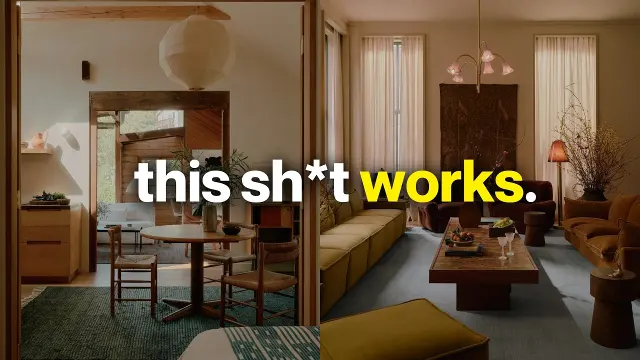
 Fifteen Essential Rules of Interior Design Explained
#Design Rules
1 ideas
Fifteen Essential Rules of Interior Design Explained
Get new #Design Rules ideas by email
Every Thursday: the week's best ideas, with the newest from #Design Rules.
Related tags
Design Rules: Core Principles for Better Spaces
What design rules are
Design rules are the basic principles that help a space, object, or composition feel clear, useful, and visually pleasing. They are not rigid laws. Think of them as guidance that helps you make choices with more confidence, whether you are arranging a room, planning a layout, or deciding how colors and shapes should work together.
The idea comes from long traditions in art, architecture, and interior design, where people have always looked for ways to create order, emphasis, and harmony. In practice, design rules help you understand why some spaces feel calm, while others feel busy, awkward, or unfinished.
The main principles
Read more
A few core ideas appear again and again in good design:
- Balance: distributing visual weight so one side does not feel heavier than the other.
- Proportion: making sure sizes relate well to each other and to the whole.
- Scale: choosing elements that fit the size of the room or object.
- Contrast: using differences in color, shape, texture, or light to create interest.
- Rhythm: repeating elements in a way that leads the eye naturally.
- Harmony: making sure parts belong together rather than competing.
- Emphasis: creating a focal point that draws attention first.
These principles work together. For example, a room may have a strong focal point, but it still needs balance and proportion to feel comfortable.
Common styles and approaches
Different design styles use these rules in different ways. Minimal spaces often rely on restraint, clean lines, and careful proportion. Traditional design may use symmetry, repetition, and familiar shapes. More relaxed or eclectic spaces can mix styles, but they still need an underlying sense of order so the result feels intentional rather than random.
Good design is not about following a single formula. It is about knowing when to simplify, when to repeat, and when to create contrast.
What beginners should know
If you are just starting, begin with the overall arrangement before focusing on details. A simple structure usually works better than adding many separate ideas at once. Pay attention to the biggest elements first: furniture placement, color balance, and how people move through the space.
A few practical tips can help:
- Start with one clear focal point.
- Repeat colors or materials to create unity.
- Leave enough empty space so the design can breathe.
- Use sizes that suit the room, not just the object itself.
- Step back often and look at the whole picture.
How to use design rules well
The best designs usually feel effortless, but they are often built on careful decisions. If something feels off, it may be because one principle is missing. The answer is not always to add more. Sometimes the fix is to remove, simplify, or rebalance what is already there.
Design rules are most useful when they help you notice relationships: light and dark, large and small, plain and detailed, soft and structured. Once you understand those relationships, you can create spaces and compositions that feel more thoughtful, more comfortable, and more complete.
Videos come from YouTube and posts from Instagram; titles and summaries are our own. All rights belong to their creators.