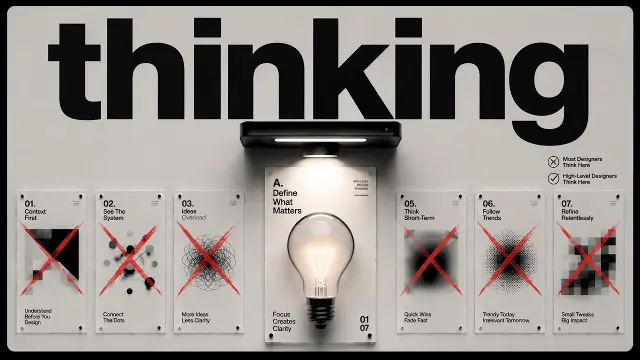
 High Level Design Thinking Principles for Creative Projects
#Design Thinking
3 ideas
High Level Design Thinking Principles for Creative Projects
 Good Design or Bad Design: A Visual Design Critique
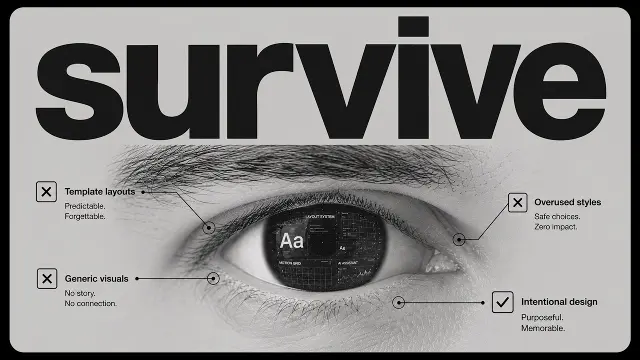 The Mindset and Psychology Needed in Graphic Design
Get new #Design Thinking ideas by email
Every Thursday: the week's best ideas, with the newest from #Design Thinking.
Related tags
Design Thinking: A Practical Guide
What design thinking means
Design thinking is a human-centred approach to solving problems. Instead of starting with a fixed answer, you begin by understanding the people affected, the problem they face, and the context around it. It is used in product design, services, communication, business, education, and even everyday problem-solving.
At its heart, design thinking combines empathy, creativity, and testing. It encourages you to look closely at real needs, generate many possible ideas, and improve them through feedback. The goal is not to create the “perfect” solution at the first attempt, but to arrive at something useful, clear, and workable.
Where it comes from
Read more
The idea draws on design practice, psychology, and problem-solving methods developed in many fields over time. Designers have long needed to balance what is desirable for people, what is technically possible, and what is practical to make or use. Design thinking brings those concerns together in a structured, repeatable way.
Because of that, it has become popular far beyond visual design. It can help when you are creating a service, planning a workshop, improving a process, or rethinking an experience from the user’s point of view.
The main steps
A common design thinking process includes these stages:
- Empathise: learn about the people you are designing for
- Define: clarify the real problem, not just the obvious symptom
- Ideate: explore many possible solutions without judging too quickly
- Prototype: make simple versions of your ideas
- Test: try them out and learn from responses
These steps are often repeated. You may go back and forth several times as you discover more. That flexibility is one of the strengths of the method.
What beginners should know
If you are new to design thinking, remember that it is less about being artistic and more about being curious. You do not need a perfect process or a polished idea to begin. Start by asking good questions, listening carefully, and noticing what people actually do, not only what they say they want.
A few useful habits:
- Keep the user’s needs at the centre
- Separate idea generation from criticism
- Use simple sketches, notes, or mock-ups to make ideas visible
- Test early, before investing too much time in one direction
- Be open to changing your assumptions
Practical tips
Design thinking works best when you stay focused on the problem and the people involved. Try to define the challenge clearly, but not too narrowly. If the problem is vague, your ideas may drift; if it is too fixed, you may miss better solutions.
It also helps to work with others. Different viewpoints can reveal blind spots and lead to stronger ideas. When testing, ask open questions and pay attention to what seems confusing, appealing, or unnecessary. Small improvements often matter more than grand concepts.
Above all, design thinking is a way of thinking and working that values empathy, experimentation, and learning. Used well, it can help you create solutions that are more thoughtful, more usable, and more likely to fit real life.
#Design Thinking: frequently asked questions
How do I start using design thinking if I’m a beginner?
Start by learning about the people you want to help and the problem they actually face. Ask open questions, listen carefully, and keep your first ideas simple so you can improve them as you learn more.
What do I need for a design thinking process?
You mainly need curiosity, empathy, and a willingness to test ideas early. Simple tools like notes, sketches, and rough mock-ups are often enough to make your thinking visible and useful.
How do I choose the right kind of solution in design thinking?
Begin by defining the real problem clearly, then explore several possible directions before deciding. The best choice is usually the one that fits the user’s needs, is practical to use, and can be improved through feedback.
What are common mistakes people make in design thinking?
A common mistake is jumping to a solution too quickly without understanding the user or the context. Another is treating criticism as the end of the process, when it should actually help refine the idea.
How can I use design thinking for a creative project or visual critique?
Use it to look beyond style and ask what the design is trying to do for real people. Comparing what is clear, confusing, useful, or distracting can help you make more thoughtful creative choices.
Videos come from YouTube and posts from Instagram; titles and summaries are our own. All rights belong to their creators.