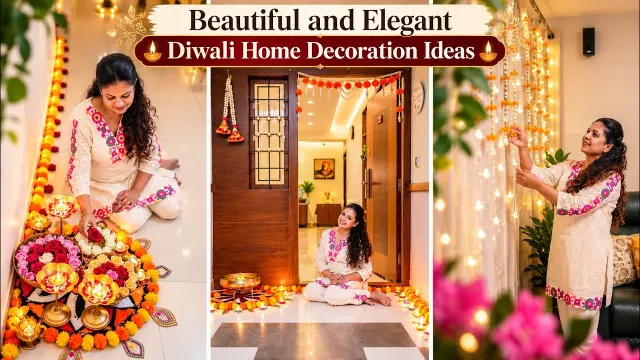
 Elegant Diwali Home Decoration Ideas and Makeover
#Diwali Decoration
1 ideas
Elegant Diwali Home Decoration Ideas and Makeover
Get new #Diwali Decoration ideas by email
Every Thursday: the week's best ideas, with the newest from #Diwali Decoration.
Related tags
Diwali Decoration: A Guide to Lighting Up Your Home
Diwali, the festival of lights, is one of the most widely celebrated occasions in India and across the Indian diaspora. Families mark it by cleaning and refreshing their homes, lighting small oil lamps, and welcoming guests with sweets and warmth. Decoration is not an afterthought to the festival; it is part of how the celebration is expressed. Every lamp, flower and pattern is a way of saying that light, welcome and good fortune are being invited inside.
Why the Home Is Decorated
The traditions behind Diwali decoration vary by region and community. Many households associate the festival with the return of Rama to Ayodhya after years of exile, when the city was said to be lit with rows of lamps to welcome him home. Others focus on the worship of Lakshmi, the goddess of prosperity, and on the idea of clearing away what is old and tired to make room for renewal. For Jains, Sikhs and Buddhists the festival carries its own meanings. What these traditions share is a sense of light overcoming darkness, which is why illumination sits at the centre of almost every decorative choice.
The Main Elements
Read more
- Diyas: small clay lamps filled with oil and fitted with a cotton wick. They can line windowsills, doorways, balconies and garden paths. Traditionally they are lit at dusk, and many families keep a simple row of them even when they decorate more elaborately elsewhere.
- Rangoli: floor patterns drawn with coloured powder, rice flour, flower petals or sand. They are usually placed at the entrance, and in some regions a plain rice-flour design is left for insects and birds.
- Torans: hanging garlands across doorways, made from marigolds and other flowers, mango leaves, fabric or paper.
- Lights: strings of small lamps or bulbs outlining windows, balconies and rooflines.
- Flowers and fabric: marigolds, jasmine and fresh blooms set in bowls of water, alongside cushions, runners and drapes in bright warm colours.
Getting Started
Begin with cleanliness, which is itself part of the tradition: wash floors, clear surfaces and put away what you no longer need. Then choose one focal point, usually the entrance or the room where the family gathers, and build outward. A doorway with a toran, a rangoli and a pair of diyas can be more striking than decorations spread thinly through the whole house.
Work in a restrained palette. Warm colours such as orange, red and gold sit naturally together, and a single accent of deep green or white keeps the scheme from feeling busy.
Practical Care
Never leave oil lamps or candles burning unattended, and keep them away from curtains, paper decorations and anything that can catch fire. Place diyas on a stable, heatproof surface, and keep them out of reach of children and pets. Battery-powered lamps are a safe alternative for shelves, stairways and rooms where a flame is impractical. If you use powdered colours for rangoli, choose a well-ventilated spot and sweep gently afterwards.
Decoration is at its best when it feels personal: a few things done thoughtfully, with the people you love around you, will always outshine a house full of ornaments.
#Diwali Decoration: frequently asked questions
How do I start decorating my home for Diwali?
Start by cleaning and clearing the space, since tidying up is considered part of welcoming light and good fortune indoors. Then pick a single focal point, usually the entrance or the room where the family gathers, and build the decoration outward from there. A focused doorway with a toran, a rangoli and a couple of diyas often reads better than ornaments scattered through every room.
What do I need for Diwali decoration?
The essentials are small clay diyas, oil and wicks, coloured powder, flower petals or sand for rangoli, garlands for doorways, string lights and bright fabric. Fresh flowers, water bowls and a few warm-coloured cushions or runners finish the look. You can add battery-powered lamps if you want light in places where an open flame is impractical.
What colours work best for Diwali decorations?
Warm colours such as orange, red and gold sit naturally together and suit the festival's association with light and festivity. Keep the palette restrained and use one accent, like deep green or white, to keep the scheme from feeling crowded. Fresh marigolds and jasmine bring in natural colour without effort.
How do I keep diyas and lights safe during the festival?
Place lamps on a stable, heatproof surface away from curtains, paper decorations and anything else that can catch fire. Never leave oil lamps or candles burning unattended, and keep them out of reach of children and pets. For shelves, stairways or rooms where a flame is impractical, battery-powered lamps are a sensible substitute.
How do I make a rangoli that lasts and stays tidy?
Work on a swept, dry floor at the entrance and draw your pattern with coloured powder, rice flour, petals or sand, choosing a well-ventilated spot. Sweep gently afterwards rather than scrubbing, so the colour does not smear into the floor. In many regions a plain rice-flour design is also left outside for insects and birds.
How can I decorate for Diwali on a small budget or in a rented flat?
Concentrate your effort on one doorway or one room instead of trying to cover the whole home. A garland across the frame, a simple rangoli and a row of diyas carry the spirit without much expense, and flowers or fabric can be reused year after year. Battery lamps also help where you cannot hang anything permanently.
Videos come from YouTube and posts from Instagram; titles and summaries are our own. All rights belong to their creators.