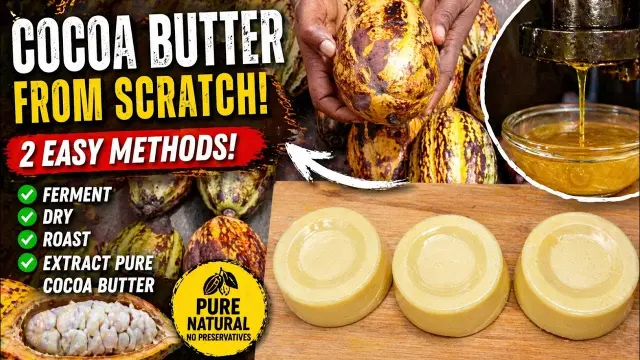
 How to Make Pure Cocoa Butter from Scratch Using Fresh Cocoa Pods
#DIY Recipe
1 ideas
How to Make Pure Cocoa Butter from Scratch Using Fresh Cocoa Pods
Get new #DIY Recipe ideas by email
Every Thursday: the week's best ideas, with the newest from #DIY Recipe.
Related tags
DIY Recipes: A Beginner's Guide to Making Things Yourself
DIY stands for do-it-yourself: making, growing, repairing or preserving something yourself instead of buying it ready-made. A DIY recipe is simply the set of instructions that makes this possible — a list of ingredients or materials, the amounts, the order of steps, and the conditions under which they work. The idea is older than the name. Households have always kept recipes for bread, soap, cough syrups, furniture polish and dye, passed down in notebooks and family memory. What changed is access: once instructions became easy to share, the habit of making things at home spread from necessity into a hobby, and then into a whole way of spending an afternoon.
The main kinds of DIY recipes
- Kitchen recipes: preserves, ferments, breads, cheese, spice blends, cordials and pantry staples made in small batches.
- Home and cleaning: surface sprays, laundry powders, furniture wax, air fresheners and stain removers built from a few basic ingredients.
- Beauty and body care: balms, scrubs, soaps, lotions and hair treatments, usually made with oils, waxes, butters and scented extracts.
- Crafts and materials: glue, paint, clay, dye, candles and paper made from scratch.
- Garden and outdoors: potting mixes, plant feeds, seed starting and simple garden structures.
- Repair and upcycling: giving an object a second life by mending, refinishing or rebuilding it.
Many recipes cross these lines — a jar of infused oil might end up in the kitchen, the bathroom cabinet or the workshop.
Read more
What beginners should know
Start with a recipe you can finish in one sitting and that fails cheaply. A first attempt at a thirty-step project teaches you little; a first batch of scrambled-together lip balm teaches you how a wax melts and how much scent is too much.
Measure properly. In the kitchen, weighing is more reliable than scooping, especially for flour and for anything that sets or thickens. In crafts and cosmetics, small errors in proportion matter more than they look, because texture and stability depend on the ratio between ingredients rather than the total.
Work clean. Anything that touches skin, food or a child's mouth needs clean tools, clean containers and hands washed first. For food, follow ordinary kitchen hygiene and respect the acidity and processing a preserving recipe assumes — those details are not decoration. For anything applied to skin, make a small test batch, patch test on a small area, and keep it simple; if you have a skin condition, an allergy or are pregnant, ask a qualified professional before trying something new.
Keep notes. Write the date, the amounts you actually used and what you would change. A recipe becomes yours through those margins, not through following it perfectly once.
Practical habits that help
Make small batches first; ingredients and mistakes are both cheaper that way. Read the whole recipe before you begin and lay out everything you need. Reuse jars and tins, but choose containers suited to what goes in them — oils and waxes behave differently from watery mixtures. Store your makes labelled and dated, away from heat and light, and discard anything that smells or looks wrong.
Finally, treat recipes as a starting point rather than a test. Substituting, simplifying and repeating is how the good ones survive.
#DIY Recipe: frequently asked questions
How do I start with DIY recipes if I have never made anything before?
Pick a single short recipe you can finish in one sitting, ideally one that is cheap to fail — a spice blend, a simple scrub or a basic surface spray rather than a multi-step build. Read it through completely and lay out your ingredients and tools before you begin, so you are not hunting for something mid-process. The point of the first attempt is learning how the materials behave, not producing a perfect result.
What do I actually need to have on hand before beginning?
Most DIY recipes need very little beyond the ingredients themselves: clean bowls, jars or tins, a way to measure accurately, and something to stir or blend with. A scale is worth having for anything that sets, thickens or is applied to skin, because those depend on getting the proportions right rather than on volume scoops. Choose containers that suit what you are filling them with, since oils and waxes behave differently from watery mixtures.
Which kind of DIY recipe should I choose — kitchen, home, beauty or craft?
Choose by what you already use and would notice going wrong: if you cook a lot, preserves and pantry staples will teach you the most quickly, while household cleaners and crafts are forgiving places to learn measuring and mixing. Beauty and body-care recipes sit in the middle — they are simple to make but reward care with proportions and cleanliness. Many recipes cross categories anyway, so pick the one whose finished result you will actually use.
How should I store what I make so it keeps well?
Label every jar or tin with what it is and when you made it, then store it away from heat and direct light, which is what degrades most homemade mixtures. Keep the container matched to the contents, and keep anything meant for the kitchen clearly separate from anything meant for cleaning or the workshop. If a batch later smells or looks wrong, throw it out rather than trying to rescue it.
Are homemade recipes good gifts for a celebration or a new home?
Yes — a small jar of something made deliberately, with a handwritten note about what is in it, tends to land better than a bought token. Choose recipes that travel well and keep well, such as preserves, spice blends, balms or candles, rather than anything that needs refrigeration or careful handling. Label the contents clearly so the person receiving it knows what it is and how to use it.
What mistakes do beginners most often make?
The usual ones are starting with a long, expensive project, eyeballing amounts that need to be precise, and working with dirty tools or containers. Another common slip is skipping notes — without recording what you actually used and what you would change, you cannot repeat a success or fix a failure. Treat the recipe as a starting point and expect to adjust it the second time around.
Videos come from YouTube and posts from Instagram; titles and summaries are our own. All rights belong to their creators.