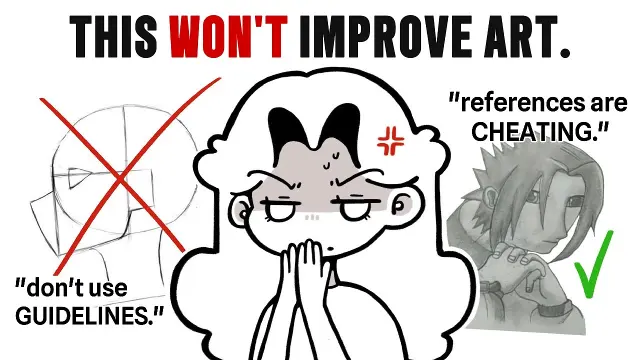
 Exposing the Worst Art Advice You Should Avoid
#Drawing Mistakes
1 ideas
Exposing the Worst Art Advice You Should Avoid
Get new #Drawing Mistakes ideas by email
Every Thursday: the week's best ideas, with the newest from #Drawing Mistakes.
Related tags
Drawing Mistakes and How to Avoid Them
Drawing mistakes are part of learning to draw. Every artist makes them, from the first sketch to the most finished illustration. What matters is understanding the most common problems so you can notice them sooner and correct them with confidence.
Why mistakes happen
Drawing asks your eye, hand, and brain to work together. It is easy to sketch what you think you see instead of what is really there. Beginners often rush, guess proportions, or try to add details too early. Even experienced artists can fall into habits that make drawings look stiff, flat, or unbalanced.
Common drawing mistakes
Read more
- Starting with details too soon instead of blocking in the main shapes first
- Getting proportions wrong, such as making parts too large or too small
- Using very dark lines everywhere, which can make a drawing look harsh and flat
- Forgetting to compare angles, widths, and distances within the subject
- Shading without thinking about the light source
- Pressing too hard with the pencil, which makes corrections difficult
- Copying outlines only, without looking at the larger forms
- Leaving the drawing too symmetrical when the subject is naturally uneven
How to correct them
A helpful habit is to begin with simple shapes and light lines. Think of the drawing as a structure you build in stages. First check the overall size and placement of the subject on the paper. Then compare one part to another: the head to the body, the width to the height, the distance between features or objects.
If something looks wrong, step back and look at the whole drawing rather than focusing on one tiny area. Many problems become clearer when you compare the sketch to the subject from a little distance. Turning the drawing upside down or looking at it in a mirror can also help you spot errors more easily.
Useful drawing habits
- Draw lightly at first so you can adjust shapes freely
- Use simple measuring by sight to compare proportions
- Look for negative space, the empty shapes around your subject
- Keep checking the direction of lines and angles
- Decide where the light is coming from before shading
- Practice short sketches instead of expecting every drawing to be perfect
What beginners should remember
Mistakes are not a sign that you are bad at drawing. They are part of the process. If a sketch goes wrong, use it as practice in observation. Try to identify one thing to improve next time, rather than changing everything at once. Over time, you will develop a steadier hand, a better eye for proportion, and more control over your marks.
The best way to avoid drawing mistakes is not to fear them, but to learn from them. Keep observing carefully, stay patient, and allow each drawing to teach you something useful.
#Drawing Mistakes: frequently asked questions
How should I start a drawing so I make fewer mistakes?
Begin by lightly blocking in the overall shape and placement of your subject before adding anything detailed. Decide how big the drawing will be on the page and where it sits, then build the form in stages from simple shapes. Keeping your lines light at this stage means you can shift and resize things freely as you go.
What are the most common drawing mistakes beginners make?
The usual culprits are jumping into details before the main shapes are settled, misjudging proportions, and pressing down hard with the pencil too early. Another common one is using dark, heavy lines everywhere, which flattens a drawing and makes it look harsh. Many beginners also shade without deciding where the light is coming from, so the form never reads clearly.
How can I tell what is wrong with a drawing that looks off?
Step back and look at the whole drawing instead of hunting for the problem in one small area. Comparing your sketch to the subject from a distance, or viewing it upside down or in a mirror, makes errors in proportion and angle much easier to see. Checking the empty spaces around your subject is another quick way to catch a shape that has drifted.
Why do my proportions keep coming out wrong?
It usually happens because you draw what you expect to see rather than what is actually in front of you. Fix this by comparing parts to each other as you work: the head against the body, the width against the height, the gaps between features. Measuring by sight and checking the direction of lines and angles will steadily train your eye.
Do I need special supplies or tools to avoid drawing mistakes?
No, the habits matter far more than the materials. A pencil you can sharpen, paper, and an eraser are enough to practise light blocking-in, measuring by sight, and judging where the light falls. What improves your drawing is patient observation and short, frequent sketches rather than any particular equipment.
Is it bad if a sketch turns out wrong?
Not at all, mistakes are simply part of learning to draw and every artist makes them. Treat a failed sketch as practice in observation: pick one thing to work on next time instead of trying to fix everything at once. Over time that habit gives you a steadier hand and a much better eye for proportion.
Videos come from YouTube and posts from Instagram; titles and summaries are our own. All rights belong to their creators.