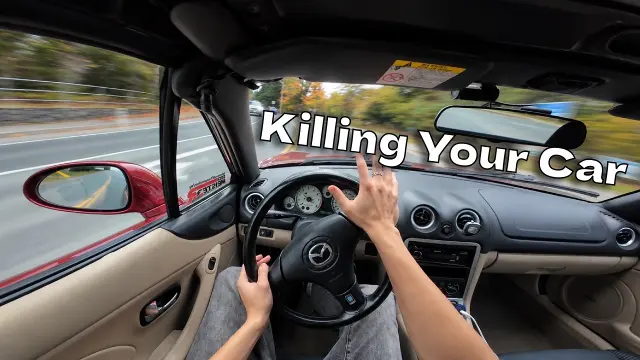
 Everyday Driving Habits That Quietly Damage Your Car
#Driving Habits
1 ideas
Everyday Driving Habits That Quietly Damage Your Car
Get new #Driving Habits ideas by email
Every Thursday: the week's best ideas, with the newest from #Driving Habits.
Related tags
Driving Habits: A Practical Guide to Safer, Smoother Driving
Driving habits are the automatic decisions and physical routines you fall into behind the wheel: how you hold the wheel, when you check your mirrors, how hard you brake, whether you signal before or after you move. Nobody sits down and chooses most of them. They form gradually, through repetition, instruction and imitation, until they feel less like decisions and more like personality. That is exactly what makes them worth examining: a habit runs whether or not you are paying attention, and its effects add up over thousands of journeys.
Why habits matter more than skill
A new driver concentrates hard and drives reasonably well. An experienced driver concentrates less and drives on autopilot, which is efficient until the autopilot is set badly. Most near-misses and small collisions are not caused by a lack of ability but by an unchallenged routine — following too closely because the car ahead happens to be calm, drifting into a lazy lane position on an empty road, or letting attention slide toward the radio, the phone or a conversation whenever the road gets easy.
The main kinds of habits
Read more
- **Observation habits:** mirror checks, shoulder checks, scanning far ahead rather than staring at the car in front, glancing at the instruments now and then.
- **Control habits:** smooth steering, progressive braking, gentle acceleration, correct hand and foot placement, seating posture that lets you reach everything without stretching.
- **Communication habits:** signalling early enough to be useful, using lights appropriately, making eye contact with pedestrians and cyclists where possible.
- **Spacing habits:** keeping a following distance that grows with speed and poor weather, and leaving room to react rather than room to stop perfectly.
- **Care habits:** the small things that wear a car out — riding the brakes downhill, holding the clutch, turning the wheel while stationary, ignoring warning lights.
What beginners should know
Learn the correct version of a routine from the start, because unlearning takes far longer than learning. Keep both hands on the wheel in a comfortable position, sit close enough to press the pedals fully with a bent knee, and set mirrors before moving off. Practise the boring parts deliberately: coming to a full stop, checking a blind spot, indicating at every turn even when the road is empty. Those repetitions become the default you fall back on when you are tired or distracted.
Practical tips for improving
Audit yourself honestly for a week. Notice when you brake late, when you drift, when you reach for something. Pick one habit at a time and attach the new version to a fixed cue — a mirror check every time you approach a junction, a pause before pulling away. Ask a passenger for neutral feedback, since we are poor judges of our own driving. And treat tiredness as information: a fatigued driver follows old habits more rigidly and notices less.
Good driving is not a performance. It is a set of quiet routines that keep you and everyone around you safe, and they can be rebuilt at any point in a driving life.
#Driving Habits: frequently asked questions
How do I start building better driving habits?
Begin by watching yourself honestly for a while and noting the moments you brake late, drift in your lane, or reach for something instead of watching the road. Then change one routine at a time and tie the new version to a fixed cue, such as a mirror check every time you approach a junction. Small changes made deliberately stick far better than trying to overhaul everything at once.
What do I need to get right from the very beginning as a new driver?
Set the basics up before you move: a seating position where you can press the pedals fully with a bent knee, a comfortable grip on the wheel, and mirrors adjusted to your own view. Then practise the unglamorous parts on purpose, like coming to a complete stop, checking blind spots, and signalling at every turn even on an empty road. Learning the correct version first matters, because unlearning a bad routine takes much longer than learning a good one.
Which driving habits matter most to work on first?
Observation and spacing habits tend to pay off the most, since scanning well ahead and keeping a following distance that grows with speed and bad weather give you time to react. Communication habits come next, because signalling early enough to be useful and making eye contact with pedestrians and cyclists prevent a lot of confusion. Control habits such as smooth steering and progressive braking are worth refining too, but they usually improve naturally as the others do.
How can I tell whether my car care habits are actually harming anything?
The habits that wear a car out are usually the quiet ones: riding the brakes on a long descent, resting a hand on the gear lever or foot on the clutch, turning the wheel while the car is stationary, and ignoring a warning light until it becomes a bigger problem. None of them feels dramatic in the moment, which is exactly why they go unnoticed. Watch for them during ordinary journeys rather than only thinking about the car when something sounds wrong.
What are the most common mistakes people make behind the wheel?
The usual culprits are following too closely because the traffic ahead happens to be calm, letting the car drift into a lazy lane position when the road is empty, and letting attention slide toward a phone, the radio, or a conversation as soon as driving gets easy. These are not failures of skill so much as routines that were never challenged. Interrupting them once, deliberately, is often enough to notice how automatic they had become.
How do I break a bad driving habit once it feels automatic?
Pick a single habit, attach the replacement to a cue you already meet regularly, and give it time rather than expecting instant change. A passenger's neutral feedback helps a great deal, since we are poor judges of our own driving. Also treat tiredness as a signal to be careful, because a fatigued driver leans harder on old routines and notices less around them.
Videos come from YouTube and posts from Instagram; titles and summaries are our own. All rights belong to their creators.