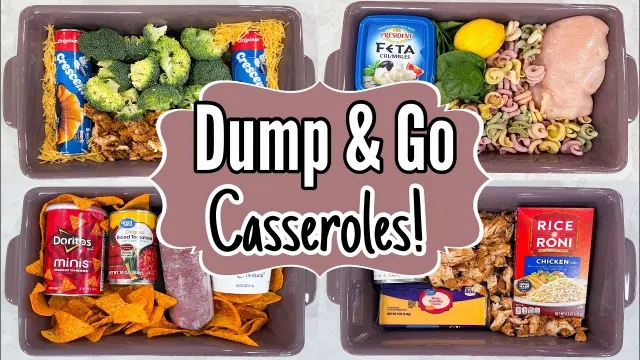
 Six Easy Dump and Go Casseroles for Fall
#Dump and Go
1 ideas
Six Easy Dump and Go Casseroles for Fall
Get new #Dump and Go ideas by email
Every Thursday: the week's best ideas, with the newest from #Dump and Go.
Related tags
Dump and Go Cooking Guide
Dump and go cooking is a popular method of food preparation designed to save time, reduce stress, and simplify daily meal routines. The core concept relies on combining raw or partially prepared ingredients directly into a cooking vessel, such as a slow cooker, baking dish, or freezer bag, with minimal preliminary steps like chopping or browning. Once assembled, the dish cooks largely unattended, making it an ideal approach for busy households.
The origins of this style of cooking stem from traditional slow cooker and casserole recipes, where convenience is paramount. Over time, the method has evolved to encompass freezer-to-crockpot meals, sheet pan dinners, and one-pot stovetop meals. The common thread among all these variations is the reduction of active preparation time in the kitchen.
Main Styles and Techniques
There are several ways to approach dump and go cooking, depending on your kitchen equipment and schedule.
Read more
- Slow Cooker Meals: Ingredients are layered into the pot in the morning, allowing the food to simmer slowly throughout the day.
- Freezer Kits: Raw ingredients, marinades, and spices are combined in storage bags and frozen. When needed, the contents are thawed slightly and transferred directly to the cooking appliance.
- Oven Casseroles: Grains, liquids, proteins, and vegetables are mixed in a single baking dish and placed in the oven until tender.
Essential Tips for Beginners
To achieve the best results with dump and go recipes, a few practical guidelines can help ensure balanced flavors and proper textures.
First, consider the different cooking times of your ingredients. Delicate vegetables like spinach or peas can turn mushy if cooked for many hours, so they are best added near the end of the cooking process. Root vegetables and dense proteins, on the other hand, benefit from longer cooking times.
Second, pay attention to liquids. Because ingredients release moisture as they cook, dump and go recipes often require slightly less liquid than traditional stovetop methods to avoid a watery final dish. Thickening agents, such as cornstarch or flour, are usually stirred in toward the end of cooking or mixed with a small amount of cold water before adding.
Finally, layering matters. Placing harder root vegetables at the bottom of a slow cooker near the heat source ensures they cook thoroughly, while tender meats and sauces rest comfortably on top or throughout the mixture.
By keeping your pantry stocked with versatile staples like canned beans, diced tomatoes, broths, and dried herbs, you can easily adapt the dump and go method to fit whatever ingredients you have on hand.
#Dump and Go: frequently asked questions
What exactly is dump and go cooking?
It is a style of cooking where ingredients go straight into the pot, baking dish, or freezer bag with almost no chopping or browning beforehand, and the appliance takes over from there. The appeal is that hands-on time shrinks to a few minutes while the meal still comes out complete. It works best with dishes that tolerate long, gentle heat rather than quick searing.
What do I need to get started with it?
A slow cooker, an oven-safe baking dish, or a supply of freezer bags will cover nearly every version of this method. Beyond that, a stocked pantry of canned beans, tomatoes, broth, and dried herbs lets you assemble something without a special shopping trip. No specialized gadget is required.
How do I choose between slow cooker meals, freezer kits, and oven casseroles?
Pick based on when you will actually be around: the slow cooker suits days you are out of the house, freezer kits suit batch prep ahead of a busy stretch, and casseroles suit evenings when the oven can run unattended. Think about the texture you want too, since oven baking and slow simmering give noticeably different results from the same ingredients.
How do I stop the finished dish from turning out watery?
Start with less liquid than you would use on the stovetop, because the ingredients themselves release moisture as they heat. If it still looks loose at the end, stir in a little cornstarch or flour slurried with cold water and let it bubble until it thickens. Adding liquid later is easy; taking it back out is not.
What mistakes do beginners usually make?
The most common ones are adding tender items like peas or spinach at the start so they collapse, overfilling the pot with liquid, and stacking dense root vegetables on top where they never get enough heat. Layering roots near the heat source and holding delicate ingredients until the final stretch solves most of it. It also helps to resist lifting the lid repeatedly, since trapped heat is what does the cooking.
What kinds of meals and occasions suit this approach?
It shines on ordinary weeknights when time is short, and it scales well to feeding a crowd or bringing a dish to a gathering. Seasonal comfort food, batch meals for a hectic week, and hands-off family dinners are all natural fits. Anything needing a crisp crust or a precise sear is better handled another way.
Videos come from YouTube and posts from Instagram; titles and summaries are our own. All rights belong to their creators.