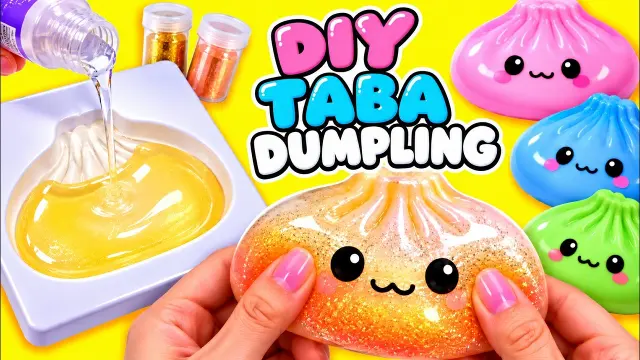
 How to Make a Dumpling Taba Squishy Step by Step
#Dumpling Squishy
1 ideas
How to Make a Dumpling Taba Squishy Step by Step
Get new #Dumpling Squishy ideas by email
Every Thursday: the week's best ideas, with the newest from #Dumpling Squishy.
Related tags
Dumpling Squishy: A Guide to Soft Squishy Fidget Toys
A dumpling squishy is a small soft toy shaped like a dumpling: a rounded base, a plump body and a gathered, pleated top where the wrapper would be pinched closed. It is made to be held and squeezed rather than looked at — pressed, kneaded, stretched and slowly allowed to spring back into shape. The shape is borrowed from a food that appears in many kitchens around the world, from Chinese jiaozi and Korean mandu to Japanese gyoza, Polish pierogi and Italian ravioli, which is part of why the toy reads instantly, even in miniature.
Why people keep them
Squishies belong to a wider family of tactile objects kept on desks, in bags and beside beds. They give the hands something to do during a phone call, a lecture or a quiet moment, and the dumpling shape is especially satisfying because the pleats create ridges to press and roll between the fingers. Many people simply like how they look: small, rounded and slightly absurd, like a cartoon of lunch.
The main kinds
Read more
- Slow-rising foam. A dense foam that returns to shape gradually after a squeeze, giving a soft, doughy feel.
- Kneadable silicone. A stretchy, putty-like material that can be pulled and folded, sometimes with a soft filling inside that shifts under the fingers.
- Filled fabric. A sewn cloth dumpling stuffed with fibre or beads, often the most durable option and the easiest to wash.
- Homemade balloon versions. A balloon filled with flour, cornstarch or small beads and gathered at the top, a common first craft project.
If you want to make one
Fabric and balloon versions are the most forgiving for beginners. The usual mistake is overfilling: leave a little slack so the toy can actually be squeezed, and tie or sew the opening securely. For a pleated look, pinch and stitch evenly around the top before closing. Silicone versions need more care, since the material has to set properly, and it is worth following a tested recipe rather than improvising proportions.
Practical care
Keep squishies away from sharp objects, hot surfaces and direct sun, which can degrade foam and silicone. A light dusting of cornstarch tames a sticky silicone surface. Store them in a small bag or box so they do not collect dust and lint.
A word on safety: fillings can leak through seams, and small parts are a choking risk, so these toys are not suitable for very young children or for anyone who tends to chew on things. Check seams now and then, and retire a squishy once it starts to split.
#Dumpling Squishy: frequently asked questions
What exactly is a dumpling squishy?
It's a small soft toy modelled on a dumpling, with a rounded base, a plump middle and a pleated pinch at the top where the wrapper would be sealed. Unlike a figurine meant for display, it is designed to be pressed, kneaded and stretched, then allowed to slowly return to its shape. The shape is instantly recognisable because dumplings appear in so many food cultures, which is part of its charm.
Which type should I pick?
Slow-rising foam gives a soft, doughy squeeze, kneadable silicone can be pulled and folded, and filled fabric is the sturdiest and easiest to clean. If you want something to keep on a desk or in a bag and wash occasionally, go with fabric; if the tactile pull-and-fold feeling is what you're after, silicone suits better. Homemade balloon versions are the simplest way to try the idea before buying anything.
How do I make one as a beginner?
Fabric and balloon versions are the most forgiving places to start, since the materials are easy to work with and mistakes are fixable. The most common beginner error is stuffing too much in, so leave a little slack so the toy can actually be squeezed. To get the pleated look, pinch and stitch evenly around the top before you close it up.
What mistakes should I avoid?
Overfilling is the big one, because a squishy packed tight can't be squeezed and the seams take the strain. Clumsy closing is the second: tie or sew the opening firmly, or a filling will start working its way out. With silicone, don't improvise the proportions — follow a tested method so the material sets as it should.
How do I keep it in good condition?
Keep it away from sharp objects, hot surfaces and direct sunlight, which break down foam and silicone over time. If a silicone surface turns tacky, a light dusting of cornstarch settles it. Store it in a small bag or box so it doesn't pick up dust and lint.
Is it suitable for young children?
Fillings can escape through seams and small parts pose a choking risk, so these toys aren't appropriate for very young children or anyone who tends to chew on things. Give the seams a quick check now and then, and stop using one once it begins to split.
Videos come from YouTube and posts from Instagram; titles and summaries are our own. All rights belong to their creators.