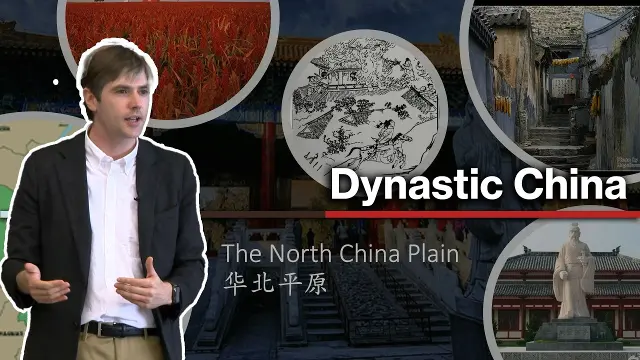
 MIT Lecture One: Introduction to China's Dynastic History
#Dynastic China
1 ideas
MIT Lecture One: Introduction to China's Dynastic History
Get new #Dynastic China ideas by email
Every Thursday: the week's best ideas, with the newest from #Dynastic China.
Related tags
A Beginner's Guide to Dynastic China
Dynastic China is the name given to the long era of Chinese history in which the country was governed by hereditary ruling houses. An emperor stood at the centre of the state, supported by a trained bureaucracy, an army, and a body of ritual and scholarship that gave the whole arrangement its legitimacy. Court, countryside and workshop were tied together by taxation, corvée labour and examinations, and the period left its mark on almost everything later generations would call "traditional China": the written language, poetry, ceramics, architecture, food, family structure and festival calendar.
The dynastic cycle
The usual way of describing this history is as a cycle. A ruling house rises, usually out of disorder, consolidates its hold, and presides over a period of prosperity; later it weakens through factional conflict at court, fiscal strain, rebellion or invasion, until it is displaced by a new house that claims to restore order. Behind the cycle sits the idea of the Mandate of Heaven: rule is justified by good governance, and misrule forfeits it. Because of this, dynasties presented themselves as renewing a tradition rather than breaking with it, and each new house looked back to earlier ones for models of correct government.
Government and the scholar-official
Read more
The distinguishing feature of the Chinese imperial state was its civil service. Officials were recruited largely through written examinations on classical texts, which created a class of scholar-administrators who served across the empire and shared a common literary culture. Below them, local gentry families managed land, charity, schools and disputes. This system made literacy and classical learning the main route to status, and it explains why calligraphy, poetry and commentary on old books were treated as serious public skills rather than private accomplishments.
Art, craft and thought
Dynastic China produced traditions of ink painting and calligraphy in which the brushstroke itself was the subject, landscape painting that treated nature as a space for contemplation, and ceramics prized across the world, from quiet green glazes to painted wares. Architecture worked in timber and tile around courtyards and walls, with an emphasis on hierarchy and orientation. Silk, lacquer, jade and bronze carried both beauty and ritual meaning. Alongside this ran the great streams of thought — the Confucian concern with duty and social harmony, Daoist ideas about nature and non-action, and Buddhist traditions of practice and devotion — which shaped education, art and everyday ethics.
Everyday life
Most people were farmers, and the agricultural calendar governed festivals, marriages and household rituals. Ancestor veneration framed family life; markets, teahouses and temple fairs provided sociability; education began with memorised classical texts. Women's lives varied enormously by class, region and period, ranging from considerable managerial authority within the household to strict confinement in some circles.
Where to begin
- Learn the rough sequence of major dynasties; you do not need exact years at first.
- Follow objects: museum collections of bronzes, ceramics and painting teach the period quickly.
- Read poetry and essays in translation to hear how people described their own world.
- Treat generalisations cautiously; China was vast, and customs differed sharply by region and century.
Dynastic rule ended when the last imperial house fell in the early twentieth century, but its vocabulary, aesthetics and habits of thought remain part of Chinese life.
#Dynastic China: frequently asked questions
Where should I begin if I want to learn about Dynastic China?
Start with the broad shape of the story rather than the fine detail: get a feel for how ruling houses rose, consolidated and eventually lost power, and let the sequence settle before you worry about precision. Then follow objects — bronzes, ceramics, painting — because museum collections teach the look and feel of a period faster than any summary. Reading poetry and essays in translation alongside that gives you the period in its own words.
Do I have to memorise emperors and exact dates to follow it?
No. The dates and reign names matter to specialists, but for a general understanding the useful thing is the rhythm of the cycle — order, prosperity, strain, collapse, renewal — and the institutions that held the state together. Think of it as learning a landscape before learning its survey coordinates.
What actually held the imperial state together?
The civil service was the defining piece: officials chosen largely by written examination on classical texts, which produced a shared literary culture spread across a vast territory. Beneath them, local landowning families handled schools, charity and disputes. That is why literacy and calligraphy counted as public skills rather than private hobbies.
How do the major systems of thought fit into the picture?
They are not separate topics bolted onto the history — they shaped education, art and everyday ethics together. The Confucian emphasis on duty and social harmony informed government and family life, Daoist ideas about nature and non-action coloured painting and contemplation, and Buddhist practice shaped devotion and craft. Seeing them as overlapping rather than competing helps.
What is a common mistake when reading about this period?
Treating it as one uniform thing. China was enormous, and customs, food, women's lives and household arrangements differed sharply between regions and across centuries, so any tidy generalisation should be held loosely. The other trap is assuming dynasty change meant a clean break, when new houses usually presented themselves as restoring an older order.
Videos come from YouTube and posts from Instagram; titles and summaries are our own. All rights belong to their creators.