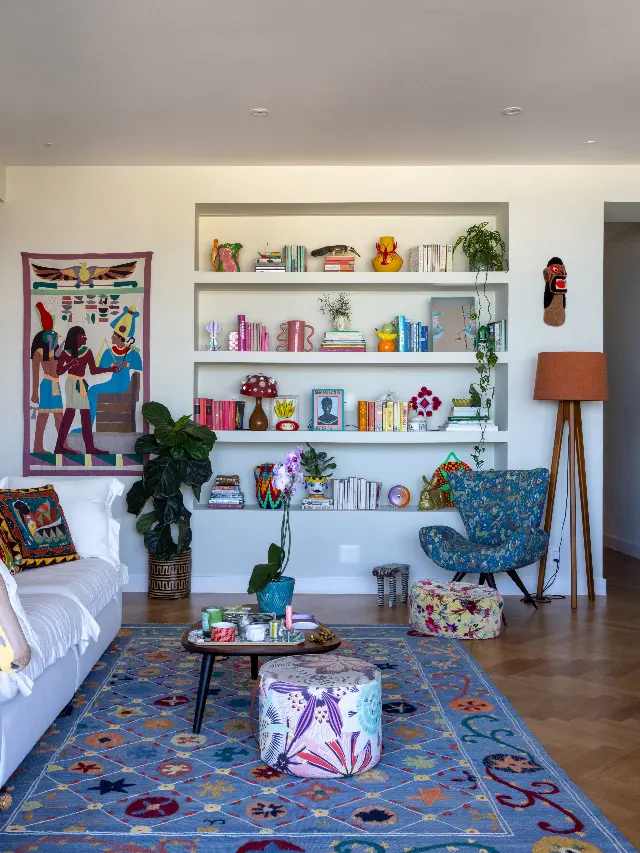
 Playful Interior Mixing Colours and Styles in One Home
#Eclectic Decor
1 ideas
Playful Interior Mixing Colours and Styles in One Home
Get new #Eclectic Decor ideas by email
Every Thursday: the week's best ideas, with the newest from #Eclectic Decor.
Related tags
Eclectic Decor: How to Mix Styles, Colours and Eras at Home
Eclectic decor is a way of furnishing a room by combining pieces from different periods, cultures and styles instead of following a single design language. The word comes from the Greek for "selecting" — the idea being that you choose what you love from many sources and make it work together. It sits between the formality of traditional interiors and the restraint of minimalism: nothing has to match, but everything has to belong.
What makes a room eclectic
An eclectic room is not the same as a cluttered one. The difference is intention. In a successful mix, each object earns its place, and something in the room ties the parts together — a repeated colour, a shared material, a consistent scale, or simply the fact that everything reflects the taste of the people living there.
Most eclectic interiors share a few habits: old and new side by side, a mix of textures such as wood, brass, wool and glass, and at least one piece that is clearly personal rather than bought to fill a gap.
Read more
Where it comes from
Mixing objects from different places has a long history in interiors, but the eclectic approach as a deliberate style grew out of the modern interest in collecting — travel finds, inherited furniture, flea-market discoveries — placed alongside contemporary pieces. It also draws on the tradition of the "cabinet of curiosities", where unrelated objects were displayed together for the pleasure of looking at them.
The main approaches
- Layered and warm: vintage furniture, patterned textiles, books and framed pictures built up over time.
- Modern eclectic: a clean base of plain walls and simple upholstery, animated by a few strongly individual pieces.
- Global mix: objects and textiles from several craft traditions, arranged with respect for what each one is.
- Colour-led: a palette chosen first, then furniture and objects selected to fit it, whatever their origin.
Getting started
Begin with a neutral base — walls, floor, large upholstery — so the eye has somewhere to rest. Then add pieces one at a time, living with each before buying the next. Photograph the room as it evolves; it is easier to see what is working from a picture than from inside the space.
Repeating one element three times is a simple way to hold a mix together: the same shade of green, the same dark wood, the same black metal. Vary the other dimensions instead — size, era, texture.
Practical tips
- Give special pieces space around them so they read as intentional.
- Keep sightlines calm: one strong focal point per view.
- Mix materials, not just colours; contrast is what makes a room feel alive.
- Edit as you go. Eclectic rooms go wrong through accumulation, not through mixing.
- Trust your own attachments. The point of the style is a home that looks like the people in it, and that only comes from choosing slowly and honestly.
#Eclectic Decor: frequently asked questions
What is eclectic decor, and how is it different from a room that is just cluttered?
Eclectic decor means furnishing a room with pieces from different periods, cultures and styles rather than following one design language — the word itself comes from the Greek idea of selecting. The distinguishing feature is intention: in a good mix each object earns its place and something ties the parts together, whether that is a repeated colour, a shared material or a consistent sense of scale. Clutter is what happens when things accumulate without that thread.
How do I start an eclectic room without it turning into a mess?
Begin with a calm, neutral base — walls, floor and the largest upholstered pieces — so the eye has somewhere to rest, then add individual pieces slowly, living with each one before buying the next. Photographing the room as it evolves helps, because it is easier to judge what is working from a picture than from inside the space. Buying everything at once is the usual reason a mix starts to feel chaotic.
What holds an eclectic mix together when nothing is supposed to match?
Repetition is the simplest tool: carry one element through the room — a particular shade, a dark wood, a black metal — and vary everything else, such as size, era and texture. Contrast in materials like wood, brass, wool and glass is what keeps the room feeling alive, while that single repeated thread stops it reading as random. Giving special pieces breathing room around them also makes them look chosen rather than crowded in.
Which style of eclectic decorating should I choose?
It depends on how much visual energy you want: a layered, warm approach built from vintage furniture, textiles and framed pictures suits rooms that will grow over time, while a modern eclectic scheme keeps plain walls and simple upholstery and lets a few strong individual pieces do the talking. There is also a global mix, drawn from several craft traditions and arranged respectfully, or a colour-led version where the palette is chosen first and objects are picked to fit it. Choose the one that matches how you actually live and shop, since the style only works if it can keep evolving.
What mistakes should I avoid with eclectic decor?
The most common failure is accumulation — adding more and more without editing, which tips a mix from intentional to simply crowded. Another is losing the focal point: too many competing statements in one sightline leaves the eye with nowhere to settle. Buying pieces merely to fill a gap, rather than because you are drawn to them, is the third, since the whole point is a home that looks like the people in it.
How do I look after an eclectic room over time?
Treat upkeep as a habit of editing as much as dusting: regularly reassess what is on display, move pieces between rooms, and let go of anything that no longer earns its place. Mixed materials need a little attention in their own way — wood, brass, textiles and glass all age differently, so check each object rather than treating the room as one surface. Storing some pieces and rotating them back in keeps the mix fresh without having to buy anything new.
Videos come from YouTube and posts from Instagram; titles and summaries are our own. All rights belong to their creators.