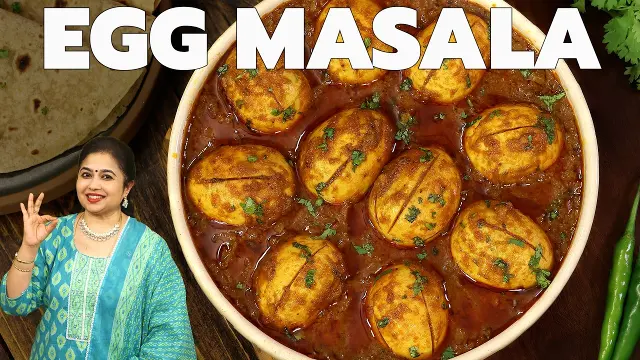
 South Indian Style Egg Masala Curry for Roti or Rice
#Egg Curry
1 ideas
South Indian Style Egg Masala Curry for Roti or Rice
Get new #Egg Curry ideas by email
Every Thursday: the week's best ideas, with the newest from #Egg Curry.
Related tags
Egg Curry: A Comforting Home-Style Dish
Egg curry is exactly what the name suggests: whole or halved boiled eggs simmered in a spiced sauce and served with rice or flatbread. It belongs to the everyday cooking of the Indian subcontinent, where it fills the space between vegetarian food and meat — substantial and satisfying, but cheap and quick enough for a weekday. Every household tends to have its own version, and that variety is the heart of the dish.
How it is built
Almost every egg curry follows the same architecture. Eggs are boiled, cooled and peeled, then usually slit or pricked with a knife or fork so the gravy can reach past the surface. Many cooks pan-fry the eggs first in a little oil or ghee until the outside turns golden and slightly blistered; this gives texture and helps them hold their shape. Separately, a masala is fried — onion, ginger, garlic, tomato, ground spices — until the oil separates and the mixture darkens, which is the signal that the base is cooked through. The eggs go in at the end, with water or another liquid, and simmer briefly so they take on the flavour. You are not really cooking the egg at that point, just warming it through.
Main styles
Read more
- North Indian onion-tomato masala: the most widespread sort, with a thick, glossy gravy and a warm blend of coriander, cumin, turmeric and chilli.
- South Indian coconut versions: thinner gravies finished with coconut milk, curry leaves and mustard-seed tempering, gentler and more aromatic.
- Bengali styles: lighter, often potato-based broths and richer, slower-cooked celebration versions.
- Peppery regional variants: heavily spiced with black pepper and roasted spices, giving a sharper, more pungent result.
Potatoes, peas or a handful of greens often join the eggs, which stretches the dish and adds body.
What beginners should know
Do not overcook the eggs — a hard, grey-ringed yolk adds nothing. Cool them in cold water straight after boiling, which makes peeling easier. When frying the masala, give it time; rushing this stage leaves the gravy tasting raw. If you use coconut milk or yogurt, keep the heat low and stir steadily, or it may split. Salt the gravy before the eggs go in, since the eggs themselves are unseasoned, and let the finished curry rest a few minutes before serving so the flavours settle.
Serving and keeping
Egg curry goes with steamed rice, roti, parotta, appam or bread, and a simple salad or pickle on the side. It keeps well in the refrigerator for a couple of days and often tastes better the next day, though reheat gently to avoid toughening the eggs. Once you know the basic pattern, the spices and the liquid are yours to change.
#Egg Curry: frequently asked questions
How do I start making egg curry if I've never cooked it before?
Begin with the basic pattern rather than a long ingredient list: boil and peel the eggs, fry them briefly until golden, then make a simple onion-tomato masala and let the eggs finish in it. Once that structure feels familiar, you can start swapping spices and liquids to suit your own taste. The dish is forgiving, so a plain first attempt is a fine place to learn.
What do I need on hand to make egg curry?
Eggs, onion, ginger, garlic, tomato and a few ground spices such as coriander, cumin, turmeric and chilli will get you a recognisable curry, plus oil or ghee and something to serve it with. Potatoes, peas or greens are optional additions that make it go further. South Indian versions also call for coconut milk, curry leaves and mustard seeds.
Which style of egg curry should I choose?
If you want the version most people picture, go for the North Indian onion-tomato masala with its thick, glossy gravy. Choose a coconut-based South Indian style when you want something lighter and more aromatic, or a peppery regional variant if you prefer a sharper, more pungent result. Bengali styles range from light potato broths to richer versions kept for special occasions.
How should I store and reheat leftover egg curry?
Keep it covered in the refrigerator and plan to eat it within a short window rather than leaving it sitting around. It frequently tastes better after a rest, because the spices settle into the gravy overnight. Reheat gently rather than at a hard boil, since aggressive heat toughens the eggs.
What can I serve with egg curry, and can I make it for a gathering?
Steamed rice, roti, parotta, appam or plain bread all work, with a simple salad or pickle alongside. For a crowd, choose a richer style and add potatoes or peas to stretch it, then let the curry rest briefly before it goes to the table. It is an easy dish to scale up because it sits comfortably between vegetarian and meat cooking.
What are the common mistakes people make with egg curry?
Overcooking the eggs is the usual one, which leaves a hard yolk and a grey ring, so cool them quickly in cold water after boiling. Rushing the masala is the other — if it doesn't get long enough in the pan, the gravy tastes raw. Also salt the gravy before the eggs go in, and keep the heat low when using coconut milk or yogurt so it doesn't split.
Videos come from YouTube and posts from Instagram; titles and summaries are our own. All rights belong to their creators.