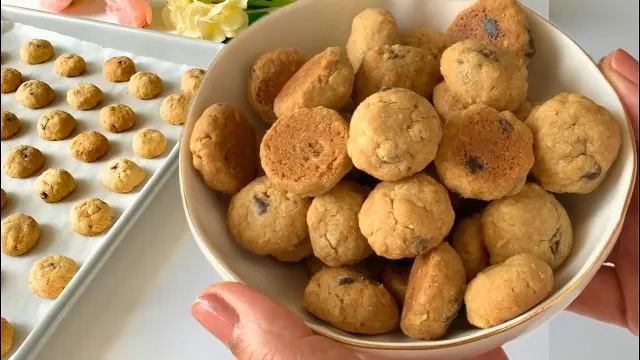
 Ten Minute Eggless Mini Chocolate Chip Cookies
#Eggless Cookies
1 ideas
Ten Minute Eggless Mini Chocolate Chip Cookies
Get new #Eggless Cookies ideas by email
Every Thursday: the week's best ideas, with the newest from #Eggless Cookies.
Related tags
Eggless Cookies: A Beginner's Guide to Baking Without Eggs
Eggless cookies are simply cookies made without eggs. You will find them in homes where someone avoids eggs for allergy or dietary reasons, in vegetarian kitchens, and in kitchens where the egg box happens to be empty on a Sunday afternoon. Whatever brings you to them, the good news is that cookies are one of the most forgiving things to bake without eggs: plenty of traditional biscuits, shortbreads and oat cookies never contained any in the first place.
It helps to know what you are replacing. In a cookie dough, egg does several quiet jobs at once. It binds the ingredients together, adds moisture, brings a little richness, and helps the dough hold air so the cookies lift slightly in the oven. Take it away and nothing collapses, but you do need to cover those jobs with something else.
What can stand in for eggs
- Dairy: plain yogurt, milk or buttermilk add moisture and a tender crumb. A spoonful of yogurt is often enough for a whole batch.
- Ground flaxseed or chia stirred into water until thick and gel-like. This binds well and gives a slightly nutty flavour and a chewier bite.
- Fruit purée: mashed banana, applesauce or stewed prunes. These keep cookies soft and add sweetness, though they also carry their own flavour.
- Silken tofu, blended until completely smooth, for a neutral, dense result.
- Sweetened condensed milk, which brings moisture, sugar and richness together.
- Aquafaba, the liquid from a tin of chickpeas, whipped like egg white. It is the closest thing to a true egg white replacement and takes practice.
- Commercial egg replacers, which are blends of starch and raising agents and follow the packet instructions.
Read more
Each substitute behaves differently, so a recipe is rarely a straight swap. If you are adapting a family recipe, start with a substitute that matches the job you need most: binding for a crumbly dough, moisture for a dry one.
Kinds worth trying
Shortbread-style butter cookies need no egg at all. Oat, nut and seed cookies hold together well with a little syrup. Drop cookies like chocolate chip work happily with yogurt or flax. Thumbprints and jam-filled cookies, biscotti and many spiced holiday biscuits are all naturally egg-free or easily adapted. The hardest recipes to convert are those built on whipped egg whites, such as macarons, so leave those for another day.
Practical tips
Measure your flour carefully, spooning it into the cup and levelling it rather than scooping, as too much flour is the usual reason a cookie turns out dry. Mix only until the flour disappears. Chill the dough before shaping: it firms up, spreads less and browns more evenly. Watch the baking time closely, since eggless doughs can colour quickly because of their sugar and fruit content, and take the tray out while the centres still look slightly underdone. Let the cookies cool on the tray for a few minutes before moving them, as they set as they cool. If a dough feels too crumbly to shape, add liquid a teaspoon at a time rather than more flour.
Store cooled cookies in an airtight tin, and freeze unbaked dough portions so you can bake a small batch whenever you like.
#Eggless Cookies: frequently asked questions
What do I need to bake eggless cookies for the first time?
You need nothing more exotic than the usual cookie staples — flour, fat, sugar and a leavening agent — plus one replacement for the egg's job. Plain yogurt, milk, ground flaxseed or fruit purée will each cover it, so choose whichever you already have in the kitchen. A baking tray, parchment and an airtight tin for storing are about all the equipment required.
What is the best substitute for eggs in cookie dough?
There is no single best one, because the egg is doing several jobs at once — binding, moisture and richness. Pick the substitute that matches what your dough lacks: a spoonful of yogurt or milk for a dry mix, a flax or chia gel for a crumbly one, and fruit purée when you want softness and added sweetness. Expect to adjust rather than swap straight across, since each option behaves a little differently.
Which kind of eggless cookie should I try first?
Shortbread-style butter cookies, oat and nut cookies, and drop cookies like chocolate chip are the easiest places to begin, since many of them never needed egg in the first place. Thumbprints, jam-filled biscuits and spiced holiday cookies also convert without trouble. Leave recipes built on whipped egg white, such as macarons, for another day — those are the hardest to adapt.
How do I stop eggless cookies from turning out dry and crumbly?
Over-measuring flour is the usual culprit, so spoon it into the cup and level it off instead of scooping straight from the bag. Mix only until the flour disappears, and if the dough still feels too crumbly to shape, add liquid a teaspoon at a time rather than reaching for more flour. Chilling the dough before shaping also helps it hold together and spread evenly.
How should I store or make ahead eggless cookies?
Cool them completely, then keep them in an airtight tin, where they hold their texture well for everyday eating. Unbaked dough portions freeze nicely, so you can bake a small batch whenever the mood takes you. Bear in mind that eggless doughs can brown quickly because of their sugar and fruit content, so take the tray out while the centres still look slightly underdone and let the cookies set as they cool.
Videos come from YouTube and posts from Instagram; titles and summaries are our own. All rights belong to their creators.