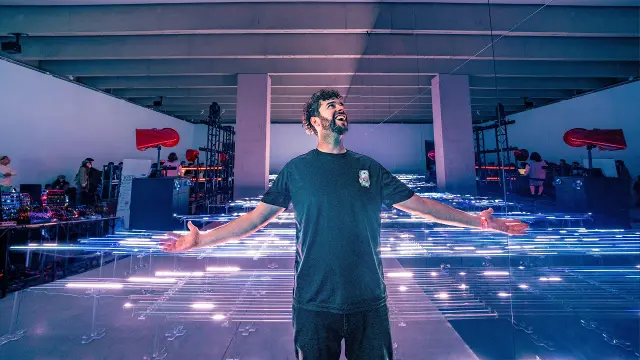
 Inside China's underground synth and modular music scene
#Electronic Music
1 ideas
Inside China's underground synth and modular music scene
Get new #Electronic Music ideas by email
Every Thursday: the week's best ideas, with the newest from #Electronic Music.
Related tags
A Beginner's Guide to Electronic Music
Electronic music is any music built primarily from sounds made or shaped by electronic means: synthesizers, drum machines, samplers, computers, and the studio itself treated as an instrument. That is a broad definition, and it is meant to be. It covers a lullaby made of soft pads and a wall of noise designed to be felt in the chest, and everything between.
Its roots run in two directions at once. One is the experimental studio tradition, where composers recorded real-world sounds onto tape, cut the tape up, played it backwards and layered it into something unrecognisable. The other is popular dance music, where drum machines and synthesizers made it possible for a handful of people to build a track that could move a room. Where those two streams meet is where most of the interesting things happen.
The main styles
The names matter less than what they describe, and most of them overlap. Ambient is quiet, slow-moving and textural, made for background attention rather than the front of it. House and techno are built on a steady, repeating pulse, one warmer and more vocal, the other more mechanical and stripped back. Trance stretches melodies over long builds. Drum and bass pushes the rhythm to a frantic, syncopated sprint. Electro and synth-pop lean on melody and song structure. Experimental and electroacoustic work treats sound itself as the subject. You do not have to pick a side; most people who make electronic music borrow freely.
Read more
How it is made
Three ideas do most of the work. Synthesis creates a sound from scratch by shaping an electrical waveform. Sampling takes an existing recording and turns it into something new. Sequencing arranges sounds in time, either by playing parts in or by drawing them into a grid. A modern setup usually means a computer with a digital audio workstation, perhaps a physical synth or drum machine, and a pair of headphones or speakers you trust.
If you are starting out
Learn one tool properly rather than five badly. A single workstation, a single synthesizer and a single drum machine will carry you a long way, and the limits are useful. Copy things you love, then notice why your version sounds different — that gap is where your taste lives. Finish tracks, even short and imperfect ones; unfinished projects teach much less than a rough ending. Pay attention to volume: long sessions at high levels tire your ears and can do lasting damage, so take breaks and keep the level comfortable.
Finally, listen widely. The people who make the most distinctive electronic music usually came to it from somewhere else — a background in choirs, church organs, field recordings, folk songs, or a decade of dancing. Technique can be learned from tutorials, but the ear you bring is your own.
#Electronic Music: frequently asked questions
How do I start making electronic music if I have no experience?
Pick one piece of software and learn it thoroughly instead of scattering your attention across several. Try rebuilding a track you already love, then listen closely to why yours sounds different — that difference tells you what to work on next. Aim to finish something short rather than perfect, because a rough ending teaches you far more than an abandoned idea.
Do I need a lot of expensive gear to make electronic music?
No — a computer with a music program, a way to hear it accurately, and one instrument you understand well will take you a long way. Limitations are genuinely useful when you are learning, since they force you to solve problems with what you have. Hardware synths and drum machines can come later, once you know what you actually reach for.
There are so many styles — how do I know which one to make?
Start from what you already listen to rather than from a genre label, since the names overlap and shift constantly. If you are drawn to atmosphere, ambient or experimental work may suit you; if you want movement, the pulse-driven styles like house, techno or drum and bass are a natural entry point. Most people end up borrowing from several, so treat the categories as starting places rather than rules.
What are the common mistakes beginners make?
The usual one is spreading yourself thin across too many tools, tutorials and half-started projects. Another is chasing gear instead of practice — the instrument rarely limits you as much as the ear does. Protect your hearing by listening at a comfortable level over long sessions, and build the habit of finishing tracks even when they feel imperfect.
How do I look after a home studio setup?
Keep things simple and consistent: a fixed place to work, cables left connected where possible, and files saved in a sensible folder structure so you can find a project again months later. Back up your work somewhere other than the machine you make it on — losing sessions is what discourages people most. Dust and heat are the quiet enemies of hardware, so cover synths when idle and leave space around anything that runs warm.
Can electronic music work for a specific occasion, like a wedding or a short film?
Yes, and occasion-driven work is a good way to learn, because the brief gives you limits to work within. For a film or video, build around the mood of the scene rather than the drop; for a celebration, favour warmth, space and a steady pulse people can move to. Writing to a purpose also teaches you restraint, which carries back into your own tracks.
Videos come from YouTube and posts from Instagram; titles and summaries are our own. All rights belong to their creators.