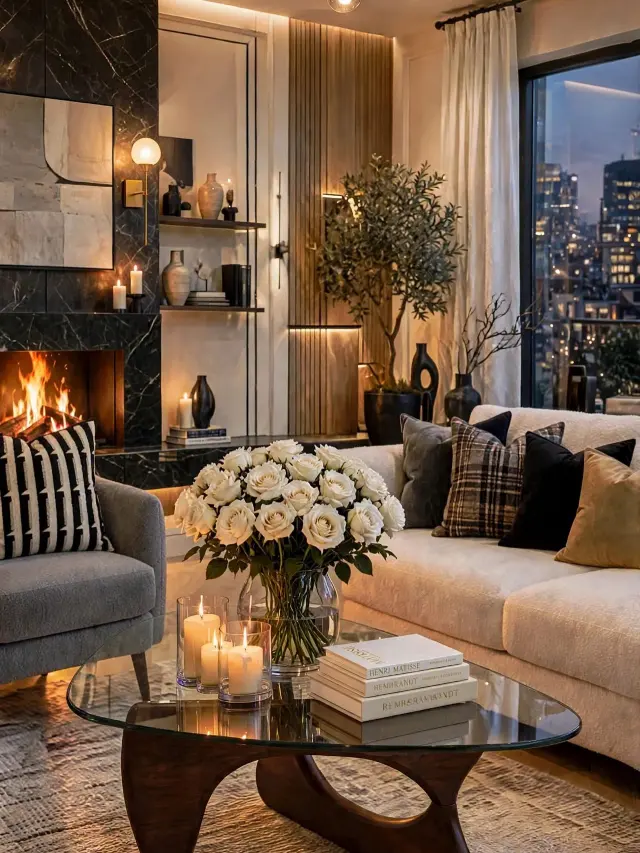
 Cozy and Elegant Home Decor Inspiration Ideas
#Elegant Interiors
2 ideas
Cozy and Elegant Home Decor Inspiration Ideas
Get new #Elegant Interiors ideas by email
Every Thursday: the week's best ideas, with the newest from #Elegant Interiors.
Related tags
Elegant Interiors: A Guide to Timeless, Refined Rooms
Elegance in a room is rarely about expense. It is a quality of calm — the sense that everything present has a reason to be there and nothing is competing for your attention. Understanding what creates that feeling makes it far easier to build, and much easier to keep.
What elegance actually means
Elegant interiors usually share a few quiet habits. Space is left empty on purpose. Colours sit close together rather than shouting at each other. Materials feel good under the hand. Lines are clean, but not cold. The overall effect is generous and unhurried, and it tends to survive changes in taste because it was never built on novelty.
The idea has deep roots in classical architecture, where proportion and symmetry were treated as the foundation of beauty, and in the older European interiors that translated those rules into domestic life. Later movements — minimalism, mid-century design — pushed back against ornament, but kept the same underlying belief: that a room works best when its parts are in balance.
Read more
The main styles
- Traditional: symmetrical layouts, mouldings, panelling, deep sofas, warm woods, patterned textiles. Rooted in historic European homes.
- Transitional: the middle ground. Classic shapes and proportions with simpler surfaces and a lighter palette. Forgiving and easy to live with.
- Modern minimal: few objects, strong geometry, concealed storage, a restrained palette, light treated as a material in itself.
- Old-world or eclectic: layered antiques, worn finishes, books, art hung densely. Elegance through accumulated character rather than polish.
The principles worth learning
Proportion does most of the work. A rug that reaches the furniture, curtains that start at the ceiling line, art hung at eye level — these small corrections change a room more than any purchase.
Palette matters more than any single object. Choose two or three related tones and let texture provide the variation: linen, wool, plaster, stone, aged brass, matte wood. One accent is usually enough.
Light should come in layers. Overhead light alone flattens a room; floor and table lamps, wall lights and candles build depth and make evenings feel considered.
Leave room to breathe. Empty wall space and clear surfaces are not unfinished — they are what lets the eye rest and what makes the well-chosen pieces visible.
Practical advice for beginners
Start with one room and edit before you buy. Remove what you do not love, live with the emptiness for a week, and notice what you miss. Invest in the pieces you touch daily — seating, lighting, handles, bedding — and go modest on anything purely decorative. Measure before committing; scale is the most common mistake. Mix old and new, because a room of only new things feels flat. Finally, keep it usable: elegance that forbids a cup of tea on the table will not last.
#Elegant Interiors: frequently asked questions
How do I begin creating an elegant interior without starting over entirely?
Begin with a single room and edit before you buy anything. Take out the pieces you don't genuinely love, live with the empty space for a while, and pay attention to what you actually miss — that tells you what deserves to come back in a better form. Small corrections to proportion, like pulling a rug under the furniture or raising curtains to the ceiling line, often do more than a new purchase.
What makes a room feel elegant rather than simply expensive?
Elegance comes from calm rather than cost: space left deliberately empty, colours that sit close together instead of competing, and materials that feel good to the touch. Clean lines help, as long as they don't turn cold. Rooms built this way tend to age well because they were never anchored to whatever was fashionable at the time.
Which style of elegant interior should I choose?
It depends on how much visual quiet you want and how much history you like around you. Traditional suits people drawn to symmetry, mouldings and warm woods; transitional softens those classic shapes with simpler surfaces and a lighter palette; modern minimal strips things back to geometry and concealed storage; old-world or eclectic layers antiques and art for character built up over time. Transitional is often the easiest to live with if you're unsure.
How do I keep an elegant room looking cared for over time?
Favour pieces and finishes that improve with handling rather than ones that need protecting — worn wood, aged brass, linen and wool all wear gracefully. Keep surfaces relatively clear so that dusting stays quick and the few objects on display keep their impact, and deal with small repairs before they spread. Most importantly, let the room stay usable; a space where no one dares set down a cup won't hold its elegance for long.
What are the most common mistakes when decorating for an elegant look?
Scale is the biggest one — furniture and lighting chosen without measuring leave a room feeling either cramped or adrift. The second is treating overhead lighting as sufficient, which flattens everything and loses the depth that floor lamps, wall lights and candles create. The third is buying only new things, which tends to give a room a flat, showroom quality; mixing in something older restores the balance.
Can elegant interiors work for a seasonal refresh, such as styling a home for the New Year?
Yes, and it's often the easiest kind of update, because a restrained foundation lets a few changes register clearly. Swap textiles and greenery rather than adding objects, and keep to the same two or three related tones so the new elements settle in instead of cluttering the space. Rearranging what you already own before buying anything usually gets you most of the way there.
Videos come from YouTube and posts from Instagram; titles and summaries are our own. All rights belong to their creators.