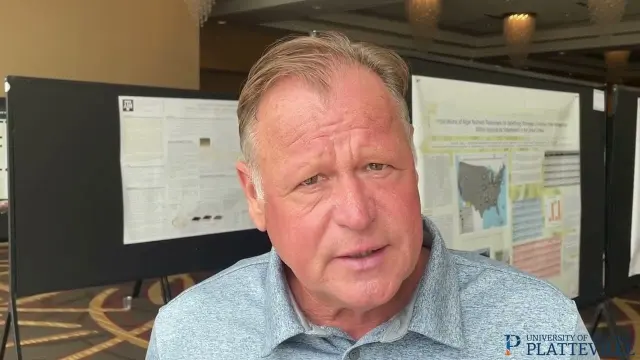
 Capturing Economic Outcomes of Research: Dairy Soil Project
#Environmental Research
1 ideas
Capturing Economic Outcomes of Research: Dairy Soil Project
Get new #Environmental Research ideas by email
Every Thursday: the week's best ideas, with the newest from #Environmental Research.
Related tags
Environmental Research: A Beginner's Guide
Environmental research is the study of the natural world and of the ways people interact with it. It brings together biology, chemistry, geology, physics, economics and social science to answer questions that no single discipline could answer alone: how nutrients move through soil, why a river's water quality shifts over a season, how a forest recovers after disturbance, how a farming community adapts when rainfall patterns change. What unites this work is not one subject but one habit of mind — treating the environment as a system of connected parts, and testing claims against evidence rather than assumption.
Where it comes from
Field observation is the oldest part of the tradition: naturalists recording what grows, breeds and migrates, and when. Modern environmental research grew out of that curiosity combined with laboratory methods and, later, statistical modelling. The field widened considerably once it became clear that pollution, land use and climate do not respect boundaries between disciplines or between countries, which is why so much of it now runs as long-term, collaborative projects rather than one-off studies.
Main kinds of work
Read more
- Field studies observe systems where they are: soil sampling, water testing, species surveys, long-term monitoring plots that are revisited for years.
- Laboratory and mesocosm work isolates particular processes under controlled conditions, so a mechanism can be tested cleanly.
- Modelling uses data and theory to project what may happen under conditions we cannot yet observe.
- Social and economic research examines how people use resources, what they value, and which policies actually change behaviour.
Most real projects combine several of these, and much of the craft lies in making the different kinds of evidence speak to each other.
What beginners should know
Start with a question small enough to answer. "Is this stream healthy?" is a project; "is the environment getting worse?" is not. Learn your methods before your topic, and record everything — date, location, conditions, method, raw numbers — because data you cannot reconstruct later is data lost. Reproducibility matters more than novelty in early work: someone else should be able to repeat what you did.
Reading widely pays off. A study of soil carbon may be transformed by a paper on farm economics, and the reverse is just as true. Learn enough statistics to know what your sample can and cannot support; overreach is the most common weakness in student projects.
Practical tips
Talk to the people who live and work in the place you are studying. Their observations often point to patterns no dataset will show you, and their trust is a research asset. Be honest about uncertainty — ranges and caveats strengthen a finding rather than weaken it. Keep careful notes on failures, too, since a method that did not work is useful knowledge for whoever comes next.
Finally, be patient. Environmental systems change slowly, and the questions worth asking usually take years to answer. Good research in this field rewards consistency and record-keeping more than it rewards speed.
#Environmental Research: frequently asked questions
How do I start doing environmental research if I have no experience?
Begin by narrowing your curiosity down to a question small enough to actually answer, such as whether one stream is healthy rather than whether the environment is getting worse. Learn your methods before you settle on a topic, and record everything you observe — date, location, conditions, method and raw measurements — so someone else could repeat what you did. Reading broadly across fields also helps, since a paper on farm economics can reshape how you interpret a soil study.
What do I need to carry out environmental research?
You mainly need a clear question, a method you understand well enough to explain to someone else, and a disciplined habit of note-taking. Beyond that, the useful assets are access to the place you are studying and the trust of the people who live and work there, since their observations often reveal patterns no dataset shows. Enough grounding in statistics to know what your sample can and cannot support matters just as much as equipment.
Which kind of environmental research should I choose?
It depends on the question you are asking rather than on what sounds most impressive. Field studies suit questions about systems as they actually exist, controlled laboratory work suits isolating a single mechanism, modelling suits conditions you cannot yet observe, and social research suits questions about how people use and value resources. Most real projects blend several of these, so pick a primary approach and stay open to adding others.
How do I keep a long-term environmental project going?
Environmental systems change slowly, so consistency and careful record-keeping carry more weight than speed or novelty. Return to the same sites, follow the same methods, and keep writing down the failures as well as the successes, because a method that did not work is genuinely useful to whoever comes next. Be honest about uncertainty — ranges and caveats make a finding stronger, not weaker.
What are the most common mistakes beginners make in environmental research?
The most frequent one is overreach: drawing conclusions from a sample that cannot support them. Another is poor documentation, which turns collected data into lost data because the conditions behind it can no longer be reconstructed. Starting with a question too broad to answer, or chasing novelty instead of reproducibility, causes the same kind of trouble.
How can I share my findings in a way people trust?
Explain your method plainly enough that someone else could repeat it, and report your results with their limits attached rather than presenting them as settled. Talking with the community in the place you studied also helps, because they can tell you whether what you found matches what they see. Honest caveats tend to earn more confidence than confident claims do.
Videos come from YouTube and posts from Instagram; titles and summaries are our own. All rights belong to their creators.