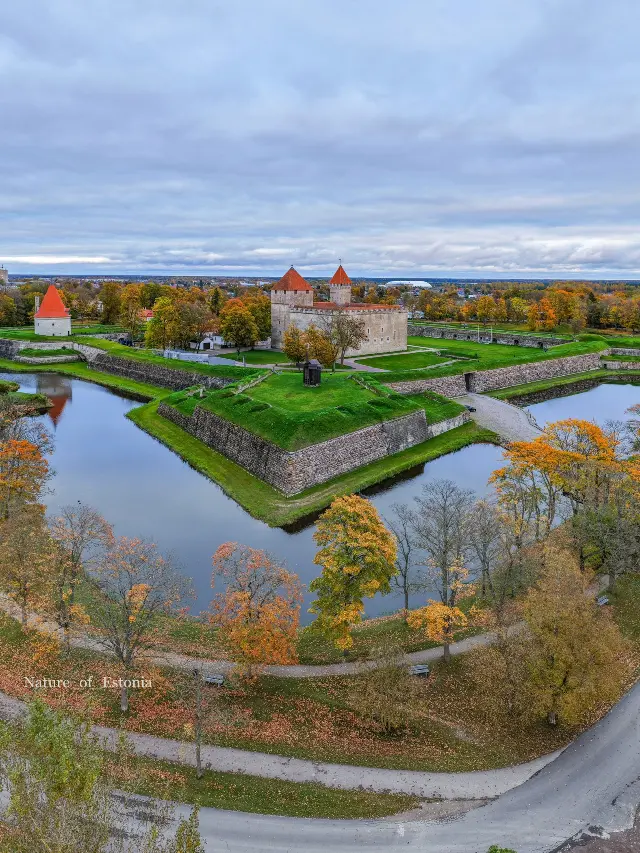
 Exploring the historic architecture of Kuressaare Episcopal Castle in Estonia
#Estonia
1 ideas
Exploring the historic architecture of Kuressaare Episcopal Castle in Estonia
Get new #Estonia ideas by email
Every Thursday: the week's best ideas, with the newest from #Estonia.
Related tags
Estonia: Forests, Song and the Baltic Sea
Estonia is a small country on the eastern shore of the Baltic Sea, the northernmost of the three Baltic states. It shares borders with Latvia and Russia and has a long coastline dotted with islands. Most of the land is flat and heavily forested, and much of it is marsh, bog and meadow. The language is Finno-Ugric, closely related to Finnish and quite unlike the Slavic and Germanic languages around it — which is part of why Estonians hold on to it so proudly.
A culture shaped by many rulers
Over the centuries the territory passed between Danish, German, Swedish, Polish and Russian rule, and each left marks on the architecture, the food and the legal habits of the place. Through all of it, rural folk culture stayed remarkably alive: songs, runic verse, woven patterns, and a deep attachment to the land. The singing tradition is the clearest expression of this. Choirs are a serious business here, and large song celebrations bring tens of thousands of people together to sing in unison.
Where to look
Read more
- Tallinn, the capital, has a compact medieval old town with towers, merchant houses and cobbled lanes.
- Tartu is the university town, quieter and student-shaped, with a lively cultural scene.
- Saaremaa and Hiiumaa, the two largest islands, offer windmills, juniper meadows and empty beaches.
- Lahemaa on the northern coast combines manor houses with forest and shoreline.
- Soomaa in the southwest is wetland country, best explored on foot in bog shoes or by canoe.
- Setomaa in the southeast has its own distinct traditions, songs and crafts.
Nature and the seasons
The four seasons are sharply different, and each changes the country noticeably. Summer brings long, bright evenings when it barely gets dark, and everyone moves outdoors. Autumn is mushroom and berry time, with baskets everywhere. Winter is cold and snowy, with frozen lakes and a hushed, pared-back landscape. Spring arrives late and fast, flooding the wetlands and turning the forests green within weeks.
Sauna is not a spa treat here but an ordinary part of life, often a weekly ritual of heat, cold plunges, birch whisks and long conversations. The older smoke sauna tradition, in which the room is heated without a chimney, is still practised in the countryside.
Food and daily life
Estonian cooking is plain and seasonal: dark rye bread, potatoes, root vegetables, dairy, herring and Baltic fish, forest berries, mushrooms and game. Modern kitchens in the cities build on these ingredients rather than replace them. Daily life is calm and orderly, public services are largely digital, and card or phone payments are accepted almost everywhere.
Practical things worth knowing
- Dress in layers and bring a waterproof outer layer whatever the forecast says.
- In summer, mosquito repellent is not optional near water and forest.
- Transport between towns is easy to arrange; the countryside rewards slow travel.
- Say "tere" when you enter a shop or a room — it is noticed and appreciated.
- Stay on marked trails in bogs and nature reserves, and take your rubbish with you.
- Many places close on public holidays, so plan meals and shopping around them.
Come with patience and curiosity rather than a checklist, and Estonia will show you its rhythm: quiet, green, and full of song.
#Estonia: frequently asked questions
When is the best time to visit Estonia?
There is no single best season — each one changes the country so much that the trip feels different. Summer gives long bright evenings and outdoor life, autumn is for mushrooms and berries, winter brings snow and frozen lakes, and spring arrives late but fast. Choose by what you want to do rather than by a calendar.
What should I pack for a trip to Estonia?
Layers are the key, plus a waterproof outer layer you carry even when the forecast looks fine. Near water and forest in the warm months, mosquito repellent is genuinely necessary rather than a nice extra. Comfortable shoes matter if you plan to walk bogs, trails or cobbled old towns.
How can I experience Estonian culture rather than just see the sights?
Go to a sauna the way locals do, as an ordinary evening of heat, cold plunges, birch whisks and conversation. Look out for choir singing and local song celebrations, and shop at markets where forest berries, mushrooms and dark rye bread show up in season. Saying "tere" when you enter a shop or room is a small habit that is noticed.
What are the most common mistakes visitors make in Estonia?
The biggest one is rushing — treating the countryside as a checklist and trying to cover too much in one trip. Others are straying off marked trails in bogs and nature reserves, leaving rubbish behind, and forgetting that many places close on public holidays. Slow travel rewards far more here than a packed itinerary.
How do I get around Estonia and out into the countryside?
Transport between towns is easy to arrange, so you can base yourself in one place and move on when you like. The countryside is where the country's rhythm shows, so build in time for islands, coastal manors, wetlands and quiet villages rather than day-tripping back and forth. Going slowly is the point, not a compromise.
What local food and crafts should I look for in Estonia?
Estonian cooking is plain and seasonal: dark rye bread, potatoes and root vegetables, dairy, Baltic fish and herring, forest berries, mushrooms and game, with city kitchens building on those ingredients rather than replacing them. For crafts, look to rural traditions such as woven patterns, and to regions like Setomaa with its own songs and handmade work.
Videos come from YouTube and posts from Instagram; titles and summaries are our own. All rights belong to their creators.