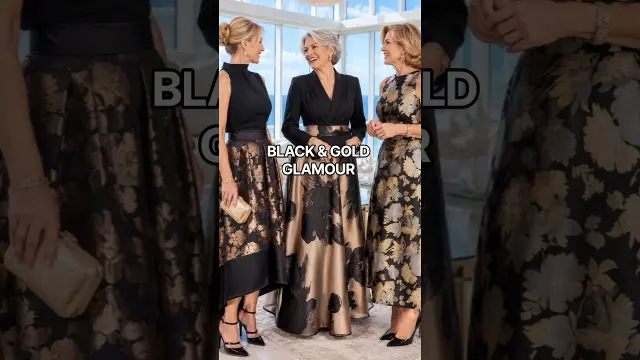
 Timeless Black and Gold Floral Dress Looks for Mature Women
#Evening Fashion
1 ideas
Timeless Black and Gold Floral Dress Looks for Mature Women
Get new #Evening Fashion ideas by email
Every Thursday: the week's best ideas, with the newest from #Evening Fashion.
Related tags
Evening Fashion: A Complete Guide to Dressing After Dark
Evening fashion is the branch of dressing devoted to the hours after sunset — clothes made for dinners, parties, theatres, galas and celebrations, where the lighting is warmer, the pace slower and the occasion a little more deliberate than the day allows. It is less a single style than a set of conventions: darker colours, richer fabrics, more considered silhouettes, and accessories that are allowed to catch the light.
Where it comes from
The idea of changing for the evening is older than most people assume. For centuries, formal gatherings followed rules about what could be worn after a certain hour, and those rules hardened in the nineteenth century, when dinner dress and evening dress separated clearly from daywear. Women's evening clothing grew gradually lighter and freer through the twentieth century, as restrictive corsetry gave way to draped and bias-cut shapes, and as dancing became a normal part of an evening out. What survived from all of this is a simple principle rather than a rulebook: evening clothes signal that the day is finished.
The main dress codes
Most invitations still sort themselves into a few familiar categories. White tie is the most formal, requiring a floor-length gown. Black tie calls for a long dress or an elegant shorter one, with jewellery to match. Cocktail sits a step below, and is where most evening wardrobes actually live: knee-length or midi dresses, a well-cut jumpsuit, a refined two-piece. Smart casual in the evening means polished but relaxed — tailored trousers, a silk blouse, good shoes. When an invitation is unclear, it is almost always safer to dress slightly up than slightly down.
Fabrics and colour
Evening fabric is chosen for how it behaves under artificial light. Silk, satin, velvet, crepe and fine wool all hold their shape and pick up a glow that cotton and linen do not. Dark tones remain the backbone of evening dressing — black above all, then navy, deep green, burgundy and charcoal — because they flatter in low light and let one strong element stand out. That element can be colour, a metallic finish, a print, or simply a striking piece of jewellery. The usual advice is to choose one focal point and let everything else support it rather than compete.
Read more
What beginners should know
Start with one well-fitting dark dress or suit that you genuinely enjoy wearing, and build around it. Fit matters far more than price: a simple garment that sits properly at the shoulder and waist will look better than an elaborate one that does not. Shoes should be comfortable enough to walk in, since evenings tend to be longer than planned. Keep a small, neutral evening bag and one piece of jewellery you trust — they solve most outfits instantly.
Practical tips
Try the whole outfit at home, in the evening, under warm light, and sit down in it before you commit. Check how the fabric creases and whether the neckline stays where it should when you move. A light wrap or jacket makes many dresses work across seasons and venues. Above all, evening fashion rewards ease: the most memorable looks are rarely the most complicated, but the ones worn by someone who feels at home in them.
#Evening Fashion: frequently asked questions
How do I start building an evening wardrobe if I own almost nothing formal?
Begin with a single dark, well-fitting piece you actually enjoy wearing — a dress, a suit or a refined jumpsuit — and treat it as your base rather than buying several half-right things. Fit around the shoulders and waist matters far more than how elaborate or expensive a garment looks. Add a neutral bag, comfortable shoes and a piece of jewellery you trust, and most invitations are already covered.
What should I wear when the invitation doesn't state a dress code?
Read the venue, the hour and the host's own habits, then lean slightly more polished than you think you need to. Dressing a touch too formal is rarely noticed, while turning up underdressed is hard to recover from. A dark midi dress or a tailored two-piece with good shoes sits comfortably in most unclear situations.
Which fabrics and colours work best after dark?
Choose materials that hold their shape and respond to warm artificial light — silk, satin, velvet, crepe and fine wool all do this where cotton and linen tend to fall flat. Deep tones such as black, navy, forest green, burgundy and charcoal flatter in low light and leave room for something to stand out. Pick a single focal point, whether it's colour, a metallic finish or jewellery, and let the rest support it.
How should I care for evening clothes so they last?
Delicate fabrics used for evening wear usually need gentler treatment than everyday clothing, so follow the care label and err toward professional cleaning for structured or embellished pieces. Store dresses and suits on proper hangers with breathing room so shapes don't collapse, and deal with small marks quickly before they set. A light wrap stored with the outfit also protects it from creasing when travelling.
What are the most common mistakes people make with evening dressing?
Buying something elaborate that doesn't fit properly is the biggest one — a simple garment that sits well beats a complicated one that doesn't. Another is competing focal points, where a strong print, statement jewellery and metallic shoes all try to lead at once. Finally, footwear that can't be walked in and a look never tested at home often turn a long evening into an uncomfortable one.
Any ideas for a timeless evening look that works across occasions?
A dark floor-length or midi dress in a fabric with some sheen, paired with restrained jewellery and simple shoes, moves easily between dinners, theatres and celebrations. A floral dress in black and gold tones is a good example of how a print can carry the outfit while everything else stays quiet. Add a wrap or light jacket and the same look stretches across seasons and venues.
Videos come from YouTube and posts from Instagram; titles and summaries are our own. All rights belong to their creators.