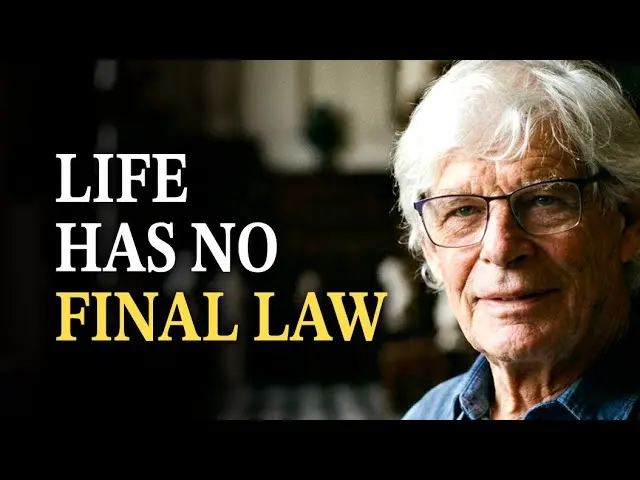
 Stuart Kauffman on Why There Is No Theory of Everything
#Evolution
1 ideas
Stuart Kauffman on Why There Is No Theory of Everything
Get new #Evolution ideas by email
Every Thursday: the week's best ideas, with the newest from #Evolution.
Related tags
Evolution: How Life Changes Over Time
Evolution is the gradual change of living things across generations. It is one of the central ideas in biology because it helps explain why species are so varied, how they are related, and how they adapt to different environments. In simple terms, evolution means that traits passed from parents to offspring can become more common, less common, or change in new ways over time.
The basic idea of evolution is not difficult: living things vary, some of those differences are inherited, and certain traits can help survival or reproduction in a particular environment. Over long periods, these small changes can accumulate. When populations become different enough, they may no longer be able to interbreed successfully, and new species can arise.
Several processes shape evolution. Natural selection is the best known: individuals with traits that help them cope with their surroundings are more likely to leave offspring. Mutation also matters, because changes in genetic material create new variation. Other influences include genetic drift, which is random change in traits in small populations, and gene flow, which happens when individuals from different populations mix and share genes.
Where evolution comes from
Read more
The idea of evolution grew from observation of nature, fossils, anatomy, and the study of heredity. Fossils show that many organisms have changed or disappeared over time. Similar structures in different species suggest common ancestry. Modern genetics later provided a deeper explanation by showing how traits are passed on and how variation arises.
What evolution is used for
Evolution is not something organisms choose or plan. It is a natural process that explains patterns in life. Biologists use it to understand relationships between species, the history of life, disease resistance, domestication, and why some organisms are so well suited to particular habitats. It also helps make sense of why the same body plan can appear in different forms across the animal and plant kingdoms.
Main kinds of change
- Gradual change, where traits shift slowly over many generations
- Rapid change, which can happen when environments change or when populations are under strong pressure
- Divergence, where one ancestral population splits into different lineages
- Convergence, where unrelated species develop similar traits because they face similar challenges
What beginners should know
It helps to remember that evolution works on populations, not on single individuals. A person or animal does not evolve during a lifetime; instead, inherited traits become more or less common across generations. It is also important to know that “better” does not mean perfect. Evolution only favors traits that work well enough in a given setting.
If you are trying to understand evolution, start by looking for patterns: why a trait might be useful, how a species fits its environment, and how closely related organisms share similarities. The more you observe, the more you’ll see that life is shaped by both continuity and change.
Videos come from YouTube and posts from Instagram; titles and summaries are our own. All rights belong to their creators.