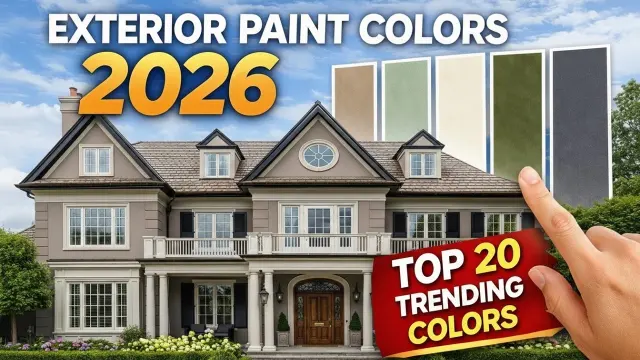
 Popular Exterior Paint Colours and How to Choose Them
#Exterior Paint
3 ideas
Popular Exterior Paint Colours and How to Choose Them
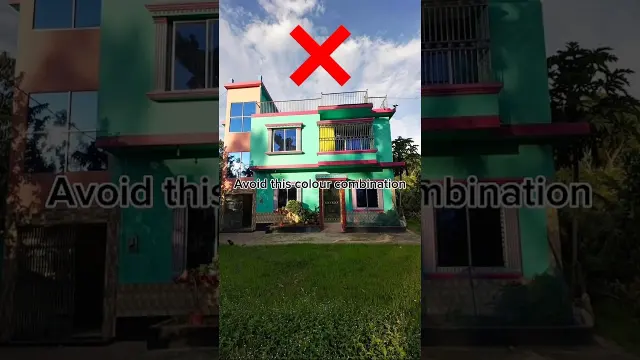 Designer Exterior Colour Schemes for a Luxury Look
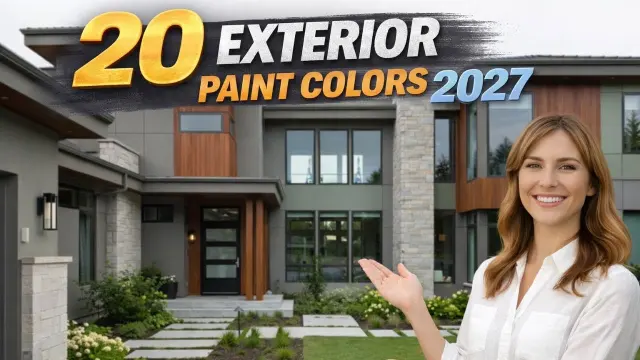 Exterior Paint Trends: Warm Neutrals and Grounded Earth Tones
Get new #Exterior Paint ideas by email
Every Thursday: the week's best ideas, with the newest from #Exterior Paint.
Related tags
Exterior Paint: A Complete Guide to Choosing and Using It
Exterior paint is the coating applied to the outside surfaces of a building — walls, trim, doors, railings, fences and outbuildings. It is formulated differently from interior paint because it has to survive sun, rain, frost, wind and pollution, and because it is exposed to those things year after year with little maintenance in between. Where interior paint is mostly about appearance, exterior paint has to do two jobs at once: it protects the material underneath, and it gives the house its face.
Why the surface matters more than the colour
The single most common reason an exterior paint job fails early is poor preparation, not poor paint. Render, wood, brick, metal and fibre cement all behave differently and need different primers. Loose and flaking paint has to be removed, cracks filled, mould and algae treated and the surface cleaned before anything is applied. Bare timber usually needs a primer and often a knotting solution; masonry needs an alkali-resistant primer; metal needs a rust-inhibiting one. Skipping these steps means the finish will lift, blister or chalk long before it should. A simple rule: spend as much time on preparation as on painting, or more.
Choosing colours
Read more
Exterior colour is read from a distance and in changing light, so it behaves unlike a colour seen on a small sample. North-facing walls look cooler and darker than the same shade in full sun; strong light washes pale colours out and deepens dark ones. Most schemes rely on a main body colour, a contrasting trim colour, and an accent for the front door or shutters. Light neutrals and off-whites make a building look larger and reflect heat; deeper earth tones and greys give a house weight and sit comfortably among trees and gardens. Historic buildings often have characteristically narrow palettes worth respecting. Always test a colour on a large panel in the real light before committing to a whole facade, and look at it at different times of day.
Finishes explained
Paint comes in sheen levels that affect both look and durability. Matt finishes hide imperfections but collect dirt and are harder to clean. Low-sheen and satin finishes are the usual compromise for walls. Gloss and semi-gloss are the most washable and are traditionally used on trim, doors and window frames, where a slight shine also picks out the architecture. The general guidance is: flatter on large, uneven surfaces, shinier on parts that get touched.
Practical tips
Paint in mild, dry weather, avoiding direct hot sun, which makes paint dry too fast and leaves brush marks, and avoid painting when rain is expected before the coating has cured. Work from the top down so drips fall on unpainted surfaces. Stir paint thoroughly, use good brushes and rollers, and keep a note of the exact colours and products used so future touch-ups match. Finally, remember that exterior paint is a maintenance layer: inspecting and refreshing it periodically is far cheaper than repairing the damage that water gets into once the coating breaks down.
#Exterior Paint: frequently asked questions
How do I start an exterior painting project the right way?
Begin with preparation rather than colour selection. Clean the surface, remove loose paint, repair cracks, treat mould or algae, and use the correct primer for the material before you paint.
What kind of exterior paint should I choose for my house?
Choose a paint made for outdoor conditions, since it needs to handle sun, rain, wind, and temperature changes. The best finish depends on the surface and the look you want: flatter finishes hide flaws, while satin or gloss are better for trim, doors, and other detailed areas.
How do I choose an exterior paint colour that looks good outside?
Test colours on a large area in the real light, because outdoor colour changes with weather, shade, and time of day. A good scheme often uses one main colour, a trim colour, and a small accent colour for doors or shutters.
What is the best finish for exterior walls and trim?
For large wall areas, low-sheen or satin finishes are usually a practical choice because they balance appearance and durability. Trim, doors, and window frames often look best in a glossier finish because it is easier to clean and helps architectural details stand out.
How do I take care of exterior paint after it is finished?
Inspect it regularly for peeling, cracking, or worn spots, especially in areas exposed to weather. Keeping the surface clean and touching up damage early helps prevent water from getting underneath the coating and causing bigger problems.
What are the most common mistakes people make with exterior paint?
A common mistake is painting over a poorly prepared surface, which can cause the finish to fail early. Other mistakes include using the wrong primer, painting in harsh weather, or choosing a colour without testing it in the actual light.
Videos come from YouTube and posts from Instagram; titles and summaries are our own. All rights belong to their creators.