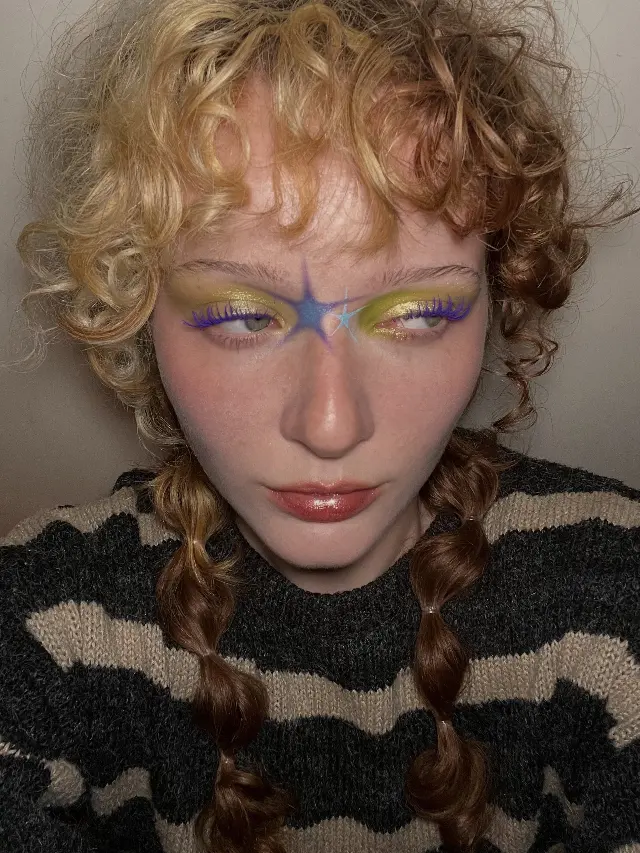
 Star-shaped editorial eye makeup look inspired by a vintage beauty reference
#Eye Makeup Inspiration
1 ideas
Star-shaped editorial eye makeup look inspired by a vintage beauty reference
Get new #Eye Makeup Inspiration ideas by email
Every Thursday: the week's best ideas, with the newest from #Eye Makeup Inspiration.
Related tags
Eye Makeup Inspiration: Styles, Techniques and Tips
Eye makeup is the part of a routine that changes a face fastest. A little definition along the lash line, a wash of colour on the lid, a flick at the outer corner — and the whole expression shifts. It is also the oldest kind of makeup there is: pigments used to darken and frame the eyes appear in ancient Egypt and across South Asia, where kohl was worn for protection, ritual and ornament long before anything like a modern cosmetics industry existed. What we recognise today took shape alongside photography and cinema, when faces had to read clearly from a distance and makeup learned to draw in bolder lines.
The main styles
- Natural: a shade close to your own skin tone, pressed onto the lid, a soft line through the lashes, mascara. The goal is definition, not colour.
- Smokey: two or three dark tones layered and blended outward until the edges disappear. It can be soft and hazy or deep and dramatic.
- Winged liner: a line that follows the lashes and extends past the outer corner. Length and thickness decide whether it reads as everyday or theatrical.
- Graphic: crisp shapes, strong colour, clean edges — geometric lines, blocks of pigment, deliberate negative space.
- Cut crease: a sharp boundary drawn above the natural crease, with a lighter lid beneath it. Precision matters more than blending.
- Halo: darker at the inner and outer corners, lighter through the centre of the lid, which makes the eye appear rounder and more open.
- Editorial: stars, glitter, painted motifs, exaggerated shapes. Wonderful in photographs and for occasions; rarely practical for a working morning.
Technique that carries across all of them
Read more
Almost every look depends on the same few habits. Start with a clean, dry lid and a thin base — a little primer or powder keeps colour from sliding into creases. Build in layers rather than pressing hard once; tap excess off the brush first. Where you place dark colour decides the shape: outer corner lengthens, inner corner brightens, above the crease deepens. Keep a clean, dry brush nearby to soften any edge that has gone too far.
For liner, rest your elbow on the table, support your hand against your cheek and draw in short strokes close to the lashes instead of one long sweep. Lashes and brows frame everything: curled lashes and a groomed brow will finish a look more than another layer of shadow.
Practical notes
Work near a window in daylight; indoor lighting flatters everything and hides uneven blending. Do the eye you find harder first, while your patience is fresh. Adapt placement to your own eye shape rather than to a rule — hooded, deep-set and downturned eyes all take colour differently, and none of them need correcting.
Keep things clean and gentle. Wash brushes regularly, avoid sharing eye products, replace mascara every few months, and take makeup off before sleep. If something stings or itches, stop using it. Inspiration is a starting point, not a test — borrow what you like from a reference and let your own face finish the sentence.
#Eye Makeup Inspiration: frequently asked questions
How do I start with eye makeup if I've never really done it before?
Begin with the smallest possible change: a soft line worked into the lashes and a coat of mascara, done on a clean, dry lid. That alone gives definition and lets you see how your own eye shape takes colour before you add shadow. Once that feels familiar, layer a shade close to your skin tone over the lid and build outward from there.
What do I actually need to keep on hand for eye looks?
A thin base such as a primer or a dusting of powder, a couple of brushes in different sizes, and something to line and darken the lashes will carry most looks. A clean, dry blending brush matters as much as the products themselves, because it is what rescues an edge that has gone too far. Curled lashes and a groomed brow finish a look more than extra shadow does.
How do I choose between a natural look, a smokey eye and winged liner?
Let the occasion and your patience decide: natural reads as definition rather than colour, smokey is about blended depth, and a wing is a single deliberate line past the outer corner. Graphic and cut-crease styles reward a steady hand and precision, while halo placement flatters anyone who wants the eye to look rounder and more open. Editorial ideas with glitter or painted motifs belong in photographs and occasions rather than a working morning.
How should I care for eye makeup and the tools around it?
Wash your brushes regularly, keep eye products to yourself rather than sharing them, and replace mascara on a sensible schedule. Take everything off before sleep, since leaving it on is the surest way to wake up with irritated eyes. If anything stings or itches, stop using it rather than trying to push through.
What are the most common mistakes people make with eye makeup?
Pressing hard once instead of building in thin layers, and skipping a base so colour slides into creases by midday. Another is drawing liner in one long sweep rather than short strokes close to the lashes, with the elbow unsupported. Checking the result in indoor light is the quiet one — it flatters everything and hides uneven blending, so work near a window in daylight instead.
Can I adapt these ideas to my own eye shape and to a special occasion?
Yes — placement matters more than any rule, and hooded, deep-set and downturned eyes all take colour differently without needing correcting. Move dark tones to the outer corner to lengthen, the inner corner to brighten, and above the crease to deepen. For an occasion, borrow a single element from a reference you love, like a star motif or a bolder line, and let your own face finish the rest.
Videos come from YouTube and posts from Instagram; titles and summaries are our own. All rights belong to their creators.