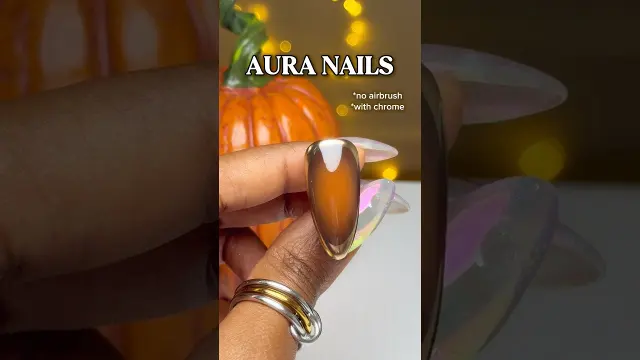
 DIY Aura Nails at Home Using Eyeshadow Instead of an Airbrush
#Eyeshadow Nails
1 ideas
DIY Aura Nails at Home Using Eyeshadow Instead of an Airbrush
Get new #Eyeshadow Nails ideas by email
Every Thursday: the week's best ideas, with the newest from #Eyeshadow Nails.
Related tags
Eyeshadow Nails: Powdered Colour for Soft Nail Art
Eyeshadow nails are a nail art technique that borrows a product from the makeup bag: loose or pressed powder eyeshadow, brushed onto the nail to build colour instead of painting it on with polish. The powder goes on sheer and blends easily, which makes the finish look airbrushed rather than drawn, and it is one of the few nail techniques you can practise at home without special equipment.
Where it comes from
The idea grew out of the habit of using makeup for nail art — blush, highlighter and powder shadow all found their way onto nails long before the technique had a name. It sits closest to the aura and ombré styles, both of which depend on soft, fading edges rather than crisp lines. The look is deliberately delicate: colour that seems to sit inside the nail rather than on top of it.
How it works
Read more
Powder needs something to grip. In practice that means a base layer of polish or gel that is still slightly tacky, or a sticky base coat, so the pigment has something to hold on to. You then apply the shadow with a small brush, a sponge-tipped applicator or a silicone tool, tapping rather than sweeping, and build in thin layers until the intensity is right. A top coat seals everything and stops the colour transferring to clothes or fingertips.
Main styles
- Aura: one strong colour concentrated in the centre of the nail and faded out towards the edges, often over a milky base.
- Ombré: two or more shades blended into each other along the length of the nail, lighter at the tip.
- Smoky tips: dark shadow dusted at the free edge for a gradient French effect.
- Sheer wash: a pale shimmer spread over the whole nail for a lit-from-within finish.
- Layered accents: powder blended over a stamped or painted pattern to soften it.
What beginners should know
Pressed shadow is easier to control than loose pigment, which tends to scatter. Matte powders give the smoothest gradients, while shimmers add texture and can look uneven in thin layers. Work in small amounts — powder builds quickly and is harder to remove than liquid polish without disturbing the base. If you are using gel, remember that any colour sitting between base and top coat must be fully sealed under a properly cured top layer, or it will wear away at the edges.
Loose pigment is fine and travels easily, so keep it away from your face, eyes and any broken skin, and work over a sheet of paper you can fold and tip back into the pot. Keep nails filed smoothly and cuticles moisturised, since powder catches on dry, ragged edges and shows every ridge.
The charm of the technique is its forgiving nature: mistakes are blurred rather than obvious, and the same pot of shadow can produce a different effect depending on the base colour underneath.
#Eyeshadow Nails: frequently asked questions
What exactly are eyeshadow nails, and why would I use powder instead of polish?
The technique means brushing loose or pressed powder eyeshadow onto the nail to build colour, rather than painting it on with polish. Because powder applies sheer and blends into itself, the result reads as airbrushed or lit from within instead of drawn. It is also one of the few nail looks you can attempt at home with makeup you likely already own.
What do I need to get started, and does it have to be gel?
The essentials are a shadow, something sticky for the pigment to grip, a small brush or sponge-tipped applicator, and a top coat to seal it. A regular polish or base coat that is still slightly tacky works fine; gel gives a longer wear but demands that the powder be fully encased under a properly cured top layer. No airbrush or lamp-free gadget is required either way.
Should a beginner choose pressed or loose eyeshadow?
Pressed shadow is the friendlier starting point because you can control how much you pick up, whereas loose pigment scatters and travels. Matte formulas tend to give the cleanest gradients, while shimmers add texture and can go patchy if spread too thin. Whichever you use, tap the product on in small amounts rather than sweeping it around.
How do I keep the powder from rubbing off onto my clothes?
Seal the finished design with a top coat and let it cure or dry completely, since unsealed pigment transfers at the slightest touch. Cap the free edge as well, because powder sitting between base and top layer is the first thing to wear away at the tips. Keeping nails filed smooth and cuticles moisturised also stops colour catching on rough edges.
Which style works best if I want something for a particular occasion?
A concentrated glow in the middle of the nail fading outward suits a soft, everyday look, while graduating shades along the nail or dusting dark powder at the tip reads dressier. A pale shimmer washed over the whole nail is the most understated option, and powder blended over a stamped pattern softens a busy design. The base colour underneath changes the effect, so the same pot can be quiet or bold.
What mistakes should I avoid?
The main one is overloading the brush — powder builds fast and is harder to lift than polish without disturbing the base beneath. Working over a sheet of paper saves the stray pigment for reuse and keeps fine particles away from your face, eyes and any broken skin. Finally, resist the urge to keep blending; the technique rewards a light touch and forgives blurred edges far better than crisp ones.
Videos come from YouTube and posts from Instagram; titles and summaries are our own. All rights belong to their creators.