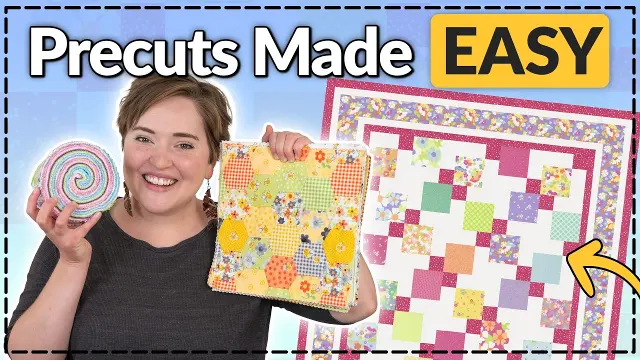
 Choosing the Best Patterns and Fabrics for Precut Quilts
#Fabric Bundles
1 ideas
Choosing the Best Patterns and Fabrics for Precut Quilts
Get new #Fabric Bundles ideas by email
Every Thursday: the week's best ideas, with the newest from #Fabric Bundles.
Related tags
Fabric Bundles: A Beginner's Guide to Precuts
A fabric bundle is a set of pieces cut from one collection and packaged together, so the colours and prints already work as a group. Instead of choosing bolt by bolt and hoping the shades sit happily side by side, you buy a curated handful, usually of fabrics a designer intended to be used together.
Where bundles come from
Quilters have always sewn from what they had: scraps, worn clothing, shirts, flour sacks. The bundle as a product grew out of that habit, plus the practical wish to buy a whole collection at once rather than commit to one print. Shops now group them by collection, by colour family or by theme, and many sewers buy a bundle simply because choosing is the hardest part of a project.
The common cuts
Read more
Sizes and names vary between shops and countries, so read the label rather than assume.
- Fat quarter: roughly a quarter of a metre or yard, cut wide rather than long, which gives a squarer, more useful shape for patchwork than a thin strip.
- Fat eighth: half of that, good for small piecing and appliqué.
- Precut squares: packs of squares in a few standard sizes, stacked and sold as a set.
- Precut strips: narrow strips the full width of the fabric, rolled together, handy for strip piecing and binding.
- Length bundles: several different prints, each a continuous piece of a quarter metre, half metre or yard.
- Scrap bundles: small mixed pieces grouped by colour or theme.
Why they suit beginners
The colour work is done for you, which removes the most common source of doubt. You get many prints without buying metres of each, and the small pieces encourage simple piecing, cushions, pouches, bunting and small quilts. A bundle is also a low-risk way to try a designer or a palette before committing to larger cuts.
What to watch for
- Check the pieces before you cut. Precuts are not always perfectly square, and pinked edges can eat into the measurement.
- Read patterns with care. A pattern written for long yardage may not translate; look for ones designed around precut sizes, or build your own design from the pieces you actually have.
- Buy enough at the start. Collections are not reprinted forever, and a second bundle bought later can differ slightly in shade.
- Washing is debated. Some sewers wash first to shrink and test for colour bleeding; others sew straight from the pack, because small pieces fray and shrink. Pick one approach and stay consistent within a project.
- Store bundles folded flat, out of direct sunlight and away from damp.
Using a bundle well
Mix in a plain solid or a quiet low-volume print to give the busy prints room to breathe. Let the larger motifs stay whole where you can, rather than cutting them into fragments. Keep every offcut bigger than a couple of inches, and a bundle will quietly turn into a second, smaller project later on.
#Fabric Bundles: frequently asked questions
What exactly is a fabric bundle, and how do I start with one?
It's a curated set of pieces cut from a single collection, so the colours and prints are already coordinated for you. Start by picking a bundle you love and a pattern written for that precut size, rather than trying to build a design around yardage. Small projects like cushions, pouches or bunting are an easy first outing.
What kinds of cuts and sizes will I find in a bundle?
Common formats include fat quarters, fat eighths, precut squares, precut strips, length bundles of continuous pieces, and scrap bundles grouped by colour or theme. Naming and dimensions vary between shops and countries, so read the label instead of assuming. If you already have a pattern, check its required precut size before buying.
Should I choose precut squares, strips or fat quarters for my project?
Fat quarters and fat eighths give you a squarer, more flexible piece that suits general patchwork and appliqué. Strips are the natural fit for strip piecing and binding, while square packs save cutting time when a design is built on repeated blocks. Let the pattern's construction decide, and choose the shape that produces the least waste.
Do I need to wash a fabric bundle before sewing with it?
Sewers disagree on this, and both approaches have a reasonable case: prewashing shrinks the fabric and tests for colour bleeding, while sewing straight from the pack avoids the fraying and shrinkage that small pieces suffer in the machine. Whichever you pick, stay consistent within a single project so everything behaves the same way. Store the bundle folded flat, away from damp and direct sunlight, until you use it.
What mistakes should I avoid when working from a bundle?
Buying too little is the big one, since collections aren't reprinted indefinitely and a later bundle can differ slightly in shade. Check the pieces before cutting, because precuts aren't always perfectly square and pinked edges can eat into the measurement. Then add a plain solid or quiet low-volume print to calm the busy motifs, and keep offcuts reasonably large so they become a second small project later.
Videos come from YouTube and posts from Instagram; titles and summaries are our own. All rights belong to their creators.