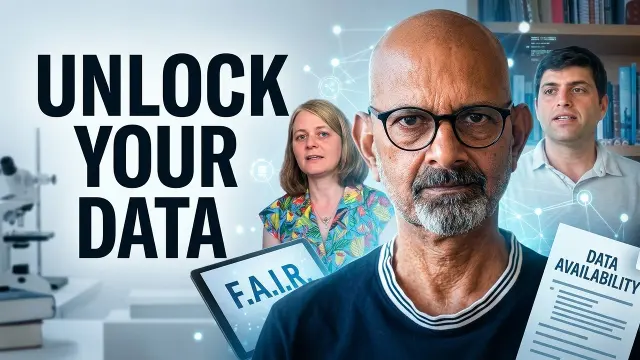
 The Truth About Open Science and Research Data Sharing Practices
#FAIR Principles
1 ideas
The Truth About Open Science and Research Data Sharing Practices
Get new #FAIR Principles ideas by email
Every Thursday: the week's best ideas, with the newest from #FAIR Principles.
Related tags
The FAIR Principles: Making Research Data Usable
Data is only as valuable as the number of people who can actually use it. The FAIR principles are a set of guidelines for looking after research data so that others — colleagues, students, entirely different fields, and your future self — can find it, understand it, and put it to work. The name is an acronym, and each letter describes an ambition rather than a rule you either pass or fail.
What each letter asks for
Findable means a person or a machine should be able to discover the data. In practice that usually starts with a persistent identifier for the dataset, like a DOI, and rich descriptive metadata held in a searchable catalogue. If nobody can locate the thing, nothing else matters.
Accessible is often misunderstood. It does not mean everything must be free to download. It means the conditions of access are clear and stated: whether the data is openly available, available on request, or restricted for legal or ethical reasons. Even when data cannot be shared, the metadata describing it should still be reachable.
Read more
Interoperable concerns fit — whether your data can combine with someone else's. Shared formats, standard vocabularies and consistent units make that possible. A spreadsheet of place names spelled five ways in four languages is technically readable and practically useless.
Reusable is the deepest of the four. It asks for clarity: how the data was collected, by what method, with what processing steps, and under what licence. Provenance and documentation are what let a stranger decide whether your data suits their question.
What FAIR is not
FAIR is not a synonym for open. It is not a piece of software, a single standard, or something a repository automatically grants you. It is closer to a way of thinking about stewardship. Nor is it a checklist to be completed once: data becomes easier or harder to reuse at every stage, from how you name your files to what you write in the accompanying documentation.
Practical starting points
You do not need to overhaul everything at once. Give each dataset a stable identifier and a descriptive title that a stranger would understand. Write the metadata as you go, not months later from memory. Choose open, well-supported file formats where you reasonably can, and record the version of the tools you used. State a licence plainly. Describe the variables, the units, the missing values, and the decisions you made along the way.
Much of this is unglamorous record-keeping, and much of it is simply good manners extended to people you will never meet. That is roughly the spirit of the principles: treat your data as something that will outlive the project that produced it, and leave it in a state you would want to inherit.
#FAIR Principles: frequently asked questions
What do the FAIR principles actually mean in plain language?
They are guidelines for looking after research data so that other people, other fields and your future self can find it, understand it and put it to use. The acronym stands for findable, accessible, interoperable and reusable, and each letter describes an ambition rather than a rule you pass or fail.
How do I start applying FAIR without overhauling everything at once?
Begin with a stable identifier for the dataset and a descriptive title that a stranger would understand, then write the explanatory notes while the work is still fresh. Moving to well-supported open file formats and stating a licence plainly covers a surprising amount of ground with little effort.
Does being FAIR mean my data has to be freely downloadable by anyone?
No — accessible means the conditions of access are clearly stated, not that everything is open. Data can be restricted for legal or ethical reasons while the metadata that describes it stays reachable, so people still know the dataset exists and how to ask for it.
What separates interoperable data from data that is merely readable?
Interoperability is about fit: shared formats, standard vocabularies and consistent units so your files can be combined with someone else's. A file that opens perfectly but spells the same place name several different ways is technically readable and practically hard to merge.
What should I record so that someone else can reuse my data?
Set down how the data was collected, the methods and processing steps behind it, and the licence it carries. Describing the variables, their units, how missing values are marked, which tool versions you used and the judgement calls you made lets a stranger decide whether it suits their question.
What is the most common misunderstanding about FAIR?
Treating it as a synonym for open, as a piece of software, or as a status a repository grants you automatically. It is closer to a habit of stewardship that applies at every stage, from how you name files to what you write in the accompanying documentation — and metadata jotted down months later from memory is usually the weakest link.
Videos come from YouTube and posts from Instagram; titles and summaries are our own. All rights belong to their creators.