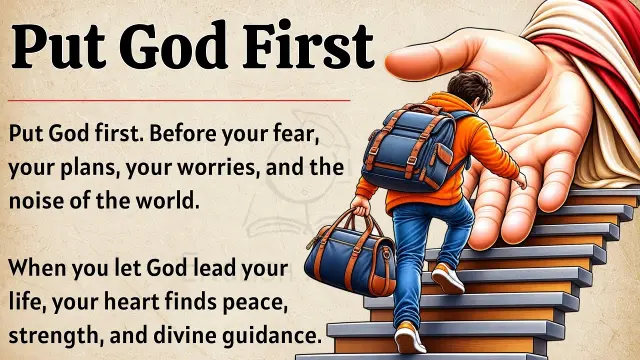
 Put God First Christian Graded Reader Story for English Learners
#Faith
1 ideas
Put God First Christian Graded Reader Story for English Learners
Get new #Faith ideas by email
Every Thursday: the week's best ideas, with the newest from #Faith.
Related tags
Faith: Meaning, Practice, and Everyday Trust
Faith is the confidence or trust a person places in something greater than themselves. For many people, it is linked to religion and belief in God. For others, it can also mean deep trust in life, in values, or in a spiritual path. Faith has existed in human life for as long as people have looked for meaning, comfort, guidance, and hope.
What faith means
At its heart, faith is not only about ideas. It is also about relationship, commitment, and practice. In religious traditions, faith may include belief, prayer, worship, sacred texts, and belonging to a community. In a broader sense, faith can describe the inner strength that helps you move forward even when answers are not complete.
Faith is often shaped by family, culture, and personal experience. Some people inherit a faith tradition from childhood. Others come to faith later in life after reflection, hardship, or a search for purpose. Because it is so personal, faith can look different from one person to another.
Read more
Main forms and expressions
Faith appears in many traditions and styles, including:
- Structured religion, with teachings, rituals, and shared worship
- Personal spirituality, with individual prayer, meditation, or reflection
- Community-based faith, expressed through gatherings, service, and shared values
- Quiet inner trust, where belief is lived through patience, gratitude, and hope
Even within one tradition, people may practice faith differently. Some focus on ceremony and sacred language, while others emphasize service, compassion, or contemplation. There is no single way faith must look.
How people live with faith
Faith is usually strengthened through regular practice. This may include prayer, reading sacred or spiritual texts, attending services, singing, silence, or spending time in nature. Many people also find that faith grows through acts of kindness, forgiveness, and care for others.
For beginners, it can help to start simply. You do not need to understand everything at once. Begin with honest questions, small routines, and a willingness to listen and learn. Faith often deepens over time rather than all at once.
Practical tips for beginning or renewing faith
- Set aside a few quiet minutes each day for reflection or prayer
- Read slowly and think about what a text or teaching means to you
- Join a supportive community if that feels right
- Keep a journal of questions, gratitude, or moments of peace
- Be patient with yourself if belief feels uncertain at times
Faith is not the same as having no doubts. Many people of faith experience uncertainty, and questioning can be part of a sincere spiritual life. What matters is often the direction of your heart, your openness to learning, and the way you try to live what you believe.
In everyday life, faith can offer steadiness. It may help you face change, forgive yourself and others, and keep hope alive in difficult moments. However you understand it, faith is often a quiet source of meaning, courage, and connection.
Videos come from YouTube and posts from Instagram; titles and summaries are our own. All rights belong to their creators.