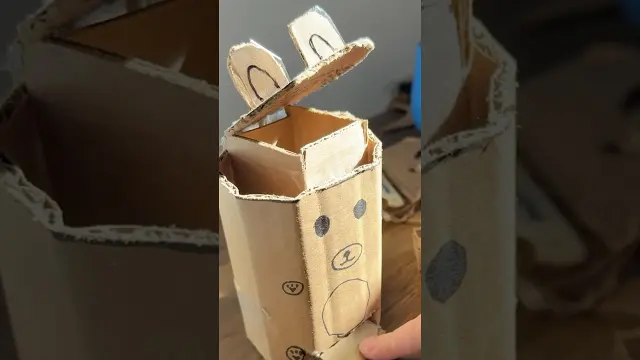
 Making a Bear-Shaped Cardboard Bin With Adley and Niko
#Family Crafts
1 ideas
Making a Bear-Shaped Cardboard Bin With Adley and Niko
Get new #Family Crafts ideas by email
Every Thursday: the week's best ideas, with the newest from #Family Crafts.
Related tags
Family Crafts: A Guide to Making Things Together
Family crafts are the things people make together at home, usually across generations and usually more for the pleasure of making than for the finished object. A grandparent folding paper with a toddler, two siblings building a cardboard house, a parent and child pressing leaves into a scrapbook: the common thread is shared time and hands kept busy. The idea draws on older domestic traditions of mending, sewing, whittling, baking and seasonal decoration, and it has grown into its own pastime as ready-made entertainment has become more common. It is less a single craft than an approach, where the process matters as much as the result.
Why it is worth the mess
Making things together gives children something rare: a task with no wrong answer, where their own choices shape the outcome. It builds patience, fine motor control and the habit of finishing what you start. For adults, it is a slow, absorbing activity that pushes conversation to the side and lets it happen naturally. And a handmade object, however crooked, tends to stay on a shelf far longer than anything bought.
Materials to keep on hand
Read more
You do not need a craft shop. Most family projects run on ordinary household supplies:
- Paper, cardstock and cardboard from boxes and packaging
- Crayons, coloured pencils, washable markers and child-safe paints
- Glue sticks, white glue and low-tack tape
- Blunt-tip scissors, a ruler and a pencil
- Odds and ends: fabric scraps, buttons, ribbon, wool, string
- Natural finds: leaves, twigs, pinecones, stones
A single box with a lid, kept in one place, saves a great deal of searching and makes spontaneous making easier.
Kinds of projects to try
Paper crafts are the easiest introduction, since folding, cutting and collage need almost nothing. Cardboard construction, from simple buildings to small vehicles, suits mixed ages because the shape can stay rough. Nature crafts connect making to the seasons: leaf rubbings, stone painting, twig frames. Textile projects, such as simple hand sewing, pompoms or felt shapes, are slower and better for older children. Then there is the broad category of useful things: decorated jars, bookmarks, homemade cards for birthdays, and small gifts that give a project a purpose.
Practical tips for beginners
Choose one project with a clear, quick outcome for a first attempt; a long, careful build can lose younger makers halfway. Set up before you invite anyone in, so the table is ready and the mood stays easy. Let the child's version be genuinely theirs, even if the colours clash or the edges wander. Keep the rules simple: respect the tools, and clean up together at the end. If something fails, treat it as part of the work.
A note on safety
Match tools to age. Young children do better with blunt scissors, washable glues and paints marked as suitable for children, and any cutting of stiff cardboard is best done by an adult. Keep small parts such as beads and buttons away from children who still put things in their mouths, and work in a ventilated space when using anything with a strong smell.
Start small, keep the box handy and let the making matter more than the result.
Videos come from YouTube and posts from Instagram; titles and summaries are our own. All rights belong to their creators.