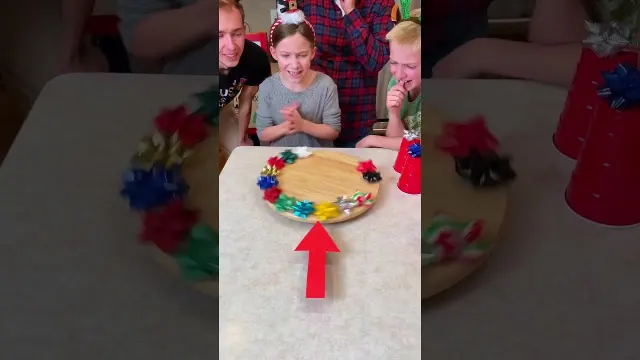
 Christmas Bow Spinner: A Party Game for Family Gatherings
#Family Games
1 ideas
Christmas Bow Spinner: A Party Game for Family Gatherings
Get new #Family Games ideas by email
Every Thursday: the week's best ideas, with the newest from #Family Games.
Related tags
Family Games: A Guide to Playing Together
Family games are games meant to be played together by people of different ages, usually at home, on holiday or at a gathering. They are less a genre than a setting: what makes a game a family game is that a child, a parent and a grandparent can sit at the same table and all take part. That often means short rules, a quick setup and a result that does not depend on reading speed or physical strength.
Where they come from
Games have been played in households for as long as there have been households. Boards and counters survive from ancient civilisations, and many games now sold in shops are polished versions of folk games passed down orally for generations. The modern idea of a family game as a marketed category grew alongside board game publishing in the twentieth century, but the underlying forms are much older: chase games, matching games, guessing games and games of chance.
The main kinds
Read more
- Board and dice games. The oldest and most familiar. Play moves around a track or across a grid, and luck often balances skill so that younger players stay in the running.
- Card games. Simple matching, shedding and trick-taking games work well across ages; a standard deck is enough for dozens of them.
- Party and parlour games. Drawing, describing, miming or answering quickly. These suit larger groups and mixed ages because nobody needs to learn a rulebook.
- Word and pencil games. Played on paper, often in teams, and easy to carry to a restaurant or a train.
- Active and outdoor games. Relays, tag variants and garden games for when the weather and the space allow movement.
- Cooperative games. Everyone plays against the game rather than each other, which can suit families with a wide age gap or with children who find losing hard.
What beginners should know
Start with one game and learn it properly rather than opening five boxes in an evening. Read the rules aloud before play begins, and agree on how long you will play. Choosing a game suited to the youngest player present is usually better than expecting the youngest to keep up with the oldest; many games can be made easier by removing a rule or helping with reading.
Practical tips
Explain the goal first, then the rules — people remember a purpose better than a procedure. Keep turns short so nobody waits long. Let children win occasionally but not always, and praise good decisions as much as victories. Put a clear end point on the evening so the game finishes while everyone still wants more.
Above all, the point of a family game is the shared hour, not the score. A game everyone half understands and enjoys is worth more than a clever one that leaves the youngest watching.
#Family Games: frequently asked questions
How do we get started with family games at home?
Pick a single game and learn it properly together instead of opening several boxes in the same evening. Read the rules aloud before anyone plays, and agree on how long you will play so the session has a clear ending. Explaining the goal first and the rules second helps people remember why they are doing what they are doing.
What do we actually need to play as a family?
Less than most people expect — a standard deck of cards or a simple board with counters covers a great deal, and paper and pencils handle word and drawing games. What matters more is a table everyone can reach, enough seating, and a room where people can hear each other. For active games you mainly need floor space or a garden.
Which kind of family game should we choose?
Choose by the youngest player at the table rather than the oldest, since it is far easier to add a rule for older players than to simplify one on the spot. Card and dice games suit mixed ages because luck keeps younger players in the running, party and parlour games suit bigger groups, and cooperative games work well when the age gap is wide or when a child finds losing hard.
How do we include a much younger child without the game falling apart?
Many games can be softened by dropping a rule or by having an adult help with reading, so look for what can be changed rather than swapping the game entirely. Keep turns short so nobody waits long, and let the youngest win occasionally without letting them win every time. Praising good decisions as much as victories teaches the point of the game, not just the score.
How should we store and look after our family games?
Keep boxes closed and dry, return loose pieces to their bag or tray after each session, and check the contents before the box goes back on the shelf. Cards last longer if they are kept flat and out of damp, and counters are easier to keep together when each game has its own pouch. A quick tidy at the end of the evening saves an argument the next time the box comes out.
What are common mistakes to avoid at a family game night?
The usual ones are teaching too many games at once, letting turns drag, and letting an evening run past the point where everyone is still enjoying it. Another is picking a game the adults find clever but the youngest can only watch. Finish while people still want more, because the shared hour matters more than the result.
Videos come from YouTube and posts from Instagram; titles and summaries are our own. All rights belong to their creators.