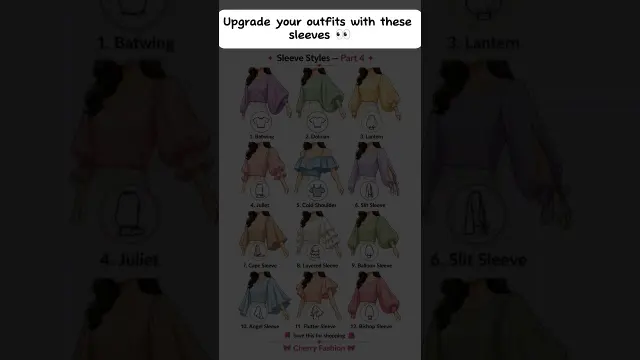
 Twelve More Sleeve Designs That Change How an Outfit Looks
#Fashion Series
1 ideas
Twelve More Sleeve Designs That Change How an Outfit Looks
Get new #Fashion Series ideas by email
Every Thursday: the week's best ideas, with the newest from #Fashion Series.
Related tags
Fashion Series: Building Cohesive Style Stories
What a fashion series is
A fashion series is a group of outfits, looks, or design ideas that belong together through a shared theme, mood, silhouette, color story, or detail. In fashion, the idea of a series is useful because clothes rarely stand alone: they make more sense when seen as part of a wider style story. A series can be very simple, such as several outfits built around one jacket, or more elaborate, such as a set of looks exploring a single shape, fabric, or occasion.
Fashion series have long been used in design, styling, magazines, and personal wardrobes. They help you see how one idea can be repeated in different ways without losing its identity. That is why they are useful both for inspiration and for practical dressing.
Common kinds of fashion series
Read more
Some fashion series are built around a garment type, such as sleeves, collars, skirts, or shoes. Others focus on a style family, such as classic, romantic, tailored, bohemian, or minimalist dressing. You may also see series based on:
- Color palettes, such as soft neutrals, strong contrasts, or all one tone
- Occasions, such as workwear, evening looks, travel outfits, or special events
- Fabrics and textures, such as denim, lace, knitwear, or structured cotton
- Shape and proportion, such as oversized layers, fitted waists, or long lines
- Decorative details, such as pleats, ruffles, embroidery, or sleeves
The strongest series usually have one clear link and enough variation to stay interesting.
How fashion series are put together
A good fashion series balances repetition and change. If everything is the same, it can feel flat. If everything is different, the connection disappears. The easiest way to build one is to choose a base idea and then vary a few elements at a time.
For example, you might keep the same color palette but change the silhouette, or keep the same silhouette but switch the fabric. You can also repeat one signature detail, such as a sleeve shape, a neckline, or a belt, to make the whole series feel intentional.
What beginners should know
If you are new to styling or planning outfits, start small. One or two repeated elements are enough to create a sense of unity. You do not need a complicated concept. In fact, simple series are often the most versatile.
A few helpful habits:
- Choose one main idea before adding details
- Use a limited color range so the looks feel connected
- Repeat shapes or proportions to create rhythm
- Leave room for contrast so each look has its own identity
- Think about how the outfits work in real life, not just in isolation
Practical style tips
When you are creating or choosing a fashion series, ask yourself what should stay consistent and what should change. That question keeps the series clear. You can use accessories, layering, or small structural changes to make one outfit feel fresh without breaking the overall theme.
A fashion series is most successful when it feels both coherent and wearable. Whether you are dressing yourself or studying style for inspiration, it helps you see fashion as a sequence of related ideas rather than a single finished look.
#Fashion Series: frequently asked questions
How do I start a fashion series if I've never built one before?
Pick a single idea you already like wearing — a color you reach for, a sleeve shape, a silhouette — and build a few outfits around it. Keep the rest of each look simple at first, since unity comes from the repeated element, not from piling on details. Starting small makes it easier to see whether the theme actually holds together in real life.
What do I need to put a fashion series together?
Mostly a clear link and a little planning: decide what stays consistent and what you're willing to change, then let a limited color range and repeated shapes do the connecting work. Accessories, layering, and small structural changes are enough to make each outfit feel like its own look. You don't need a complicated concept — a simple one is usually easier to wear.
Which kind of fashion series should I choose?
Choose the anchor that matches what you already notice in your wardrobe — a garment type such as skirts or sleeves, a style family such as tailored or romantic, a palette, a fabric, or an occasion you dress for often. Occasion-based series are the most practical if you're styling yourself, while color and texture themes are easier to explore when you're gathering inspiration. Whichever you pick, make sure it leaves room for variation.
How do I keep a series from looking like the same outfit over and over?
Hold the shared element steady and change something else each time — swap the silhouette while keeping the palette, or keep the shape and change the fabric. Contrast is what gives each look its own identity, so resist matching everything. A signature detail repeated across the looks ties the variation back together.
Can I build a fashion series for a specific occasion?
Yes, and occasions are one of the easiest themes to work with, since the setting already sets limits you can build inside. Repeat a color story or a proportion across the looks, then adjust formality through fabric, layering, and accessories. Think about how each outfit actually behaves when worn, not just how it looks on its own.
What mistakes do people make when creating a fashion series?
The usual ones are going too uniform, so nothing stands out, or changing so much that the connection disappears. Another is choosing a concept that photographs well but doesn't suit ordinary days, which leaves the series unworn. Keeping a single clear link and checking each look for wearability avoids most of it.
Videos come from YouTube and posts from Instagram; titles and summaries are our own. All rights belong to their creators.