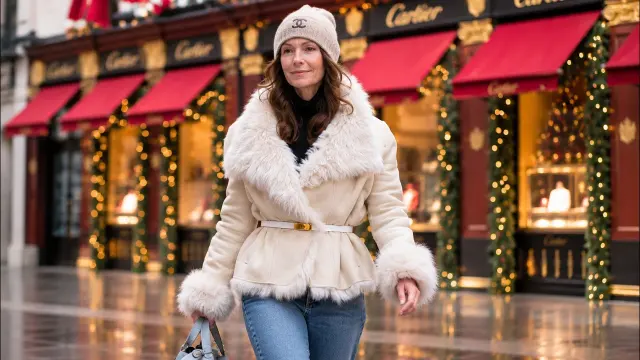
 London Street Style: Autumn to Winter Looks in Mayfair
#Festive Style
1 ideas
London Street Style: Autumn to Winter Looks in Mayfair
Get new #Festive Style ideas by email
Every Thursday: the week's best ideas, with the newest from #Festive Style.
Related tags
Festive Style: A Guide to Dressing for Celebrations
Festive style is the art of dressing for occasions that ask for a little more than everyday clothes. It covers the whole run of celebrations in the calendar — the end-of-year holidays, weddings and anniversaries, birthdays, christenings, New Year's Eve, the office party, the meal that stretches from afternoon into the night. What ties it together is not one look but an intention: you are dressing for an occasion, for other people, and for a mood of generosity and warmth.
Where it comes from
Dressing up for shared celebrations is older than any single tradition. Most cultures set aside certain days marked by food, music, light and company, and marked them in clothing too: the good suit put by, the dress saved for years, the jewellery that only leaves its box in December. Festive dressing as we know it came together around the nineteenth century's enthusiasm for seasonal ritual and was remade in the twentieth by the evening dress, the cocktail party and the department-store window. Its rules have loosened a great deal, but the impulse is unchanged.
The main styles
Read more
Two broad directions exist, and most outfits lean one way. The first is celebration by shine: sequins, satin, silk, velvet, metallics, deep saturated colour, jewellery that catches the room's light. The second is celebration by texture and ease: heavy knitwear, tartan and plaid, wool and cashmere, faux fur trims, embroidered or hand-knitted pieces, richer versions of clothes you already like to wear. Around these sit the traditional and folk-inspired looks — national costume, embroidered dress, the dress passed down — which carry more meaning than any palette.
Colour and fabric
Red, green, gold, winter white and jewel tones such as emerald, ruby and sapphire are the classic choices, though black and silver do the same work. What makes a fabric read as festive is usually its surface: how it holds light, how it drapes, how it feels. Velvet, satin, taffeta, brocade, lace and sequinned cloth all behave differently on the body, so try them in front of a mirror in the light you will actually be seen in.
Practical advice for beginners
Start with one piece you love and build the rest around it, rather than buying a whole outfit at once. Fit matters more than sparkle; a well-altered simple dress or jacket always looks more festive than something expensive that pulls at the shoulder. Think about the evening in practice — how long you will stand, whether you will walk far, how warm the room is — and choose shoes and layers accordingly. Keep a single repeated accessory or signature detail to make your outfits look like yours. And if you celebrate often, buy for repetition: a piece that works at three different events is worth far more than one that works at one.
Comfort and confidence
The best festive clothes are the ones you forget you are wearing. Choose fabrics that do not itch, cuts that let you sit and eat and hug people, and colours you feel well in rather than colours you think you should wear. Style at a celebration is mostly a matter of ease: arrive comfortable, and the room will read it as confidence.
#Festive Style: frequently asked questions
How do I start building a festive outfit without buying everything at once?
Pick one piece you genuinely love — a dress, a jacket, a knit — and let the rest of the look grow around it. Fitting and altering that piece well matters more than how much it cost or how much sparkle it has. Once it feels right on you, shoes, layers and an accessory are much easier to choose.
What is the difference between shiny festive dressing and the texture-based kind?
One direction creates celebration through shine: sequins, satin, velvet, metallics and deep saturated colour that catch the light. The other creates it through texture and ease — heavy knits, tartan, wool, embroidery and richer versions of clothes you already wear comfortably. Most outfits lean one way, and neither is more correct than the other; it comes down to the mood of the event and how you want to feel in the room.
Which colours and fabrics read as festive?
Red, green, gold, winter white and jewel tones like emerald, ruby and sapphire are the classics, while black and silver do the same work in a quieter way. What actually makes a fabric feel celebratory is its surface — how it holds light, drapes and feels against the skin. Try velvet, satin, taffeta, brocade and lace in front of a mirror under the kind of light you will really be seen in.
How can I stay comfortable at a long celebration without looking underdressed?
Think through the evening in practical terms before you dress: how long you will be standing, how far you will walk, how warm the room will be. Choose fabrics that do not itch, cuts that let you sit, eat and hug people, and shoes you can actually last in. Comfort is read as confidence, so the best festive clothes are the ones you forget you are wearing.
What mistakes should I avoid when dressing for a celebration?
The common ones are buying a whole outfit in one go, chasing sparkle over fit, and wearing a colour you think you should wear rather than one you feel well in. Poor fit shows more than any expensive detail, and a piece that only works for a single event is rarely worth it. If you celebrate often, buy for repetition and keep one signature accessory so your looks feel like yours.
Do festive outfits have to follow tradition or a particular style?
Not at all — festive dressing is defined by intention rather than one look: you are dressing for an occasion, for other people, and for a mood of warmth and generosity. Traditional and folk-inspired pieces, including national costume and handed-down dress, carry meaning that no palette can, but they sit alongside modern interpretations rather than replacing them. The rules have loosened a great deal, so the direction you take is yours to choose.
Videos come from YouTube and posts from Instagram; titles and summaries are our own. All rights belong to their creators.