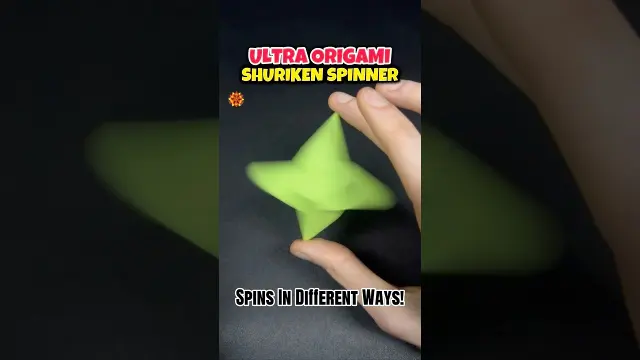
 Spinning Origami Ninja Star Paper Toy Tutorial
#Fidget Craft
1 ideas
Spinning Origami Ninja Star Paper Toy Tutorial
Get new #Fidget Craft ideas by email
Every Thursday: the week's best ideas, with the newest from #Fidget Craft.
Related tags
Fidget Craft: Handmade Toys for Restless Hands
A fidget craft is any small object you make by hand for the simple purpose of being handled: spun, folded, clicked, rolled, twisted or traced between the fingers. It sits at the meeting point of toy-making, paper craft and jewellery-making, and it asks very little of you — a bit of wire, a sheet of paper, a length of cord, a few beads.
Where the idea comes from
Keeping the hands busy while the mind works is an old habit. Worry beads and prayer beads appear in many cultures, strung to be counted and turned; the Greek komboloi and the begleri are close cousins, made to be flipped and clacked rather than counted. Paper folding traditions in Japan turned a square sheet into playthings that fit in a pocket. What is new is only the framing: the recognition that a small, pleasing object to fiddle with can help a restless hand settle, and that making one yourself is half the pleasure.
The main kinds
Read more
Fidget crafts divide roughly by material and by motion.
- Paper: origami toys that fold flat and spring open, paper spinners, folded cubes, little fortune-tellers. The cheapest way in, and the least messy.
- Cord and beads: knotted strings, worry beads, begleri-style two-bead swings, sliding knot bracelets. Repetitive and calming to make.
- Wire and metal: simple loops, rings and puzzle pieces bent from craft wire, often combined with a marble or a bead.
- Wood and clay: sanded shapes, small discs, air-dry clay pieces pressed with texture so they feel interesting under the thumb.
- Sewn and stuffed: tiny fabric pockets filled with rice or lentils, marble runs stitched into cloth, felt shapes with moving parts.
If you are just starting
Choose one motion you like — spinning, sliding, folding — and make the simplest version of it. Paper spinners and bead strings are forgiving first projects; wire takes a little more patience with your hands but no special tools.
- Work on a tray or cloth so small parts do not escape.
- Sand or smooth every edge. A fidget toy is held far more than it is looked at, and a rough spot will put you off using it.
- Test the weight as you go. Most of the satisfaction lives in how an object balances, not in how it looks.
- Keep moving parts secured: knots glued, wire ends turned inward, beads larger than a choking gauge if small children are nearby.
- Make two. The second one is always better, and the first makes a good gift.
A note on materials and care
Natural materials — paper, cotton cord, untreated wood — age gracefully and are easy to repair. Keep paper pieces away from damp, and check cord for fraying now and then, replacing it before it gives way. None of this is a remedy for anything; it is simply a craft that rewards attention, and gives your hands something quietly absorbing to do.
#Fidget Craft: frequently asked questions
How do I start making fidget crafts if I've never done it before?
Pick one motion you actually enjoy — spinning, folding, sliding — and build the simplest version of it, since paper spinners and bead strings are far more forgiving than wire. Work over a tray or cloth so small pieces don't escape, and smooth every edge as you go, because a fidget object is held far more than it is looked at.
What supplies do I need to begin?
Very little: a sheet of paper, a length of cord, a few beads, or some craft wire will cover most projects, and none of it calls for special tools. Add something to sand or smooth edges with, plus a tray to keep small parts from rolling away.
Which kind of fidget craft should I choose?
Choose by the motion you find pleasant rather than by how the finished object looks. Paper suits anyone who wants something clean and quick, cord and beads reward people who find repetitive knotting calming, and wire or wood ask for a little more patience with your hands.
How do I look after a handmade fidget toy?
Keep paper pieces away from damp, and check cord now and then for fraying so you can replace it before it gives way. Natural materials age gracefully and are easy to mend, which is a good reason to favour them in the first place.
What mistakes do beginners usually make?
Skipping the sanding is the common one — a rough spot or a lumpy knot makes a toy unpleasant to hold, and it ends up forgotten in a drawer. Also secure anything that moves: glue knots, turn wire ends inward, and keep tiny beads well away from small children.
Would a handmade fidget craft make a good gift?
Yes — a small object made to be handled feels personal in a way bought things rarely do, and the making is quick enough to repeat for several people. Do a practice version first, since the later attempt will balance better and the earlier one still makes a fine present.
Videos come from YouTube and posts from Instagram; titles and summaries are our own. All rights belong to their creators.