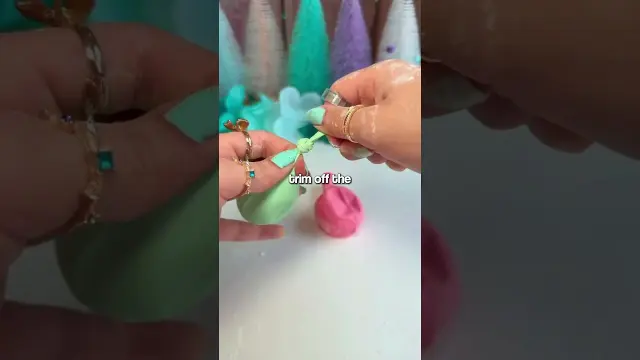
 Homemade Globbles Squishy Fidget You Can Make Yourself
#Fidget Toy
1 ideas
Homemade Globbles Squishy Fidget You Can Make Yourself
Get new #Fidget Toy ideas by email
Every Thursday: the week's best ideas, with the newest from #Fidget Toy.
Related tags
Fidget Toys: A Beginner's Guide to Keeping Hands Busy
Fidget toys are small objects made to be handled, squeezed, spun, clicked or rolled, usually while the hands are otherwise idle. Their appeal is simple: when the fingers have something to occupy them, attention often settles more easily on whatever else is happening — a conversation, a lesson, a meeting or a long wait.
Where the idea comes from
Busy hands are nothing new. People have always knitted, twiddled pencils, doodled in margins or turned a ring around a finger during moments of concentration. The fidget toy as a category grew out of that everyday habit, popularised in the 2010s by small handheld devices designed specifically for repetitive movement, and later by the spinner, which brought the idea into the mainstream almost overnight. Many of the objects now sold as fidget toys are simply refined versions of things people have fiddled with for generations: smooth stones, worry beads, knotted string.
The main kinds
Read more
- Squishy toys: soft, stretchy or dough-like objects that can be squeezed and kneaded. They tend to be quiet and forgiving, and suit people who find pressure calming.
- Spinners and fidget spinners: weighted discs that rotate between the fingers, offering a steady, repetitive motion.
- Clickers and switches: small devices with buttons or sliders that produce a light click or bump, appealing to those who like tactile feedback and sound.
- Beads, chains and coils: strings of connected pieces that can be pushed, threaded or rolled from hand to hand.
- Putty and modelling compounds: pliable materials that can be stretched, folded and reshaped, closer to a craft material than a gadget.
What beginners should know
There is no right way to use a fidget toy, and no single type suits everyone. The most useful approach is to think about what kind of movement feels pleasant to you: slow and rhythmic, firm and steady, or quick and repeated. Something that fits easily in one hand and can be used without looking at it is usually the most practical, since the point is to occupy the fingers, not the eyes.
Consider the setting too. Some toys are silent and discreet, good for shared spaces; others click or whirr and are better kept for home. Durability matters more than novelty — a toy that crumbles, sheds or falls apart after a week is not much use.
Practical tips
Start with one object rather than a collection, and give yourself a few days with it before deciding whether it helps. Keep it clean, especially putty and squishy items, which pick up dust and lint. If a toy is meant for a child, check that it has no small parts that could come loose, and treat it as a toy rather than a tool. And if you find that a particular fidget does nothing for you, that is normal — it is a matter of personal fit, not a failure.
#Fidget Toy: frequently asked questions
How do I pick a first fidget toy if I have never used one?
Start by noticing which kind of movement feels pleasant to you — slow and rhythmic, firm and steady pressure, or quick repeated motion — and let that point you toward spinners, squishies or clickers. A single object that fits comfortably in one hand and can be used without looking down is usually the most practical choice. Try just one for a few days rather than buying a collection, so you can tell whether it actually suits you.
Which type is best for using around other people, like a meeting or a shared workspace?
Quiet, discreet options tend to work best in shared spaces: squishy toys, putty, or beads and coils that move without noise. Clickers and spinners that whirr or produce a light click are usually better kept for home or for moments when nobody nearby will be distracted. Whichever you choose, something small enough to use out of sight under a table is the most considerate.
How should I look after a fidget toy so it lasts?
Keep it clean, and pay particular attention to putty and squishy items, which readily pick up dust and lint from pockets and bags. Store soft or pliable toys somewhere closed rather than loose in a bag with crumbs and grit. If a toy starts to crumble, shed or come apart, that is a sign to replace it rather than keep handling it.
What mistakes do people usually make when they first try fidget toys?
The most common one is buying a whole collection at once instead of giving a single object a fair trial. Another is choosing something showy or noisy that draws more attention than it absorbs, or one that needs your eyes on it when the point is to keep the hands busy. And if a particular fidget does nothing for you, that is a matter of personal fit rather than something you did wrong.
Are fidget toys suitable to give to a child?
They can be, but check the object first for small parts that might come loose, and treat it plainly as a toy rather than a tool or a piece of equipment. Soft, one-piece items tend to be the simplest place to start, with anything made of many small connected pieces better suited to an older child.
Can I make a fidget toy myself instead of buying one?
Yes — homemade versions such as a stretchy, dough-like squishy are a popular craft project and easy to put together from simple materials. Making one yourself also lets you adjust the size and firmness to what feels right in your hand. As with anything handmade, check it holds together well before using it regularly.
Videos come from YouTube and posts from Instagram; titles and summaries are our own. All rights belong to their creators.