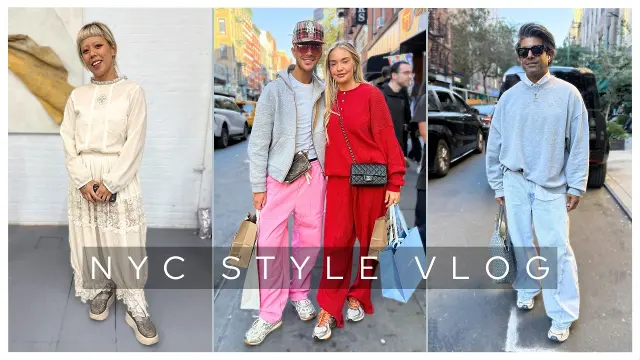
 What Stylish New Yorkers Are Wearing: NYC Street Style
#Fit Checks
1 ideas
What Stylish New Yorkers Are Wearing: NYC Street Style
Get new #Fit Checks ideas by email
Every Thursday: the week's best ideas, with the newest from #Fit Checks.
Related tags
Fit Checks: A Simple Guide to Sharing an Outfit
A fit check is a short, visual way of presenting an outfit. You stand where the camera can see you, often from head to toe, and show what you have put together: the clothes, the shoes, the layers, the accessories. The point is not a formal fashion shoot. It is closer to saying, "This is what I'm wearing today," with a little movement and personality.
The phrase comes from everyday speech: a "fit" is an outfit, and to check it is to look it over. The format grew out of outfit-of-the-day photos, street-style photography and the habit of documenting what people actually wear. On video, it became something more playful: a turn, a walk toward the camera, a change of jacket, a zoom on the details. It belongs to the same family as getting dressed in front of a mirror and asking someone, "Does this work?"
What people use them for
Most fit checks are simply a record of a look. They can mark a first day at a new job, a birthday, a concert, a holiday or an ordinary Tuesday when you felt good in what you wore. Others are more deliberate styling exercises: showing how one jacket works with three different trousers, or how to build an outfit around a colour you rarely wear. Some people use them to talk through fit, fabric and comfort, which makes them useful to anyone learning how clothes behave on a real body rather than on a hanger.
Read more
Common styles
- The mirror check: filmed in a full-length mirror, often with a phone in one hand. Simple, private and easy to repeat.
- The walk-and-turn: you step into frame, turn once, and show the back and side of the outfit.
- The detail close-up: the camera lingers on shoes, jewellery, a bag, a sleeve or a hem.
- The transition: a quick cut changes one element, such as a coat or accessory, while the rest stays the same.
- The seated or candid check: a less posed version, showing how the outfit moves when you sit, walk or reach.
If you want to try one
Start with an outfit you already feel at ease in. Choose a spot with even light and a background that does not compete with the clothes: a plain wall, a doorway, a quiet corner of a room. Put the camera at roughly waist or chest height so the proportions look natural, and check the frame before you record. Keep it short. One clear turn is usually enough.
Wear the outfit for a little while first. Sit down, walk, lift your arms. Clothes that look good in a still photo can pull, gap or ride up in motion, and a fit check is a good place to notice that. If you share one, a short caption helps: what you are wearing, how it feels, what you would change. Add a description for anyone who cannot see the image clearly.
Above all, remember that a fit check is about clothes, not a verdict on a body. The best ones look like the person wearing them, not like a performance of someone else.
#Fit Checks: frequently asked questions
How do I do my first fit check?
Pick an outfit you already feel comfortable in and set up somewhere with even light and a calm background, like a plain wall or a doorway. Put the camera around waist or chest height so your proportions look natural, check the frame before you record, and keep the clip short — a single turn or a few steps toward the camera is plenty.
What do I actually need to film one?
A phone and a steady place to prop it will do; nothing more is required. The things that make the biggest difference are simple: soft, even light, a background that doesn't compete with your clothes, and a mirror or a ledge at roughly waist height to hold the camera. You can add a short caption and a written description later for anyone who can't see the image clearly.
Which style of fit check should I choose?
It depends on what you want to show. The mirror check is the easiest to repeat and the most private, the walk-and-turn shows how an outfit looks from the back and side, and a detail close-up is best when shoes, jewellery or a hem are the point. Transition cuts suit showing how one piece changes a whole look, while seated or candid versions are good for showing how clothes behave in real movement.
What are common mistakes people make?
The usual ones are rushing straight into filming an outfit they've never actually worn, and framing from too high or too low, which throws off proportions. Clothes that look fine standing still can pull, gap or ride up once you sit or lift your arms, so try the outfit out first and adjust before you record. It also helps to keep the background and lighting simple instead of letting them compete with what you're wearing.
Do I need a special occasion to post one?
No — many fit checks are just a record of an ordinary day when you felt good in what you wore, and those often read as the most natural. Occasions like a birthday, a concert, a holiday or a first day somewhere new give an easy reason to film one, but they aren't a requirement. Styling exercises, such as showing how a single jacket works with different trousers, are another reason people make them.
How do I keep the outfit looking good while I film?
Wear it around the house for a while first and see how it sits when you walk, sit and reach, then smooth anything that bunches or shifts. Give the pieces a quick check for creases, loose threads or tags showing before you start. A fit check is about the clothes, not a verdict on your body, so the ones that work best look like the person wearing them rather than a performance.
Videos come from YouTube and posts from Instagram; titles and summaries are our own. All rights belong to their creators.