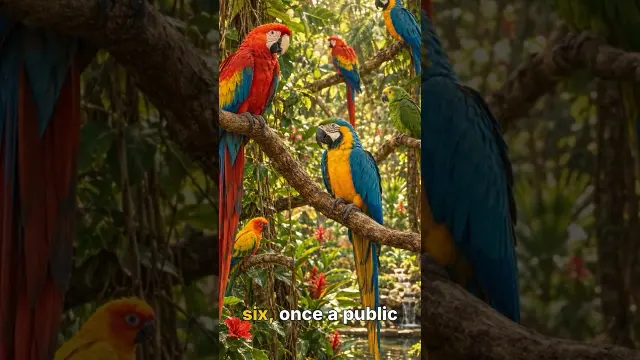
 The History of Florida's Oldest Attraction Created by a Plumber
#Florida History
1 ideas
The History of Florida's Oldest Attraction Created by a Plumber
Get new #Florida History ideas by email
Every Thursday: the week's best ideas, with the newest from #Florida History.
Related tags
Florida History: A Short Guide
Florida’s history is layered, varied, and shaped by many people, cultures, and landscapes. Long before it became a U.S. state, the peninsula was home to Native peoples whose communities adapted to wetlands, coasts, forests, and changing seasons. Their histories are the foundation of Florida’s story, and their influence remains important today.
Early Florida
For centuries, Florida was a place of trade, travel, and survival. Native groups such as the Timucua, Apalachee, Calusa, and Seminole lived in different parts of the region, each with distinct ways of life. Coastal communities relied heavily on fishing and shellfish, while inland groups developed farming and hunting traditions suited to their environment.
Because Florida sits at the edge of the Atlantic world, it became one of the first parts of what is now the United States to be encountered by Europeans. Spanish explorers and settlers arrived early, bringing new religions, conflicts, and diseases that changed Native life dramatically. Florida then became a contested place, passing through periods of Spanish control and other colonial influence.
Read more
Spanish, British, and American Florida
Florida’s colonial past is marked by shifting rulers and frontier life. Spanish missions, forts, and settlements were established in different areas, especially along the coast. Later, British control introduced another layer of cultural change, before Spain regained the territory again. These shifts shaped Florida as a borderland rather than a settled center of empire.
Eventually, Florida became part of the United States. Statehood brought new migration, land development, and political change. Like much of the American South, Florida also experienced the hardships and divisions of slavery, the Civil War, and Reconstruction. These eras left lasting marks on its communities and economy.
Settlement, agriculture, and growth
For much of its history, Florida was sparsely populated compared with many other states. Settlement expanded through farming, transportation, and land development. Citrus growing became especially associated with the state, along with cattle ranching, timber, and other agricultural work. Railroads and roads helped connect remote areas and encouraged new towns to grow.
Florida’s natural environment has always played a major role in its history. Its wetlands, coasts, hurricanes, and heat shaped where people lived and how they built. Over time, improvements in transportation and infrastructure made larger-scale settlement possible, and the state’s population increased rapidly.
Modern Florida
Today, Florida is known for its mix of cultures, languages, and traditions. Its history includes Native American heritage, Spanish and Caribbean influence, African American history, immigrant communities, and the growth of major urban and resort areas. That diversity is one of the most important parts of understanding the state.
If you are exploring Florida history, it helps to look beyond a single story. The past here is not only about tourism or famous landmarks. It is also about Indigenous survival, colonial conflict, farming communities, migration, labor, and the constant relationship between people and the land. Learning Florida’s history means seeing how many different histories came together to shape the state you know today.
Videos come from YouTube and posts from Instagram; titles and summaries are our own. All rights belong to their creators.