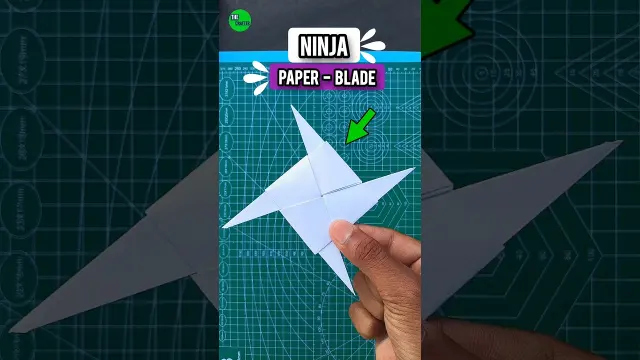
 Flying Origami Paper Ninja Star and Boomerang Tutorial
#Flying Paper Toy
1 ideas
Flying Origami Paper Ninja Star and Boomerang Tutorial
Get new #Flying Paper Toy ideas by email
Every Thursday: the week's best ideas, with the newest from #Flying Paper Toy.
Related tags
Flying Paper Toys: A Beginner's Guide
There is something quietly satisfying about folding a sheet of paper into a shape and then watching it leave your hand. A flying paper toy is simply any folded or cut paper object built to travel through the air: planes, gliders, darts, spinning stars, boomerangs, helicopters with whirling blades. It costs almost nothing, needs no batteries, and turns an ordinary afternoon into an experiment.
Where it comes from
Paper folding has long traditions in several cultures, and paper has been used for playthings and simple flying models for generations, wherever cheap paper was available. Many children learn their first design from a parent or a friend rather than a book, which is part of the appeal: the skill travels by showing, not reading. Modern interest in paper aerodynamics grew alongside a general fascination with flight, and today folding a paper plane is often the first honest lesson anyone gets in lift and balance.
The main kinds
Read more
- Dart-style planes: narrow, pointed and fast. They fly in a straight, powerful line but drop quickly.
- Gliders: wide wings and a flatter nose. Slower, longer flights, more sensitive to a good throw.
- Distance planes: long, thin wings; built to travel rather than to loop or hover.
- Ninja stars and similar throwers: interlocking folded shapes that spin as they travel.
- Paper boomerangs: curved forms that circle back when thrown with a flick of the wrist.
- Paper helicopters: a body with angled blades that spin as the toy falls, or rise in a light breeze.
- Paper kites and simple gliders on a frame: bigger projects that need a little string or a stick.
What beginners should know
Choose paper that suits the design. Ordinary copier paper is a reliable all-rounder; lighter paper suits gliders that need to float, heavier paper gives darts the momentum to cut through the air. Sharp, firm creases matter more than neatness — run a fingernail or the back of a spoon along every fold and your model will hold its shape instead of buckling.
Keep your folds symmetrical. Most flying paper toys fail not because the design is wrong but because one wing is a few millimetres off. If a plane veers left, gently bend the trailing edges of the wings to correct it rather than refolding the whole thing.
Practical tips
Throw flat and smooth, not hard. A glider released with a gentle forward push will usually fly further than one hurled at full force. Fly indoors in an empty hallway on a wet day, or outside on a still evening — wind is the enemy of a light paper wing. Adjust before you rebuild: tiny tweaks to wing angle, nose weight or a paperclip on the body can transform a dive into a glide.
Fold slowly the first time and let yourself make mistakes; every crumpled attempt teaches you something about how the shape behaves in the air.
#Flying Paper Toy: frequently asked questions
How do I get started with a flying paper toy if I have never folded one before?
Start with a single sheet of ordinary paper and a simple design such as a basic dart or a small glider, then throw it a few times before folding anything else. The point of the first attempt is not a perfect model but learning how the shape behaves once it leaves your hand. Folding slowly and letting yourself crease a sheet wrongly now and then teaches you more than rushing through a complicated design.
What kind of paper works best for paper planes and gliders?
Standard copier paper is the reliable all-rounder and behaves well for most designs. Lighter paper suits gliders that need to float gently, while heavier paper gives darts the momentum to punch through the air. What matters most is pressing each fold firmly with a fingernail or the back of a spoon so the model keeps its shape instead of buckling.
Which flying paper toy should I choose, a dart, a glider or something that spins?
It depends on what you want the toy to do: darts fly narrow and fast, gliders float slowly and reward a smooth throw, and spinning shapes such as ninja stars, boomerangs or helicopters are about motion rather than distance. If you are folding with a child, a helicopter or a spinner is forgiving because it works even when the creases are not perfect. Distance designs with long thin wings suit anyone who wants to see how far a sheet can travel.
Why does my paper plane veer to one side or dive straight into the ground?
Almost always the model is slightly asymmetrical rather than badly designed, so check that both wings match before you start over. Small bends to the trailing edges of the wings will usually straighten a veering plane, and a light adjustment at the nose or a clip on the body can turn a dive into a glide. Rebuild only after those small tweaks have failed, since refolding rarely fixes the same mistake twice.
How should I throw a paper glider for the longest flight?
Throw flat and smooth rather than hard, releasing with a gentle forward push instead of a full-force hurl. A light paper wing is easily overwhelmed by wind, so fly indoors in an empty hallway or outside on a still evening. Aim for a level release at roughly shoulder height and let the design do the rest.
What are the most common mistakes people make with flying paper toys?
Rushing the folds and leaving creases soft, so the wings bend out of shape the moment the toy is thrown. Another frequent slip is forcing a hard throw, which stalls a light glider instead of carrying it. Keeping the model flat and uncrumpled between flights, away from damp or a pocket full of other things, also helps it keep flying the way it did on the first attempt.
Videos come from YouTube and posts from Instagram; titles and summaries are our own. All rights belong to their creators.