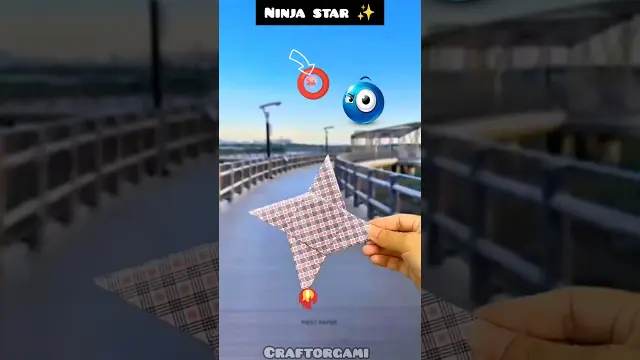
 Craft Paper Ninja Star With Folding and Balance Tips
#Folding Tips
1 ideas
Craft Paper Ninja Star With Folding and Balance Tips
Get new #Folding Tips ideas by email
Every Thursday: the week's best ideas, with the newest from #Folding Tips.
Related tags
Folding Tips: Clean Creases and Better Paper Crafts
Folding paper is one of the oldest and most forgiving crafts there is. A sheet costs almost nothing, mistakes can usually be undone, and the skills involved — patience, accuracy, a good eye for symmetry — carry over to sewing, baking, wrapping and just about anything else you make with your hands. Whether you are folding a simple star for a child or working through a complex model, the same handful of habits separates a tidy result from a crumpled one.
Start with the right paper
Most folding problems begin before the first crease. Thin paper folds easily but tears under pressure; thick paper holds a shape well but resists sharp creases and springs open. Notebook paper is a fine place to learn because it creases clearly and you can see your lines. For anything you intend to keep, choose paper that is a little thinner than card stock but heavier than tissue, and avoid sheets that are already curled, damp or heavily printed, since they fold unevenly.
Accuracy beats speed
Read more
A fold that is half a millimetre off rarely stays half a millimetre off. The error multiplies as you work, so a model that looks almost right in the early steps ends up visibly crooked at the end. Line up corners and edges with your fingertips before you press, and check the opposite side too. If you are working from a diagram, read the next two steps before folding the first one — knowing where a fold is going helps you place it deliberately instead of guessing.
Make creases you can trust
- Press with the side of your fingernail or the back of a spoon, working from the centre of the fold outwards.
- Fold the same crease twice in both directions if you need to reverse it later; the paper remembers the path.
- Use a bone folder or a smooth, hard object for long straight creases, and keep the pressure even.
- Fold on a hard, flat surface. Soft surfaces let the paper bend where you don't want it to.
- Don't worry about a crease being "wrong". Most can be flattened out, and some models rely on deliberately soft folds.
Balance and shape
Symmetry is what makes a folded object read as intentional. Hold the finished piece up and look at it from the front and from the side; uneven points or lopsided angles are easier to spot at arm's length than close up. If a shape needs to stand or spin, the weight has to be spread evenly around the centre, which is why balanced models are usually built from matching folds on opposite corners. Adjust gently with small flexes rather than pressing hard, which flattens the structure you have built.
Keep it enjoyable
Learn each new model on cheap paper first, then fold it again on the good sheet once your hands know the sequence. Working slowly at the beginning is faster overall, and a model folded twice is always neater than one folded once in a hurry.
#Folding Tips: frequently asked questions
What kind of paper works best for folding?
Look for something in between tissue and card stock — thin enough to crease crisply, heavy enough not to tear or spring back open. Plain notebook paper is ideal while you are learning because the creases show up clearly and you can see whether your lines are straight. Skip sheets that are curled, damp or busy with print, since they tend to fold unevenly.
How do I make creases that actually hold?
Press firmly along the fold with your fingernail or the back of a spoon, starting at the middle and working out towards the edges. Work on a hard, flat surface, because a soft one lets the paper bend wherever it likes. If you think you may need to reverse a crease later, fold it once in each direction so the paper knows the path.
Why does my finished model come out crooked?
Small errors build up as you go, so a fold that is barely off in the early stages turns into a visibly slanted shape by the end. Line up the corners and edges with your fingertips and check the opposite side before you commit to pressing down. Reading the next step or two before you fold also helps you place each crease with intent rather than guessing.
What should I do when a fold goes wrong?
Flatten it out and try again — most creases can be smoothed away well enough to keep working, and a soft fold is sometimes part of the design anyway. Resist the urge to press hard while correcting, since force flattens the structure you have already built. Small gentle flexes shift a shape far more reliably than squeezing it.
How can I tell if a folded piece looks balanced?
Hold it up at arm's length and look at it from the front and the side, where lopsided angles and uneven points are much easier to spot than close up. Symmetry is what makes a piece read as deliberate, so matched folds on opposite corners keep the weight centred. If it needs to stand or spin, evenly distributed weight matters as much as a tidy outline.
What is the best way to learn a new model?
Work through it first on cheap paper so you can make mistakes without minding, then fold it again on your good sheet once your hands know the sequence. Going slowly at the start usually gets you to a finished piece faster than rushing and backtracking. A model folded twice nearly always comes out neater than one folded once in a hurry.
Videos come from YouTube and posts from Instagram; titles and summaries are our own. All rights belong to their creators.