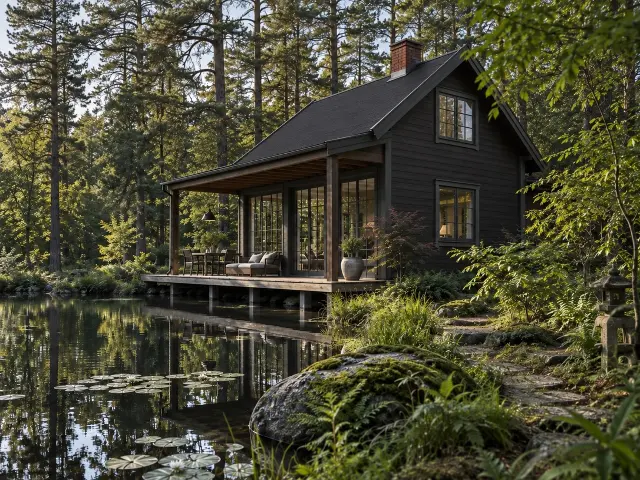
 1920s Cottage Renovation Blending Swedish Nature and Japanese Style
#Forest Garden
1 ideas
1920s Cottage Renovation Blending Swedish Nature and Japanese Style
Get new #Forest Garden ideas by email
Every Thursday: the week's best ideas, with the newest from #Forest Garden.
Related tags
Forest Gardening: A Guide to Growing in Layers
A forest garden is a garden designed to behave like the edge of a woodland. Instead of beds that are dug over and replanted each year, it is built from mostly perennial plants chosen to occupy different heights and depths, so that the whole thing holds together as a small, productive ecosystem. You plant it once, tend it lightly, and harvest from it for years.
Where the idea comes from
Growing several crops at once, at different heights, is an old practice. Home gardens in many tropical regions have long combined trees, shrubs, climbers and ground crops in a single crowded patch, and woodland-edge cultivation has a similar logic in temperate climates. The modern version of the idea took shape within permaculture thinking and has since been adapted to ordinary gardens, allotments and even courtyards, where it is scaled down to fit.
The layers
Read more
Most forest gardens are described in layers, roughly from the top down:
- Tall trees, grown for fruit or nuts, forming the canopy.
- Smaller trees and large shrubs, including dwarf fruit trees and nut-bearing shrubs.
- A shrub layer of soft fruit and flowering plants.
- Herbaceous perennials: herbs, leafy crops, flowers that bring in insects.
- Ground cover that creeps across bare soil and keeps it shaded.
- Root crops, grown for tubers and bulbs below the surface.
- Climbers that use trunks and branches as support.
A small plot rarely holds all of them; you can keep the same idea with dwarf rootstocks and fewer levels.
How it works
The density is the point. Covered soil dries out less and supports more life, and plants that fix nitrogen or gather deep nutrients feed their neighbours. Flowers and shelter bring in birds and insects that help with pest control, and a mix of plants tends to spread the harvest across the year rather than concentrating it into a few weeks.
Getting started
Watch your site before you plant, if you can, through a full year: where the sun falls, where water collects, which way the wind comes, where you naturally walk. Start smaller than you think you should. Improve the soil, set out paths first, and choose plants that suit your climate and soil rather than ones you admire in a picture.
Plant the long-lived things first: trees and shrubs take the longest to settle and to shade what comes after them. Fill the gaps with faster perennials and annuals while you wait, and expect to move things once you see how they grow.
Practical notes
Keep your paths and access clear; a forest garden you cannot reach is hard to harvest. Prune to let light down to the lower layers, and be wary of vigorous spreaders, which can take over a small space and are difficult to remove. Some plants will fail. That is ordinary, and the garden improves as you notice what thrives and adjust.
Above all, it asks for patience. A forest garden is generous and beautiful, but it matures slowly, and its best years come to those who leave room for them.
#Forest Garden: frequently asked questions
What actually makes a forest garden different from an ordinary garden?
It is designed to behave like the edge of a woodland rather than a set of beds that get dug over and replanted each season. It is built mostly from perennial plants placed at different heights and depths, so the planting works as a small ecosystem that you tend lightly and harvest from for years. The density is the point: covered soil holds moisture better and the mix of plants supports more life.
How should I begin if I have never made one before?
Spend time watching the site across the seasons first, noticing where the sun falls, where water collects, which way the wind comes and where you naturally walk. Then start smaller than feels sensible, improve the soil and set out your paths before anything else goes in. Choose plants that suit your own climate and soil rather than ones that merely look good in a picture.
What should I plant first, and what goes in afterwards?
Put in the long-lived things first, because trees and shrubs take the longest to settle and will eventually shade whatever comes after them. Fill the gaps in the meantime with quicker perennials and annuals, and expect to move some things once you see how they actually grow. If your plot is small, dwarf rootstocks and fewer levels let you keep the same idea at a smaller scale.
Can I make a forest garden in a small plot or a courtyard?
Yes, the layered idea scales down; a small plot rarely holds every layer, and it does not need to. Using dwarf fruit trees, compact shrubs and ground cover lets you keep the structure and the density in a limited space. What you cannot shrink is the patience it asks for, since a scaled-down version still matures slowly.
How much looking after does it need once it is planted?
Less than a vegetable bed, but not nothing: keep paths and access clear, since a garden you cannot reach is hard to harvest, and prune so light reaches the lower layers. Watch vigorous spreaders closely, as they can take over a small space and are difficult to get rid of later. Otherwise the work is mostly observing what thrives and adjusting around it.
What do beginners most often get wrong?
The common error is starting too large before understanding the site, which leaves you maintaining ground you cannot keep up with. Planting things you admire rather than things suited to your soil and climate is the next most frequent misstep, along with crowding the paths. It also helps to accept that some plants will simply fail; that is ordinary, and the garden improves as you notice and respond.
Videos come from YouTube and posts from Instagram; titles and summaries are our own. All rights belong to their creators.