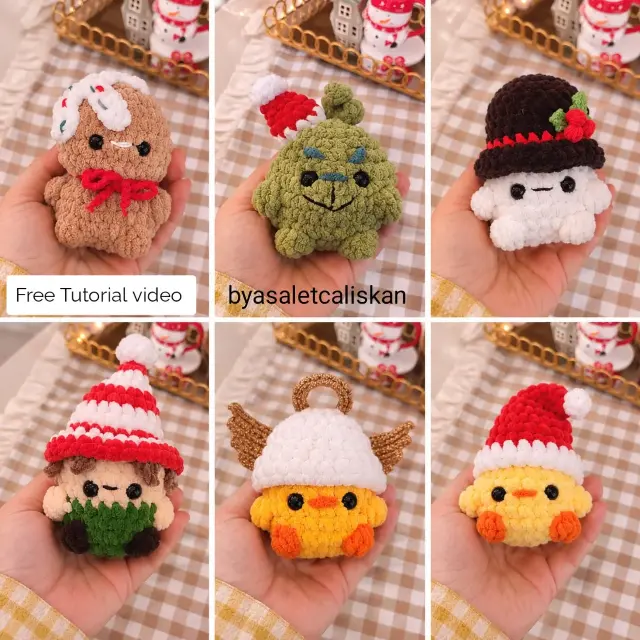
 Handmade Christmas Amigurumi Collection with Free Tutorials
#Free Crochet Tutorial
1 ideas
Handmade Christmas Amigurumi Collection with Free Tutorials
Get new #Free Crochet Tutorial ideas by email
Every Thursday: the week's best ideas, with the newest from #Free Crochet Tutorial.
Related tags
Free Crochet Tutorials: A Beginner's Guide to Learning
Crochet is a craft built from one continuous strand of yarn, looped and pulled through itself with a single hooked tool. Compared with knitting, which uses two needles and many live stitches at once, crochet works one stitch at a time, which makes it forgiving to learn and easy to pick up and put down. A free crochet tutorial is simply instruction offered at no cost — written, photographed or filmed — that walks you through a technique or a whole pattern step by step.
The craft is old, with textile traditions resembling crochet appearing across Europe and beyond, though the word itself and the modern hooked form took hold in the nineteenth century. Today it is practised for practical items, for decoration and for the calm, repetitive pleasure of working with your hands.
What beginners should learn first
Almost every tutorial assumes a handful of basics. Start with holding the yarn and hook comfortably, then learn the slip knot and the foundation chain. From there, four stitches carry you a long way: slip stitch, single crochet, half double crochet and double crochet. Once you can make these evenly, you can read most simple patterns.
Read more
Two more skills repay early practice. Working in the round — spiralling or joining each round — opens up hats, coasters, granny squares and amigurumi. And turning chains at the end of a row, done consistently, keep your edges straight.
Reading a pattern
Written patterns use abbreviations for each stitch, and most free tutorials include a key. Charts and symbol diagrams show the same information visually; many makers find charts easier once the symbols become familiar. Pay attention to gauge, the number of stitches and rows in a measured square. It decides whether your finished piece matches the size given, so a quick test square is rarely wasted effort.
Kinds of tutorial
Video tutorials suit learners who need to see hands and hook at work, and they let you pause and replay a tricky moment. Photo tutorials break a technique into still steps you can keep open beside you. Written patterns, often free on designers' blogs, are easy to print and annotate. Many resources combine all three.
Practical tips
Choose a smooth, light-coloured yarn in a medium weight and a hook to match; fuzzy or dark yarn hides your stitches while you are learning. Practise new stitches on a small swatch before committing to a project. Count your stitches at the end of each row — most beginner problems are a stitch gained or lost at the edge. Keep a notebook of what you have made and which hook you used. And when a tutorial confuses you, look for another explanation of the same technique: different teachers describe the same movement in different words, and one will click.
#Free Crochet Tutorial: frequently asked questions
How do I start learning crochet with no experience?
Begin by getting comfortable holding the yarn and hook, then learn the slip knot and the foundation chain. After that, practise a few core stitches — slip stitch, single crochet, half double crochet and double crochet — until they come out even. Working on small swatches first makes the movements familiar before you attempt a full pattern.
What supplies do I need before following a free crochet tutorial?
You really only need a hook, a ball of yarn and something to mark your place, such as a stitch marker or a scrap of contrasting yarn. Choose a smooth, light-coloured yarn in a medium weight with a hook that matches it, since fuzzy or dark yarn makes your stitches hard to see while learning. A notebook for jotting down hooks used and rows completed also helps more than most beginners expect.
Should I learn from video, photo or written tutorials?
It depends on how you absorb new skills: video suits people who need to watch hands and hook in motion and want to rewind a tricky moment, while photo tutorials let you keep each step open beside you as you work. Written patterns are easiest to print and annotate, and many free resources mix all three formats. If one explanation doesn't click, try the same technique taught by someone else.
Why does my crochet edge keep getting wider or narrower?
Most beginner problems come down to a stitch gained or lost at the start or end of a row, usually from miscounting the turning chain or forgetting it altogether. Count your stitches at the end of every row and compare against the pattern, and keep the turning chain consistent in height. Practising on a small swatch until your edges stay straight saves a lot of unraveling later.
How do I read a crochet pattern or chart without getting lost?
Written patterns use abbreviations for each stitch, and nearly every free tutorial includes a key you can refer to as you go. Charts and symbol diagrams carry the same information visually and often become quicker to follow once the symbols feel familiar. Do check the gauge — the stitch and row count in a measured square — because it decides whether your finished piece ends up the size the pattern promises.
What can I make once I know the basic stitches?
Working in the round, either spiralling or joining each round, unlocks hats, coasters, granny squares and amigurumi figures — the little stuffed shapes that make popular gifts and seasonal projects. Flat pieces in the basic stitches are enough for scarves, blankets and household items. Start with something small so you finish it and learn from the result before committing to a larger piece.
Videos come from YouTube and posts from Instagram; titles and summaries are our own. All rights belong to their creators.