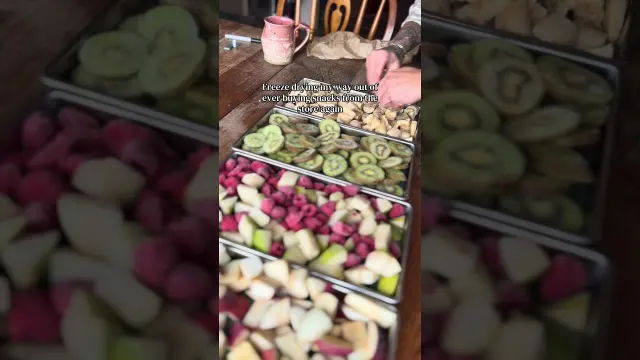
 Freeze-Dried Fruit Straight From a Home Freeze Dryer
#Freeze Dryer
1 ideas
Freeze-Dried Fruit Straight From a Home Freeze Dryer
Get new #Freeze Dryer ideas by email
Every Thursday: the week's best ideas, with the newest from #Freeze Dryer.
Related tags
Freeze Drying at Home: A Beginner's Guide
Freeze drying is one of the oldest ways of keeping food good for a long time, and one of the strangest. Instead of cooking the water out with heat, it removes water while it is still ice. The food goes in frozen, the air around it is pumped away, and the ice turns straight into vapour without ever becoming liquid. What's left is light, dry and crunchy, holding its shape almost like a model of itself.
The method has deep roots. Andean communities have made chuño for centuries by letting potatoes freeze overnight at high altitude, then treading out the water in the sun. Modern freeze drying, called lyophilization, grew out of laboratory work on preserving delicate samples that heat would destroy. The principle is the same in both cases: water leaves as vapour, and the structure survives.
What it does to food
Because nothing is heated, colour, flavour and shape come through far better than with a dehydrator. A strawberry comes out scarlet and sharp, a slice of apple pale and crisp. Rehydrate it in water, sauce or yoghurt and it comes back close to what it was, though softer than fresh. The very low moisture content is why freeze-dried food keeps so long without refrigeration, as long as it stays dry and sealed.
Read more
What people freeze dry
Fruit is the usual starting point, and the one that convinces most people. Vegetables work well for soups and stews. Cooked meals, herbs, coffee, pet treats, and sweets are all common. Sweets are a category of their own: the aeration makes them lighter and stranger in texture, which is either the point or a disappointment depending on your expectations.
Things high in fat are trickier, since fat does not freeze dry and can turn stale in storage. Very sugary or syrupy items can stay sticky. Very wet, dense foods take longer than you expect.
Before you start
Read the machine's instructions properly; each one has its own cycle lengths and tray limits and they are not interchangeable.
- Freeze what you can beforehand. Cold, firm pieces go through a cycle faster and more evenly.
- Cut things to a consistent size and spread them in a single layer, without overlaps.
- Load the trays the way the manual says, and let a cycle finish rather than stopping it early; partly dry food is the one thing that stores badly.
- Judge doneness by texture, not by the clock: it should be crisp and shatter rather than bend.
- Store in airtight jars or pouches, away from light and heat, and label with what it is and when you made it.
A note on expectations
Cycles are long — often a day or more — and the machine makes noise while it runs, so plan around it. Start with a small batch of something cheap and forgiving, like bananas or apple slices, and learn how your machine behaves before committing a whole harvest. Once you've got the rhythm of it, freeze drying becomes less a gadget and more a quiet kitchen habit.
Videos come from YouTube and posts from Instagram; titles and summaries are our own. All rights belong to their creators.