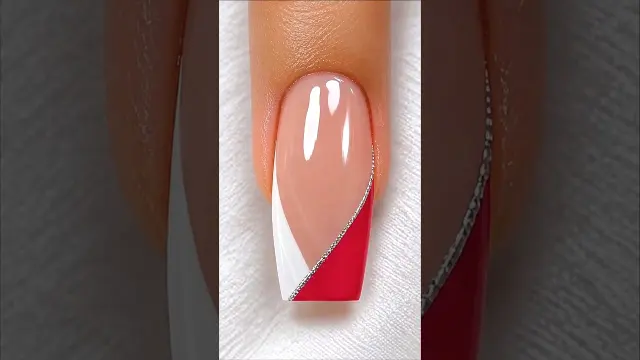
 Diagonal French manicure design
#French Nails
2 ideas
Diagonal French manicure design
Get new #French Nails ideas by email
Every Thursday: the week's best ideas, with the newest from #French Nails.
Related tags
French Nails: A Guide to the Classic Manicure and Its Variations
French nails are one of the most recognisable manicures in the world: a sheer, natural-looking pink or nude base finished with a crisp white line across the tip of each nail. The look is deliberately understated — clean rather than decorated — which is why it has stayed in circulation for decades while louder designs come and go.
Where it comes from
The style grew out of twentieth-century beauty culture and became a fixture of salon manicures and fashion imagery in the 1970s, when a natural nail with a defined white tip suited both editorial work and everyday wear. The name points to Paris as a shorthand for elegance rather than to a documented inventor; the exact origins are debated, and the look itself is closer to a shared idea than to any single creation.
What made it endure is practical. A light base hides small imperfections, the white tip visually lengthens the nail bed, and the contrast reads as tidy from a distance. It flatters most skin tones and works with almost any outfit.
Read more
The main variations
- Classic: a soft pink base with a thin, even white smile line.
- Micro French: the white tip reduced to a hairline, subtle and modern.
- Coloured French: the tip painted in any shade — red, black, pastel, metallic — with the same clean geometry.
- Diagonal and asymmetric: the tip line drawn at an angle or off-centre rather than following the natural curve.
- Ombré and baby boomer: the white blended softly into the base instead of sitting in a hard line.
- Matte French: the whole nail finished matte for a softer, less glossy version.
- Reverse French: the accent placed at the cuticle instead of the tip.
What beginners should know
The whole effect depends on preparation. Nails should be clean, shaped and gently buffed so the surface is smooth; any ridge shows through a sheer base. A base coat protects the nail and gives the white something to grip.
The smile line is the difficult part. Freehand painting suits short nails and a relaxed look; for a sharper line, a stencil or guide strip gives more control, and a thin brush with a light hand works better than a wide one. Painting the white first and correcting it with a small brush dipped in remover is often easier than trying to paint white over a finished base. Two thin coats always beat one thick one, and a top coat seals the tip where wear starts.
Caring for the manicure
Keep the nails moisturised and avoid using them as tools, since the tip edge chips first. A clear top coat refreshed every few days extends any polish. If you polish regularly, give nails regular breaks in bare condition so they stay strong and healthy.
#French Nails: frequently asked questions
What do I need to do a French manicure at home?
You need a sheer pink or nude polish for the base, a white polish for the tip, a base coat and a top coat, plus a thin brush or a guide strip for the smile line. A gentle buffer and a nail file matter as much as the polish, since the sheer base shows every ridge. Keep a small brush and remover nearby for tidying the tip.
How do I get a clean white tip when I'm a beginner?
Most people find it easier to paint the white tip first and then correct the shape with a small brush dipped in remover, rather than painting white over a finished base. A stencil or guide strip helps if you want a sharp line, while freehand with a thin brush suits short nails and a softer look. Thin layers work better than one thick one, because a heavy coat drags and floods the smile line.
Which French nail variation should I choose?
Classic with a soft pink base and a thin white tip is the safest starting point and suits almost any occasion. If you want something more modern, a micro French with a hairline tip is subtle, a coloured or diagonal version adds personality, and an ombré or baby boomer blends the tip softly into the base. A reverse French moves the accent to the cuticle instead of the tip.
How do I keep a French manicure looking fresh?
The tip edge is where wear starts, so refresh a clear top coat every few days to seal it. Moisturise your hands and nails, and avoid using your nails as tools to open or scrape things. If you polish often, let your nails rest bare from time to time so they stay strong.
What are the common mistakes with French nails?
Skipping preparation is the big one: an unshaped, unbuffed nail shows every ridge through a sheer base, and polish lifts sooner. Another is making the white tip too thick, which looks heavy and shortens the nail instead of lengthening it. Rushing the smile line rather than correcting it afterwards also spoils an otherwise tidy result.
Can I wear French nails for a special occasion?
Yes, that is part of why the look has lasted: it reads as tidy and elegant without competing with an outfit. For a party or holiday you can shift the tip to a metallic or deep shade, add a subtle shimmer topcoat, or go for a diagonal design for something more striking. For everyday wear, the classic or micro version stays understated.
Videos come from YouTube and posts from Instagram; titles and summaries are our own. All rights belong to their creators.