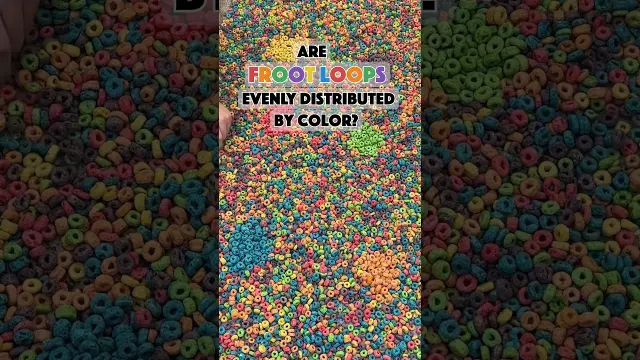
 Counting 8,000 Froot Loops to Find the Most Common Color
#Froot Loops
1 ideas
Counting 8,000 Froot Loops to Find the Most Common Color
Get new #Froot Loops ideas by email
Every Thursday: the week's best ideas, with the newest from #Froot Loops.
Related tags
Froot Loops: Colorful Cereal Crafts, Sorting and Play
Froot Loops is the name most people know for those small, bright, ring-shaped cereal pieces that come in a bag of mixed colors. They are made from a sweetened grain base, puffed and pressed into loops, then colored and flavored to look and taste like fruit. Because every piece is a slightly different shade, the cereal easily slips past the breakfast bowl: it turns up in sorting trays, homemade jewelry and party tables as readily as in a bowl with milk.
Why the rings work so well for play
The shape is what makes them useful. A ring can be threaded, stacked, sorted, counted and hidden. The pieces are small enough for a child's fingers but sturdy enough to survive handling, and each bag contains an unpredictable mix of colors, which makes them ideal for games about probability and counting. They are also cheap, widely available and easy to replace, which matters when a project goes wrong.
Sorting, counting and early math
The simplest activity is also the longest lasting: pour a pile onto a plate and ask a child to group the loops by color into separate bowls or paper cups. From there you can count how many of each color appeared, line the groups up from smallest to largest, make repeating patterns for a necklace, or guess which color is most common and then check. Sorting by shape, size and color is one of the earliest math skills a child learns, and holding the loops builds the same small muscle control that later helps with writing.
Threading and wearable crafts
A bowl of loops and a length of clean string, yarn or kitchen twine is enough for bracelets and necklaces. Older children can work to a pattern; younger ones simply thread and enjoy the result. Keep finished pieces dry and store them away from moisture, and remember that anything worn or played with should not be eaten afterwards.
Read more
Sensory play and decoration
Loops can be poured, scooped and buried in a tray of rice or sand, or used to decorate cakes, cookies and party favors by pressing them lightly into frosting. They can also be sorted into jars by color for a bright shelf display, though food coloring fades over time and the pieces go stale.
Practical tips
- Keep an eye on very young children, as small cereal pieces can be a choking risk.
- Check the ingredient and allergen information on the bag before using the cereal in any food activity or offering it to a child.
- Set out only what you need; moisture and crushed pieces make the rest less pleasant to eat.
- Wash hands before and after handling, and use clean string or thread for anything that will touch the skin.
- Sweep up dropped pieces promptly, as crushed loops attract pests.
Whether you are building a counting lesson, a birthday table or an afternoon craft, a bag of colorful rings offers a generous amount of play for very little money.
#Froot Loops: frequently asked questions
How do I start a Froot Loops activity with a young child?
Begin with the simplest version: pour a pile onto a plate and let the child group the rings by color into paper cups or small bowls. Nothing else is needed, and the sorting itself teaches color recognition and builds fine finger control. Once that feels easy, add counting or a pattern to keep it interesting.
What do I need for Froot Loops threading and jewelry crafts?
A bowl of cereal plus a length of clean string, yarn or kitchen twine is enough for bracelets and necklaces. Use clean thread for anything that will sit against the skin, and tie a knot or tape one end so the loops don't slide off while threading. Older children can follow a color pattern; younger ones usually just enjoy the act of threading.
Which kind of Froot Loops should I pick for a craft versus for eating?
Buy fresh, unopened bags for anything that will be eaten or used near food, so the pieces are whole and crisp. For wearables, sensory trays and sorting games, older cereal works fine and saves the better bag for the table. Check the ingredient and allergen information on the bag before using the cereal in any food activity or offering it to a child.
How should I store finished Froot Loops crafts and leftover cereal?
Keep finished bracelets, necklaces and decorations dry and away from moisture, since dampness makes the loops soft and sticky. Leftover cereal should go back into a sealed bag or container rather than sitting out, because crushed pieces and humid air make it less pleasant to eat. Anything that has been worn or handled during play should not be eaten afterwards.
What are some good Froot Loops ideas for a party or special occasion?
Press the loops lightly into frosting on cakes, cookies and cupcakes, or fill small cups and bags as colorful party favors. A sorting station also works well as a calm table activity while a party is getting going. Set out only what you need for the event, and sweep up dropped pieces promptly so they don't get crushed underfoot.
What are the most common mistakes people make with Froot Loops crafts?
The usual ones are leaving too much cereal out at once, so the rest goes stale or gets crushed, and forgetting that small loops are a choking risk around very young children. Another is using damp or unwashed hands and string, which spoils both the craft and the cereal still in the bag. Sweeping up dropped pieces right away also keeps crushed loops from attracting pests.
Videos come from YouTube and posts from Instagram; titles and summaries are our own. All rights belong to their creators.