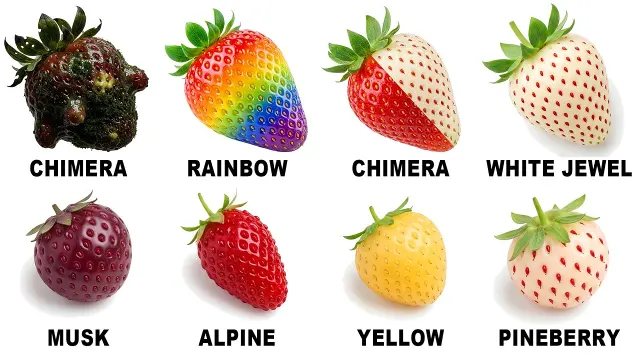
 A Complete Guide to Major Strawberry Varieties
#Fruit Varieties
1 ideas
A Complete Guide to Major Strawberry Varieties
Get new #Fruit Varieties ideas by email
Every Thursday: the week's best ideas, with the newest from #Fruit Varieties.
Related tags
Fruit Varieties: A Guide to Choosing and Growing Them
Take two apples from the same shop and they may share almost nothing — one crisp and sharp, the other soft and honeyed. That difference is the variety: a distinct, named form within a fruit species, selected for particular qualities of taste, texture, colour, keeping quality or resilience. In everyday speech "variety" and "cultivar" are used loosely, but growers usually mean a cultivated variety — a plant whose characteristics are reproduced deliberately, either by grafting, by cuttings, or by seed.
Where varieties come from
Most varieties began as accidents that someone noticed: a seedling with unusually good fruit, a single branch on an old tree bearing something different, a wild plant that crossed with a cultivated one. Growers then kept the best of these and multiplied them. Deliberate breeding came later, crossing chosen parents to combine traits such as flavour with hardiness or resistance to disease. Because fruit trees do not come true from seed, a good variety is preserved by grafting a piece of it onto a rootstock — which is why orchards are collections of copies rather than offspring.
Reading the descriptions
Read more
A few terms come up again and again. Open-pollinated varieties breed relatively true from seed; heirloom varieties are older ones kept alive by gardeners rather than commerce. Hybrids are the result of a deliberate cross, and seed saved from them rarely repeats the parent. Beyond that, descriptions usually speak to use: dessert fruit for eating fresh, culinary fruit for cooking, and keeping varieties that store well.
The main groups
- Pome fruits such as apples and pears, where varieties differ enormously in season and storage life.
- Stone fruits such as peaches, plums and cherries, where flesh colour, cling or freeness of the stone, and early or late ripening matter most.
- Citrus, where varieties are often distinguished by peel thickness, seedlessness and how easily they peel by hand.
- Berries and vines, where varieties are chosen for picking time, sweetness and how well they travel.
- Tropical and subtropical fruits, where variety names often reflect regional traditions as much as flavour.
What beginners should know
Climate decides more than anything else. Deciduous fruit needs enough winter cold to break dormancy and flower properly, while tropical fruit will not tolerate it; a variety that thrives in one garden may sulk in another a short distance away. Many fruits also need a partner: a second variety flowering at the same time, so that pollination can happen. Rootstocks control how large a tree becomes, which is what makes fruit growing possible in small spaces. And it is worth choosing varieties selected for resistance to the diseases common where you live, rather than fighting them afterwards.
Choosing well
Taste before you commit where you can, at a market or a pick-your-own farm; a name on a label is no substitute. Ask which varieties ripen together and which spread the harvest over weeks. And remember that fruit is seasonal by nature — the variety that tastes best in midsummer is rarely the one that keeps until winter.
#Fruit Varieties: frequently asked questions
What is the difference between a fruit variety and a cultivar?
A variety is a named, distinct form within a fruit species, chosen for particular qualities of taste, texture, colour, keeping ability or hardiness. In common speech the words are used interchangeably, but growers usually mean a cultivated variety — one that is deliberately reproduced rather than simply found growing. That distinction matters because a good fruit is preserved by grafting, cuttings or careful seed saving, not by chance.
How do I choose the right fruit variety for my garden?
Start with your climate, since deciduous fruits need enough winter chill to break dormancy while tropical fruits will not tolerate cold at all. Then look for varieties bred for resistance to the diseases common where you live, rather than planning to fight problems later. Taste before committing wherever you can, at a market or pick-your-own farm, and ask which varieties ripen together and which stretch the harvest over a longer season.
Do I need more than one fruit tree to get fruit?
Many fruits need a partner variety flowering at the same time so that pollination can happen, and a lone tree may flower beautifully yet set nothing. When you choose, check not just that a partner exists but that its bloom period overlaps with your tree's. Some varieties are self-fertile and manage alone, so it is worth confirming before you plant.
What does a rootstock actually do?
The rootstock is the root system a chosen variety is grafted onto, and it governs how large the tree eventually becomes. That is what makes fruit growing workable in a small garden or even a container, where a full-sized tree would never fit. The rootstock also influences how quickly the tree crops and how well it copes with local soil conditions.
What do open-pollinated, heirloom and hybrid mean on a fruit label?
Open-pollinated varieties come reasonably true from saved seed, while heirloom varieties are older ones kept going by gardeners rather than by commerce. Hybrids are the result of a deliberate cross, so seed saved from them rarely repeats the parent's qualities. The practical upshot is that if you want to grow the same fruit again, hybrids are reproduced by grafting rather than from seed.
What mistakes do beginners make with fruit varieties?
The most common one is picking a name that looked wonderful elsewhere without checking whether the local climate suits it — a variety that thrives in one garden can sulk a short distance away. Another is forgetting pollination partners or choosing a tree far larger than the space allows. Expecting out-of-season fruit is a third: the variety that tastes best in high summer is rarely the one that stores into winter.
Videos come from YouTube and posts from Instagram; titles and summaries are our own. All rights belong to their creators.