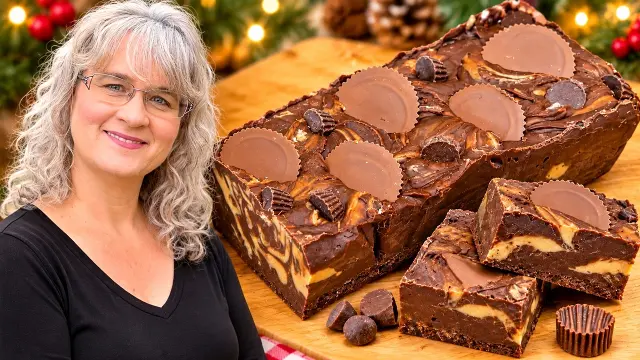
 Twenty Peanut Butter Fudge Recipes Made From Simple Ingredients
#Fudge Recipes
1 ideas
Twenty Peanut Butter Fudge Recipes Made From Simple Ingredients
Get new #Fudge Recipes ideas by email
Every Thursday: the week's best ideas, with the newest from #Fudge Recipes.
Related tags
Fudge Recipes: A Beginner's Guide to Homemade Fudge
Fudge is a dense, soft confection made from sugar, butter and milk or cream, cooked to a syrup and then beaten until it sets into a smooth, sliceable block. It sits somewhere between candy and cake, and it is one of the few sweets that home cooks genuinely can make better than most shops, because freshness and real butter show through immediately.
Where it comes from
The confection is American in origin, generally traced to the late nineteenth century, when cooks on the East Coast began experimenting with sugar-and-chocolate mixtures that sometimes failed and were jokingly called "fudge." What started as a happy accident became a deliberate technique, and by the early twentieth century it was a standard of church bazaars, college kitchens and holiday boxes. In Scotland, a closely related sweet called tablet is boiled longer and left to set with a crumbly, sugary grain rather than a creamy one.
How the texture works
Read more
The whole craft rests on sugar crystals. In a creamy fudge, you want tiny crystals forming evenly throughout, and you get them by cooling the cooked syrup undisturbed, then beating it firmly so that many small crystals develop at once. Large crystals feel gritty on the tongue, which is why the two classic faults are graininess and a batch that stays soft and refuses to set.
A few things help:
- Use a heavy pan and a candy thermometer, and trust the thermometer over the clock.
- Stir only until the sugar dissolves; after that, wash down the sides of the pan and leave the syrup alone.
- Let the syrup cool to lukewarm before you begin beating. Beating it hot gives coarse, grainy fudge.
- Add a spoonful of corn syrup or honey to discourage large crystals.
- Beat with a wooden spoon until the gloss dulls and the mixture thickens, then press it into a lined tin quickly, before it stiffens.
The main kinds
Chocolate is the most familiar, made with dark, milk or white chocolate, or with cocoa and butter. Vanilla fudge, sometimes called opera cream, relies on good vanilla and a long, gentle cook. Brown sugar or penuche fudge has a caramel, molasses depth. Nut and peanut butter versions fold in a fat that keeps the texture soft, while marshmallow-based recipes use melted marshmallows to interrupt crystal formation and make the process forgiving for beginners.
Practical notes
Fudge is sensitive to damp weather; on humid days it may take longer to set, so be patient rather than adding extra sugar or heat. Never let a cooked syrup bubble up the pan's sides without washing it down. If a batch does turn grainy, warm it with a little water and start the beating again, or simply call it a spread and use it on toast.
Store fudge in a tightly closed tin with a sheet of parchment between layers, in a cool place. It keeps for a week or two and freezes well, so making a double batch is rarely a mistake.
#Fudge Recipes: frequently asked questions
Is fudge a realistic project for someone who has never made candy before?
Yes, it is one of the friendlier sweets to start with, since the ingredients are ordinary and the method is short. Recipes built on melted marshmallow are the most forgiving, because the marshmallow interrupts crystal formation and hides small mistakes. The main things that separate success from disappointment are patience and a thermometer rather than experience.
What equipment do I actually need to make fudge at home?
A heavy-bottomed pan, a candy thermometer, a wooden spoon and a lined tin will see you through almost any recipe. The heavy pan matters because thin metal scorches the syrup unevenly, and the thermometer matters because timing alone is unreliable. Beyond that, nothing specialised is required, which is part of why the sweet is so popular with home cooks.
Which kind of fudge should I choose for a first attempt?
Chocolate is the natural starting point because it is the most familiar and the ingredients are easy to find. If you want something softer and more foolproof, look at the peanut butter and nut versions, where the added fat keeps the texture tender, or a marshmallow-based recipe. Brown sugar and penuche styles are worth trying once you are comfortable, as they bring a deeper caramel flavour.
Why does fudge sometimes turn out gritty, or refuse to set at all?
Both faults come down to sugar crystals: too many large ones make the texture grainy, while a batch that never firms up usually was not cooked or beaten properly. Stir only until the sugar dissolves, wash down the sides of the pan, and let the syrup cool to lukewarm before you start beating so that many small crystals form at once. Damp weather can also slow setting, so give it time rather than adding more sugar or heat.
How should I store fudge once it is made?
Keep it in a tightly closed tin in a cool place, with parchment between the layers so the pieces do not stick together. It holds well for a good while stored this way and also freezes successfully, which makes a double batch a sensible habit. A grainy batch need not be wasted either, since it can be warmed with a little water and used as a spread.
Can I make fudge ahead of time for holidays or to give as gifts?
Absolutely, and it is one of the better sweets for that purpose because it travels and keeps well. Make it in advance, cut it into neat squares and layer the pieces in a lined tin or box with parchment between them. Since it freezes successfully, you can prepare several kinds well before you need them and bring them out as required.
Videos come from YouTube and posts from Instagram; titles and summaries are our own. All rights belong to their creators.