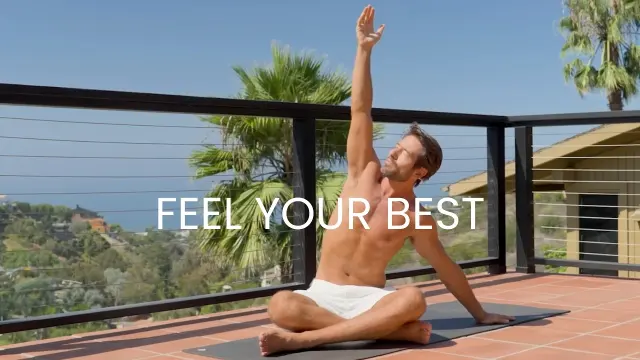
 30 Minute Daily Yoga Routine and Full Body Flow
#Full Body Flow
1 ideas
30 Minute Daily Yoga Routine and Full Body Flow
Get new #Full Body Flow ideas by email
Every Thursday: the week's best ideas, with the newest from #Full Body Flow.
Related tags
Full Body Flow: A Guide to Moving Through the Whole Body
A full body flow is a way of moving where one posture leads into the next without long pauses, so the body stays in motion from beginning to end. Rather than holding a shape for a minute and then resting, you pass through it and continue, letting the breath set the rhythm. The aim is not speed for its own sake but continuity: joints warm up, muscles lengthen and strengthen in turn, and the attention stays on the transition rather than on the destination.
Where it comes from
Flowing sequences belong to the vinyasa side of yoga, the branch of the tradition that links postures together in a continuous thread. The word vinyasa refers to placing movements in a deliberate order, and you will meet the same idea in the sun salutation, a short circular sequence repeated several times that forms the backbone of many flow practices. Teachers in the last century adapted these patterns for modern bodies, and today the same principle appears in countless forms — sometimes slow and precise, sometimes athletic, sometimes blended with mobility or movement work from other disciplines. The thread between them is the same: breath and motion kept together.
What a flow can look like
Read more
Flows vary enormously, but most share a broad shape. They tend to open with a few moments of settling and gentle movement, build through standing postures that fold, twist and reach, and close with slower work on the floor before a rest. A typical sequence might weave together forward folds, backbends and side bends so that the spine is moved in several directions. Some styles emphasise strength and balance, others favour softness and long, unhurried transitions. A short practice can be a handful of linked poses repeated with attention; a longer one can travel through many rounds.
Starting out
Beginners do well to learn a small number of postures properly before stringing them together. Two or three shapes you can enter and leave calmly are enough to build an early sequence. Move within a range that feels comfortable, keep breathing steadily, and treat any sharp sensation as a signal to ease off or stop. Practising near a wall helps with balance, and a mat or a non-slip surface makes transitions easier on the hands and feet. If you have an injury or a health concern, it is worth speaking to a qualified professional before adding new movements.
Practical tips
- Let the breath lead: lengthen the movement over an inhale, soften it over an exhale.
- Keep transitions as interesting as the poses themselves — that is where the practice lives.
- Warm up before deeper shapes and cool down afterwards.
- Repeat sequences often; familiarity frees you to pay attention rather than remember.
- Adapt freely. Knees, wrists and lower backs all appreciate a version that suits them.
A full body flow is ultimately a personal rhythm rather than a fixed routine. Once a few shapes feel familiar, you can arrange them to suit your own body, your time and your mood.
#Full Body Flow: frequently asked questions
How do I start a full body flow if I have never done one before?
Begin with just a couple of postures you can enter and leave calmly, then join them so one shape moves into the next instead of holding each for a long time. Practise near a wall for balance and on a non-slip mat, and keep the range of movement within what feels comfortable.
What do I need for a full body flow at home?
Very little: a mat or other non-slip surface, some clear floor space, and clothing you can move freely in. A wall is useful for balancing poses, and a cushion or folded blanket can make floor work kinder on the knees and hips.
Which kind of full body flow should I choose?
Styles range from slow and precise to athletic, and some blend mobility work from other disciplines into the sequence. If you want to build strength and balance, look for something more active; if you want to unwind, favour a slower flow with long, unhurried transitions.
How should I care for my body during and after a flow?
Move within a range that feels comfortable, let the breath set the pace, and treat any sharp sensation as a signal to ease off or stop. Warm up before deeper shapes, cool down afterwards, and adapt postures freely so that knees, wrists and lower back get a version that suits them.
What are the common mistakes people make with a full body flow?
The most frequent one is rushing, chasing speed instead of continuity even though the point is to keep breath and motion together. Others are stringing together too many postures before any single one feels steady, and treating the poses as the goal rather than the transitions between them.
Videos come from YouTube and posts from Instagram; titles and summaries are our own. All rights belong to their creators.