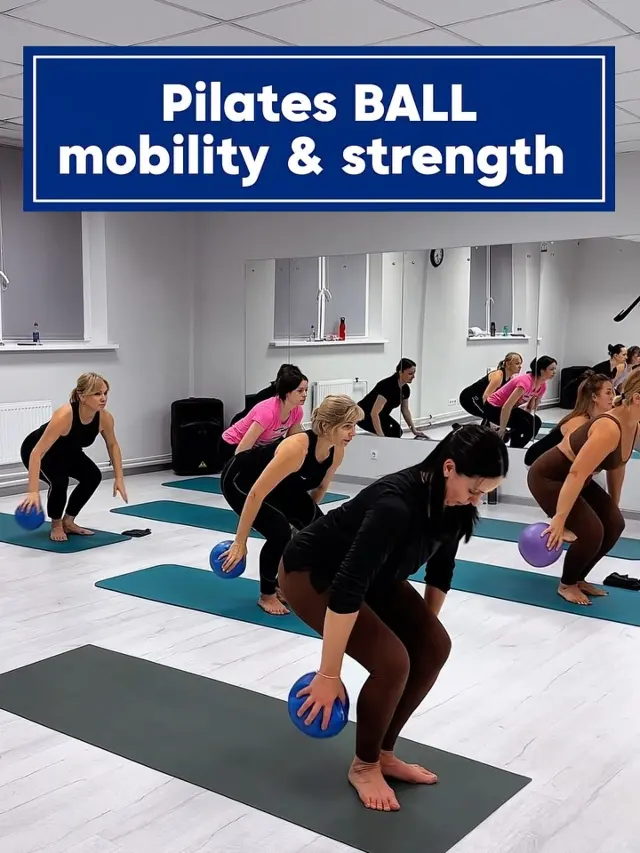
 Pilates Ball Mobility Ideas to Add to Your Routine
#Functional Training
1 ideas
Pilates Ball Mobility Ideas to Add to Your Routine
Get new #Functional Training ideas by email
Every Thursday: the week's best ideas, with the newest from #Functional Training.
Related tags
Functional Training Guide
Functional training is a style of exercise that helps your body move better in everyday life. Instead of training one muscle at a time in isolation, it focuses on movements you use naturally, such as squatting, reaching, lifting, twisting, pushing, pulling, walking, and balancing. The goal is not only strength, but also coordination, stability, mobility, and control.
What functional training is
At its core, functional training prepares you for real-life movement. That can mean carrying groceries, climbing stairs, picking up a child, or standing for long periods with better posture. The exercises often involve more than one joint and more than one muscle group at the same time, which makes them practical and efficient.
Functional training can be adapted for many fitness levels. You can use only your body weight, or add equipment such as resistance bands, dumbbells, medicine balls, kettlebells, steps, or stability tools. What matters most is not the tool, but how well the movement matches the way your body needs to work.
Read more
Common movement patterns
Most functional workouts are built around a few basic patterns:
- Squat: sitting down and standing up
- Hinge: bending at the hips, like lifting something from the floor
- Push: pressing something away from your body
- Pull: drawing something toward you
- Lunge: stepping forward, backward, or to the side
- Rotate: turning through the torso in a controlled way
- Carry: holding and moving weight while staying stable
These patterns appear in daily life and in many sports, so practicing them can make your body feel more capable and balanced.
Why people use it
Functional training can help improve strength in a way that feels useful, not just abstract. It often supports better core control, joint stability, balance, and coordination. Because many exercises involve the whole body, they can also make workouts feel dynamic and varied.
It is especially helpful if you want to move more confidently in daily life, improve general fitness, or build a solid base before moving into more specialized training. It can also be a smart complement to walking, running, dancing, yoga, Pilates, or sports.
How to start
If you are new to functional training, begin with simple movements and focus on form before adding intensity. Good technique matters more than speed or heavy resistance. Start with a few basic exercises and learn to move through a comfortable range with control.
A simple session might include:
- Body-weight squats
- Glute bridges
- Standing rows with a band
- Incline push-ups
- Step-ups
- Dead bugs or bird dogs for core control
- Farmer carries with light weights
Practical tips
- Keep your spine neutral and move with control.
- Breathe steadily instead of holding your breath.
- Start with light resistance and increase gradually.
- Choose exercises that feel stable before trying more complex ones.
- Work both sides of the body evenly.
- If something causes pain, stop and adjust the movement or get guidance from a qualified professional.
Functional training works best when it is consistent and well balanced. If you combine strength, mobility, and coordination, you build a body that is not only stronger, but also easier to move through everyday life.
Videos come from YouTube and posts from Instagram; titles and summaries are our own. All rights belong to their creators.