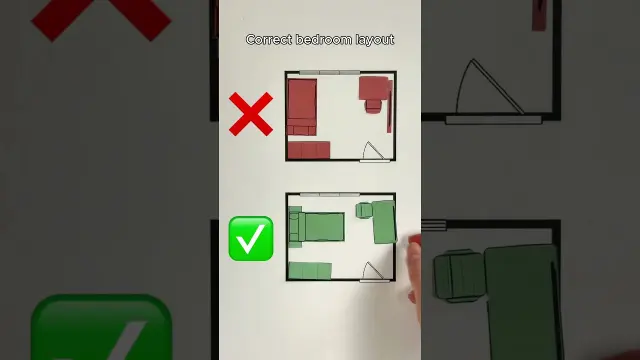
 Comparing Right and Wrong Bedroom Layouts
#Furniture Placement
2 ideas
Comparing Right and Wrong Bedroom Layouts
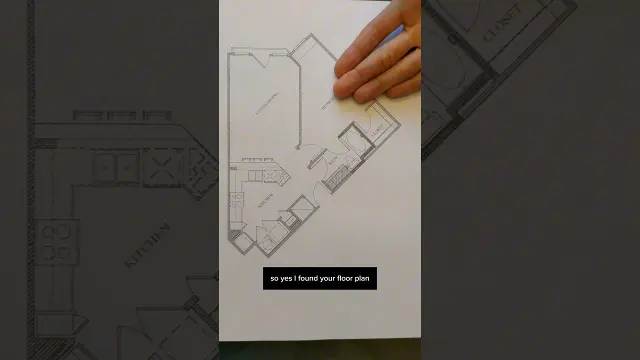 Finding the Best Bed Placement in a Triangular Room
Get new #Furniture Placement ideas by email
Every Thursday: the week's best ideas, with the newest from #Furniture Placement.
Related tags
Furniture Placement: How to Arrange a Room That Works
Furniture placement is the craft of arranging what you own so a room does its job well and feels good to be in. It is older than interior design as a profession: people have always decided where the bed goes, where the table sits, where the light falls. What has changed is how deliberately we do it. Good placement is less about taste than about observation — how you move, what you need to reach, where you naturally want to sit.
Start with how the room is used
Before moving anything, spend a few days noticing the room as it is. Where do you actually walk? Which corner collects clutter? Where does the light land in the morning? A layout that ignores daily habits will always feel slightly wrong, no matter how attractive it looks.
Then decide what the room must do. A living room might need to seat four comfortably and still leave space for a child to play. A bedroom might need nothing more than calm and a clear path to the window. Write down the two or three things that matter most, and let them guide every decision.
Read more
Measure, then move
Measure the room and the furniture before you shift a single piece. Note doorways, radiators, window sills and socket positions; these fixed points decide more than any style rule. Mark the footprint of large pieces on the floor with tape to test a layout without lifting anything.
The principles that hold up
- Anchor the main seating around a focal point — a fireplace, a view, a piece of art — but do not force everything to face it.
- Keep conversation distances close enough to talk without raising your voice; a wide, scattered arrangement feels cold.
- Leave paths of a comfortable width between doorways and key furniture, and keep the route from one door to another clear.
- Pull furniture slightly away from the walls where space allows. Floating a sofa can make a room feel larger and more intentional.
- Use rugs to define zones rather than to fill floor space; front feet of seating on the rug is a reliable guide.
- Balance visual weight. A heavy piece on one side wants something substantial opposite, even if it is only a tall plant or a lamp.
Small rooms and awkward shapes
In compact rooms, choose furniture with visible legs so floor shows beneath it, and favour a few larger pieces over many small ones — scattered small items make a space feel busy. In narrow or oddly shaped rooms, work with the long axis, avoid blocking the natural walking line, and treat an unavoidable corner as a feature rather than an empty gap.
Common mistakes
Pushing everything against the walls, buying before measuring, and arranging around a television alone are the usual culprits. Also easy to forget: leave room for doors to open, drawers to pull out and chairs to push back.
A practical order of work
Clear the room as far as you can, place the largest piece first, then the second largest, and build outward. Live with the arrangement for a week before deciding. Furniture placement rewards patience more than it rewards buying anything new.
#Furniture Placement: frequently asked questions
How do I start rearranging a room without buying anything new?
Live in the room as it is for a while and notice how you actually move through it — where you walk, where you pause, where clutter piles up. Then decide what the room has to do and write down the few things that matter most, letting those guide every choice. Measuring the room and marking furniture footprints with tape lets you try layouts before lifting anything.
How do I choose what the seating should face?
Pick the feature the room already offers — a fireplace, an outlook, a piece of art — and let the main seating gather around it. The mistake is forcing every chair and sofa to point at it, which makes the arrangement feel stiff rather than social. Balance matters too: a heavy piece on one side wants something substantial opposite it.
What is the best way to place a bed in a room with an awkward shape?
Work along the room's longest line and keep the natural walking route to the door unobstructed, letting the bed sit against the most solid wall you can find. A triangular or angled room is easier to handle when you treat the odd corner as a deliberate feature rather than trying to fill or hide it. Test the position with tape first so you can feel how the space works before committing.
How can I make a small room feel less cramped?
Choose pieces with visible legs so floor shows beneath them, and favour a few generous items over a scatter of small ones, which makes a space read as busy. Pulling furniture slightly off the walls where there is room can also make a compact room feel more open. Rugs should mark out zones rather than cover every inch of floor.
What are the most common furniture placement mistakes?
Pushing everything flat against the walls, buying before measuring, and building the whole room around a television are the familiar ones. It is also easy to forget the space furniture needs to function — doors that must swing open, drawers that pull out, chairs that push back. Leaving those gaps is what makes a layout feel effortless afterwards.
How long should I live with a new layout before deciding it works?
Give it time rather than judging on the first evening, since a room only reveals its problems once you have used it through ordinary days. Notice after a week whether the paths feel clear and the seating feels natural to settle into. Placement rewards patience far more than it rewards buying something new.
Videos come from YouTube and posts from Instagram; titles and summaries are our own. All rights belong to their creators.