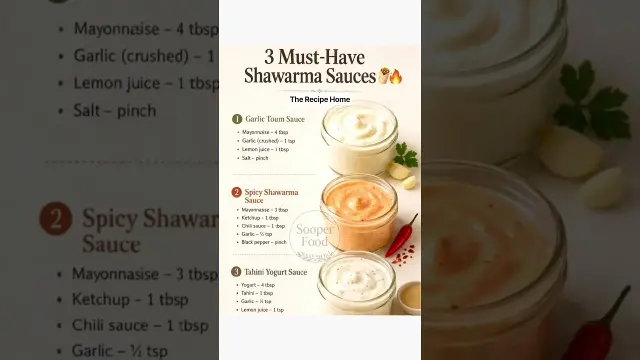
 Three Shawarma Sauces: Garlic, Tahini and Red Chili
#Garlic Sauce
1 ideas
Three Shawarma Sauces: Garlic, Tahini and Red Chili
Get new #Garlic Sauce ideas by email
Every Thursday: the week's best ideas, with the newest from #Garlic Sauce.
Related tags
Garlic Sauce: How to Make It, Use It and Adapt It
Garlic sauce is less a single recipe than a family of preparations in which garlic gives the character and something else — oil, egg, yoghurt, bread, nuts or tomatoes — gives the body. It appears in kitchens from the eastern Mediterranean to southern Europe and Latin America, and each place has settled on its own way of taming the sharpness of raw garlic while keeping its perfume intact.
The main families
- Emulsified sauces: crushed garlic is worked with oil until it thickens into a pale, glossy cream. This is toum in Lebanon and Syria, where oil is added very slowly to garlic and lemon juice, and aïoli in Provence, which is traditionally pounded garlic and olive oil and nothing else — egg yolk is a modern shortcut for a steadier emulsion, not part of the old method.
- Bread-thickened sauces: Greek skordalia binds garlic with soaked stale bread, mashed potato or ground almonds, then loosens it with olive oil and vinegar.
- Dairy sauces: garlic stirred into yoghurt or sour cream, sometimes with cucumber, herbs or lemon, gives a quicker, cooler sauce that needs no emulsion at all.
- Cooked sauces: garlic simmered in tomato, stock or cream, as in many Spanish and Italian preparations, loses its bite and turns sweet and mellow.
What beginners should know
Read more
The texture of an emulsified garlic sauce depends on patience, not strength. Add the oil in a thin thread, almost drop by drop at the start, and stop pouring whenever the mixture looks like it might split. If it does separate, the usual rescue is to start a fresh spoonful of garlic in a clean bowl and beat the broken sauce into it slowly. A spoonful of egg white or a little mustard can help hold a fragile emulsion together, though purists will tell you the garlic alone is enough.
Salt the garlic early. A pinch of salt helps break down the cells and turns the paste smoother and less aggressive. Removing the green germ from the centre of older cloves makes the flavour cleaner.
Acidity balances garlic. Lemon juice or vinegar does more than add sourness: it keeps the sauce bright and stops it from tasting heavy against rich grilled meat. Add it in stages and taste as you go.
Practical tips
- Keep raw garlic sauces cold and use them within a few days; they are at their best fresh.
- A neutral oil gives the mildest result, while olive oil brings a stronger flavour and can turn slightly bitter when beaten hard.
- Rest the sauce for half an hour before serving so the garlic settles into the oil.
- Freeze emulsified sauces in small portions if you make a large batch; they thaw well enough for cooking.
- Use a fork, a mortar or a small food processor — anything that crushes rather than chops, so the garlic releases flavour without turning watery.
Garlic sauce is forgiving once you understand its logic: garlic for the soul of it, fat or dairy for the body, acid for the edge, and salt to bring it all forward. Learn one version well and the rest follow easily.
#Garlic Sauce: frequently asked questions
How do I start making garlic sauce for the first time?
Begin with an emulsified style, since it teaches the basic logic of garlic, fat and acid. Crush the garlic with a pinch of salt, add lemon juice, then pour oil in a very thin thread while beating, pausing whenever the mixture looks ready to split. Once you can hold one emulsion steady, the yoghurt and bread-thickened versions come almost automatically.
What do I need on hand to make it?
Garlic, salt, an acid such as lemon juice or vinegar, and a fat or body ingredient, depending on the family you choose. A mortar, a fork or a small food processor works better than a sharp blade, which releases water instead of flavour. Keep a neutral oil for mild sauces and olive oil for stronger ones.
Which kind of garlic sauce should I choose?
Pick by what you are serving: a pale emulsified sauce suits grilled meat and sandwiches, a bread-thickened sauce is sturdy enough for vegetables and fried fish, and a dairy version is the quickest option when you want something cool and fresh. Cooked sauces are the right call when you want sweetness rather than bite. Choose one family and learn it properly before moving on.
How should I store garlic sauce and how long does it keep?
Keep raw garlic sauces cold, and treat them as something to eat soon rather than keep for weeks. They taste best fresh, so make small amounts and rest them briefly before serving so the garlic settles. Large batches of emulsified sauce can be frozen in small portions, which thaw well enough for cooking.
What goes wrong most often when making it?
Splitting is the classic problem, and it nearly always comes from adding oil too fast or too much at once. If it happens, start a fresh spoonful of garlic in a clean bowl and beat the broken sauce into it slowly. Underseasoning is the other common fault: salt early and add acid in stages, tasting as you go.
Where does it fit on a table or at a gathering?
It is a natural partner to grilled and roasted meats, wraps and flatbreads, where a spoonful cuts through richness. It also works as a dip for raw vegetables and fried food, and a cooler dairy version sits easily alongside a mezze spread. Making a couple of contrasting versions gives guests something to choose between.
Videos come from YouTube and posts from Instagram; titles and summaries are our own. All rights belong to their creators.