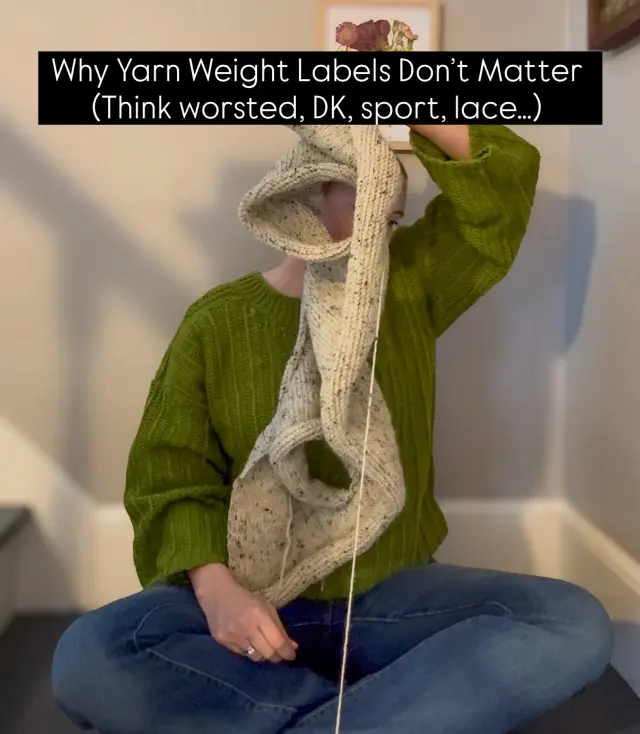
 Why Yards Per Gram Beats Yarn Category Numbers
#Gauge
1 ideas
Why Yards Per Gram Beats Yarn Category Numbers
Get new #Gauge ideas by email
Every Thursday: the week's best ideas, with the newest from #Gauge.
Related tags
Knitting Gauge: Why Your Swatch Matters More Than the Label
Gauge, sometimes called tension, is the measure of how many stitches and rows you produce in a given length of fabric — usually counted over 10 cm or 4 inches. It is the quiet number behind every pattern that fits, every sweater that ends up the size you planned, and every hat that goes on the head it was meant for. Two people can follow the same pattern with the same yarn and the same needle and end up with garments several sizes apart, because gauge belongs to the hands, not to the paper.
What gauge actually describes
Fabric is a grid. Stitch width and row height together decide how big that grid is, so gauge is really two numbers working separately. Stitch gauge controls width: too many stitches per 10 cm and a sweater comes out narrow. Row gauge controls length, which matters most in shaped pieces — raglan yokes, sleeve caps, anything with a set-in curve. Some patterns only ask you to match stitch gauge and tell you to work to a measured length instead of a row count, which is a useful habit even when it isn't suggested.
Yarn weight categories, and the recommended needle sizes printed on a yarn label, are only starting points. They describe a range, not a result. A sport weight worked loosely can behave like a worsted; a worsted worked tightly can behave like a DK. This is why experienced makers trust their own swatch over the band on the ball.
Read more
Making a swatch you can believe in
- Work a square larger than the one you intend to measure — around 15 cm is comfortable — so the edges, which curl and pull in, stay out of your count.
- Use the stitch pattern the pattern calls for. Ribbing, cables, lace and colourwork all pull in differently from stocking stitch, and a swatch in the wrong stitch tells you nothing.
- Treat the swatch the way you will treat the finished piece: wash it, block it, let it dry fully. Some fibres relax and grow noticeably on first washing, and that change belongs in your measurement.
- Measure in more than one place and average. Lay the swatch flat without stretching, count across the middle, and use a rigid ruler rather than a soft tape.
- If you are between numbers, go up or down a needle size and swatch again. Changing needle size is the reliable way to change gauge; changing your grip to force a number rarely holds.
When gauge drifts
Gauge shifts with mood, fatigue, time of day and the project itself — many makers tighten as they settle into a rhythm. On large pieces, check again partway through. Circular knitting and flat knitting can also differ for the same person, so swatch in the round if the project is in the round. And if a swatch refuses to match, remember that a small difference compounds: a stitch or two over 10 cm, multiplied across a whole body, is the difference between a garment that fits and one that doesn't. Matching stitch count, then adjusting length as you go, is often the most practical compromise.
#Gauge: frequently asked questions
How do I get started with gauge if I've never measured it before?
Knit a swatch in the stitch pattern your project uses, working it wider than the area you plan to measure so the curling edges stay out of your count. Let it rest, then treat it the way the finished piece will be treated — washed, blocked and fully dried — before you measure. Measuring your own swatch is the only reliable starting point, because gauge comes from your hands rather than from the yarn label or the pattern.
What do I actually need to check my gauge?
You need the yarn and needles your pattern calls for, a rigid ruler or a gauge measure rather than a soft tape, and a little patience for making a swatch first. A flat surface to lay the fabric on without stretching helps too, since pulling the swatch changes the reading. Everything else is optional; the tools are simple, and the habit of swatching is what does the real work.
Which should I match — stitch gauge or row gauge?
Stitch gauge matters most, because it decides the width of the finished piece, and it is the number to chase first. Row gauge shapes length, so it counts heavily in curved or shaped sections like raglan yokes and sleeve caps. Many makers match stitch gauge and then simply work to a measured length rather than counting rows, which is a practical habit in almost any project.
How do I care for gauge so it stays consistent across a big project?
Check your gauge again partway through a large piece, since tension often shifts as you settle into a rhythm or tire. Swatch in the round if the project is worked in the round, because circular and flat knitting can give different results from the same hands. If your numbers start to drift, adjust your needle rather than forcing your grip, which rarely holds for long.
What are the most common mistakes people make with gauge?
The usual ones are measuring a small, unwashed swatch with its edges included, and swatching in plain stocking stitch for a project full of cables, ribbing or colourwork that pulls in differently. Stretching the fabric while counting, or using a soft tape, quietly distorts the result. Another common slip is assuming the yarn label's guidance settles the question — a sport weight worked loosely can behave like a much thicker yarn, so your own swatch always outranks the ball band.
Why does yarn thickness matter more than the weight category on the label?
Weight categories sit on a range rather than a fixed result, and the recommended needle size printed alongside them is only a starting point. Looking at how much length a yarn gives for its weight tells you more about its true thickness than the category name does. That is why experienced makers trust what their swatch produces over the description on the label.
Videos come from YouTube and posts from Instagram; titles and summaries are our own. All rights belong to their creators.