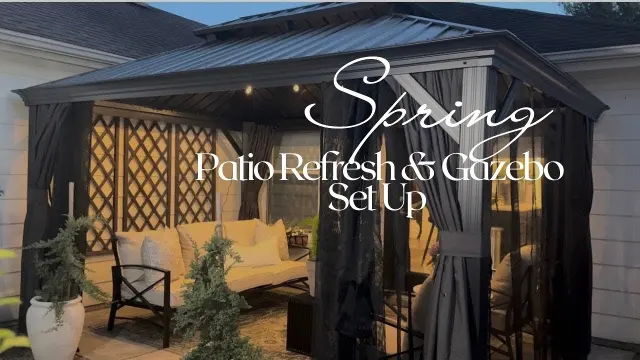
 Small Patio Spring Refresh and Gazebo Setup
#Gazebo Setup
1 ideas
Small Patio Spring Refresh and Gazebo Setup
Get new #Gazebo Setup ideas by email
Every Thursday: the week's best ideas, with the newest from #Gazebo Setup.
Related tags
Gazebo Setup Guide
A gazebo is a freestanding outdoor structure that creates a sheltered place to sit, relax, or gather. It can serve as a quiet corner in a garden, a dining area on a patio, or a focal point in the yard. Gazebos have a long history in gardens and parks, where they were used for shade, views, and conversation. Today, they are chosen for the same basic reasons: to make outdoor space feel more usable and inviting.
Choosing the right spot
Good gazebo setup begins with location. Look for a level area with enough room around the structure for walking, seating, and access. Think about sun, shade, wind, and how you will use the space. A gazebo near a seating area works well for relaxing, while one placed farther into a garden can create a destination and frame the landscape.
If the ground is uneven, take time to level it before setting up. A stable base helps the gazebo look better and feel safer. For some yards, a patio, deck, gravel bed, or paved surface may be the most practical choice.
Read more
Understanding the main types
Gazebos come in different styles, and each one suits different needs.
- Permanent gazebos are built as part of the landscape and often fixed to a foundation.
- Portable gazebos are easier to move and are useful for temporary shade or seasonal use.
- Pop-up gazebos are designed for quick assembly and simple storage.
- Open-sided gazebos allow airflow and views, while enclosed or semi-enclosed styles offer more protection from insects, sun, or light rain.
The best choice depends on how often you will use it, how much maintenance you want, and whether you need a temporary or lasting structure.
Basic setup tips
Before assembly, read the instructions carefully and sort all parts. It helps to have an extra pair of hands, especially for larger frames or roof sections. Work on a calm day if possible, because wind can make setup difficult and unsafe.
A few practical tips can make the process smoother:
- Check that all parts are present before starting.
- Assemble on a flat surface.
- Keep tools nearby and follow the steps in order.
- Tighten fasteners gradually rather than fully at first.
- Make sure the frame is square before securing it completely.
If your gazebo includes a canopy or roof cover, attach it evenly so the fabric sits smooth and does not pull to one side.
Anchoring and safety
Anchoring is one of the most important parts of gazebo setup. A gazebo that is not secured properly can shift, tip, or be damaged by wind. Use the anchoring method recommended for your surface and structure, whether that means stakes, weights, bolts, or another system. Always follow the manufacturer’s guidance if you have it.
Keep the area around the gazebo clear of hanging branches, sharp objects, and tripping hazards. If you place furniture inside, leave enough space to move around comfortably. For safety and longevity, avoid overloading the structure with heavy decorations or items it was not designed to hold.
Styling and care
Once the gazebo is in place, you can make it feel more welcoming with simple furnishings. A small table, chairs, cushions, lanterns, or potted plants can soften the structure and make it feel like part of the garden. Choose materials that suit outdoor use and can handle your local weather.
Regular care helps the gazebo last longer. Clean dust, leaves, and debris from the frame and roof covering, check fasteners from time to time, and store removable fabric when severe weather is expected. With thoughtful setup and basic maintenance, a gazebo can become one of the most useful and loved parts of your outdoor space.
Videos come from YouTube and posts from Instagram; titles and summaries are our own. All rights belong to their creators.