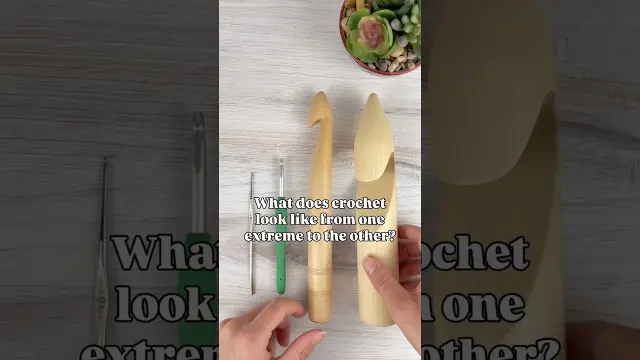
 What a 40mm crochet hook can make in amigurumi
#Giant Crochet
1 ideas
What a 40mm crochet hook can make in amigurumi
Get new #Giant Crochet ideas by email
Every Thursday: the week's best ideas, with the newest from #Giant Crochet.
Related tags
Giant Crochet: A Guide to Oversized Hooks and Chunky Makes
Giant crochet — sometimes called extreme crochet or jumbo crochet — is the practice of working with hooks and yarns far larger than the ones used for ordinary crochet. Where a standard hook is a few millimetres across, a giant hook can be many times that, and the "yarn" may be thick roving, t-shirt yarn, macramé cord, jute, fabric strips or even rope. The stitches are the same ones you already know; only the scale changes.
Where it comes from
Crochet has always adapted to whatever material was at hand. Working thick wool with big hooks appears in traditional textile crafts across cold climates, where heavy yarn was common and quick results mattered. The modern giant-crochet wave grew out of that same practical logic: once crafters started making their own yarn from cut-up fabric and recycled textiles, and mills began producing very thick single-ply wool, oversized hooks became the natural tool for it. The technique sits comfortably alongside arm knitting and finger crochet, its close relatives.
Why people choose it
Read more
The appeal is speed and presence. Because each stitch is enormous, a project grows visibly in an hour, which makes giant crochet unusually satisfying for beginners and for anyone tired of slow, fine work. Finished pieces are sculptural: a basket stands up on its own, a blanket has real weight, a floor cushion holds its shape. Thick single stitches also show texture beautifully, so simple stitch patterns read clearly without elaborate charts.
Main kinds of projects
- Home storage: baskets, pods, plant-pot covers, doorstops.
- Soft furnishings: floor cushions, poufs stuffed with offcuts, throws and pet beds.
- Wearables: chunky scarves, cowls, simple hats, oversized cardigans worked in thick wool.
- Amigurumi and sculptural pieces: large soft toys, decorative spheres, seasonal figures.
- Rugs and mats worked with cord or fabric yarn.
What beginners should know
Start with a hook that feels comfortable to grip — very large hooks can be heavy, so a handle or ergonomic shape helps. Choose a smooth, forgiving yarn for your first project; fuzzy roving is lovely but hides mistakes and can pill with friction. Make a small practice swatch to learn how much tension thick yarn needs, because loose stitches in giant crochet tend to lean and stretch while tight ones fight the hook.
Use stitch markers generously; at this scale it is easy to lose your place. Keep your loops relaxed, turn your work gently, and remember that seams and joins become very visible, so finish them neatly. When stuffing cushions, use small pieces rather than one big lump so the filling sits evenly.
Practical tips
Giant pieces are heavy, so store them folded rather than hung. Check care instructions for the fibre you use — thick wool and fabric yarns can behave very differently when washed. If you make your own yarn from old sheets or shirts, cut continuous strips and stretch them so the edges curl inward. And if your hands tire, work in short sessions: the motions are large, and a little rest keeps the craft enjoyable.
#Giant Crochet: frequently asked questions
How do I get started with giant crochet if I've never done it before?
Begin with a single simple stitch and a small practice swatch, because the basic stitches are the same ones used in ordinary crochet — only the scale changes. Working a swatch first teaches you how much tension thick yarn needs, since loose stitches tend to lean and stretch. Once the rhythm feels natural, move on to a small project such as a basket or a cowl.
What supplies do I need for giant crochet?
You need an oversized hook and a very thick material — roving, t-shirt yarn, macramé cord, jute, fabric strips or rope all work. A hook with a handle or ergonomic shape is worth choosing, since very large hooks can be heavy to grip. Stitch markers are also essential at this scale, as it is easy to lose your place.
Which kind of giant crochet project should I choose as a beginner?
Home storage pieces and soft furnishings are the friendliest starting points, because a basket or floor cushion is forgiving and shows progress quickly. Simple wearables like scarves and cowls also work well since they rely on plain stitches rather than complex charts. Save sculptural and amigurumi work for later, when your tension is more even.
How should I care for and store finished giant crochet pieces?
Store heavy pieces folded rather than hung, since the weight of thick stitches can stretch a garment out of shape over time. Always check the care instructions for the specific fibre you used, because thick wool and fabric yarns behave very differently when washed. If you made your own yarn from old sheets or shirts, keep in mind that the finished item may need gentler handling.
What are the most common mistakes people make with giant crochet?
Starting with fuzzy roving is the usual trap — it looks lovely but hides mistakes and can pill with friction, so a smooth yarn is better for a first attempt. Skipping stitch markers is another frequent problem, as oversized stitches are easy to miscount. Finally, many people work too long in one sitting; the motions are large, so short sessions keep hands fresh.
Why do people choose giant crochet over ordinary crochet?
The appeal is speed and presence: each stitch is enormous, so a project grows visibly in a short time, which suits beginners and anyone tired of slow, fine work. Finished pieces are sculptural — a basket stands on its own and a blanket has real weight. Thick single stitches also show texture beautifully, so simple patterns read clearly without elaborate charts.
Videos come from YouTube and posts from Instagram; titles and summaries are our own. All rights belong to their creators.